
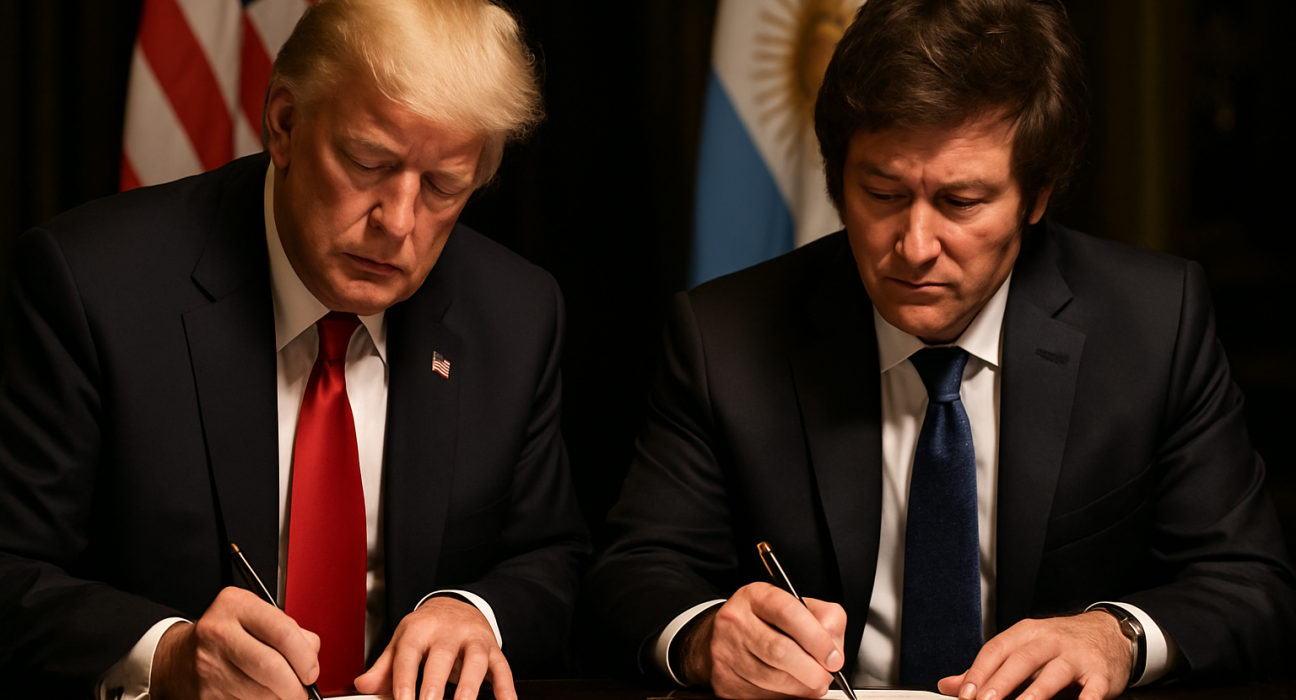
The Trump administration has agreed to a currency swap deal with Argentina, marking a significant financial and geopolitical development during Argentine President Javier Milei’s visit to Washington. The agreement involves the U.S. buying large quantities of Argentine pesos, with the goal of stabilizing Argentina’s volatile currency and supporting bilateral trade.
The initiative was negotiated between U.S. Treasury officials, Robert Bessent (an economic adviser to President Trump), and Argentina’s finance minister. It aims to strengthen Argentina’s struggling economy while deepening U.S.-Argentina financial ties amid ongoing inflation and debt crises in Buenos Aires.
The deal arrives at a time when Argentina’s economic situation remains dire — annual inflation exceeds 200%, and the peso continues to depreciate. The Trump administration’s move signals a shift in regional U.S. economic strategy, favoring bilateral agreements over IMF or multilateral frameworks. Analysts see this as part of a broader U.S. effort to counter Chinese influence in Latin America, as China has been a major lender and trade partner for Argentina in recent years.
Critics, however, warn that the currency swap could increase U.S. exposure to Argentina’s financial instability, potentially resulting in losses if the peso continues to fall. There are also political implications: the deal reinforces ties between Trump’s team and President Milei, both known for their populist and deregulatory agendas. Observers view this as an attempt to create a right-leaning economic bloc aligned against socialist governments in the region, such as Venezuela and Bolivia.
Argentina’s government celebrated the deal as a confidence boost, framing it as a step toward rebuilding credibility with international markets. Financial experts suggest it may help shore up short-term liquidity and relieve immediate pressure on Argentina’s reserves, though long-term economic stability will depend on Milei’s austerity and privatization reforms.
The transaction details remain undisclosed, but sources indicate it involves multi-billion-dollar purchases of pesos, effectively providing the U.S. with leverage in Argentina’s financial system. The Federal Reserve and U.S. Treasury have declined to comment on operational specifics, citing confidentiality of sovereign agreements.
Main Points
- The U.S. agreed to a currency swap deal with Argentina involving large peso purchases.
- The arrangement was brokered by Robert Bessent and Argentine officials during President Milei’s visit to Washington.
- The goal is to stabilize Argentina’s economy and strengthen bilateral trade.
- The agreement reduces reliance on the IMF and challenges China’s regional influence.
- Critics warn it could expose U.S. finances to Argentina’s instability.
- The deal symbolizes growing ties between Trump and Milei’s administrations, both favoring nationalist economic policies.
Projections & Implications
Potential Positive Outcomes (Pro):
- Short-term currency stabilization could reduce inflationary pressures in Argentina.
- The U.S. may expand regional influence, balancing against Chinese investment.
- The deal could open new trade opportunities and mutual investment between the nations.
Potential Negative Outcomes (Con):
- The peso’s ongoing decline may expose U.S. funds to losses.
- Critics argue the move undermines multilateral financial norms, weakening IMF authority.
- It risks politicizing monetary policy, linking financial deals to ideological alliances.






Leave feedback about this
You must be logged in to post a comment.