
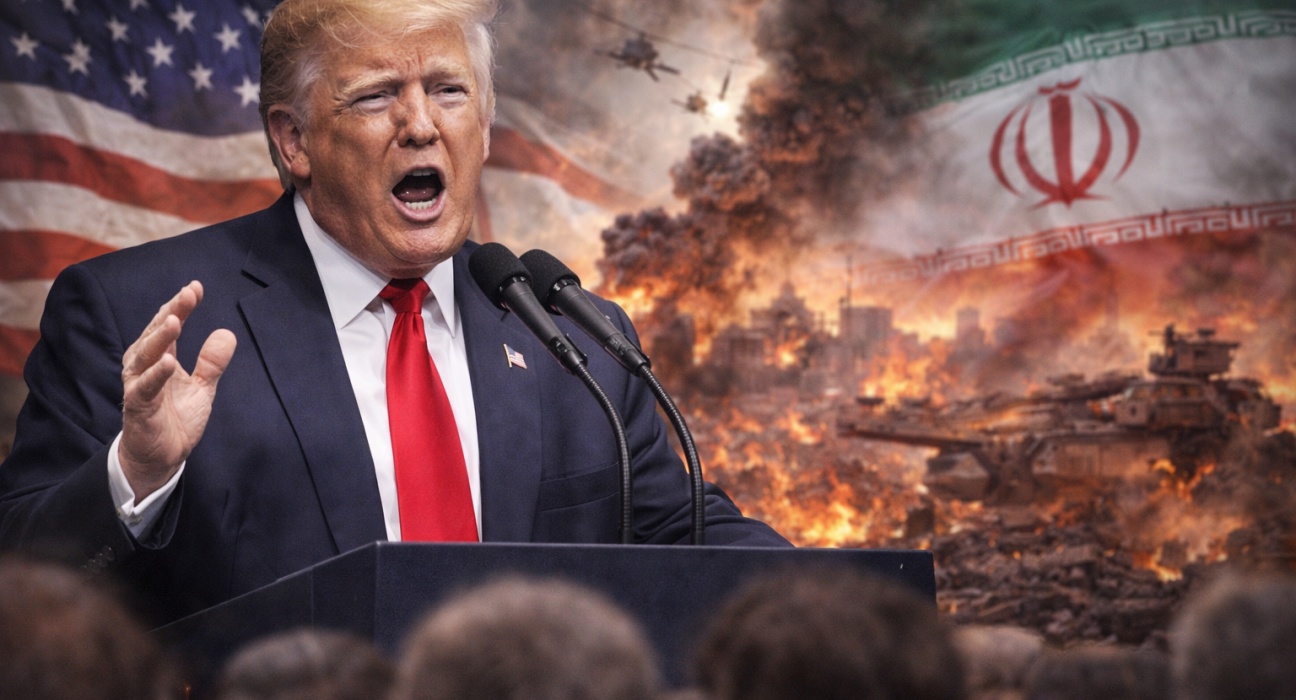
A recent national address by Donald Trump regarding the ongoing Iran war has drawn widespread attention and mixed reactions, as reporting from The Atlantic and The Independent highlights both the messaging and the broader implications of the speech.
The address aimed to reassure the public and signal that the conflict may be nearing its end. However, analysts and observers point to contradictions, lack of clarity, and unresolved strategic questions that continue to shape the debate around the war.
What Trump Said in the Address
In the speech, Trump emphasized that the war was “nearing completion” and that U.S. objectives had largely been achieved. He pointed to:
- Significant damage to Iran’s military infrastructure
- Degradation of missile and nuclear capabilities
- Strategic gains achieved through coordinated U.S.–Israeli operations
At the same time, Trump suggested that operations could continue for several more weeks if necessary and warned of further escalation, including potential strikes on Iranian infrastructure if negotiations fail.
He also indicated that discussions or expectations of a ceasefire may be developing, though no formal agreement has been confirmed and Iranian officials have publicly disputed claims of negotiations.
Messaging Tension: Victory vs Ongoing Conflict
One of the central themes identified in both reporting and analysis is the tension within the speech itself.
According to analysis reflected in The Atlantic, the address presented a narrative that simultaneously:
- Declared success or near-victory
- Acknowledged continued military operations
- Suggested escalation remained possible
This dual messaging has led to questions about:
- Whether the war has clearly defined objectives
- What constitutes “victory” in the conflict
- Whether there is a concrete exit strategy
Observers note that such ambiguity can make it difficult for both the public and international partners to interpret the administration’s long-term plan.
Ceasefire Signals and Uncertainty
Reporting from The Independent indicates that Trump framed the conflict as approaching a resolution phase, suggesting that a ceasefire or conclusion may be imminent.
However:
- No official ceasefire agreement has been announced
- Iran has denied that negotiations are underway
- Military activity continues across the region
Analysts emphasize that wars often enter phases where political messaging about conclusion precedes actual diplomatic resolution, creating a gap between rhetoric and reality.
Broader Strategic Concerns
1. Lack of Clear End-State
One of the primary critiques raised in analysis is the absence of a clearly defined end goal.
Possible objectives mentioned throughout the conflict have included:
- Preventing Iran from obtaining nuclear weapons
- Weakening Iran’s military capabilities
- Deterring regional threats
- Influencing political leadership within Iran
However, these goals do not necessarily align with a single, measurable endpoint.
2. Alliance and Global Reaction
The speech comes amid ongoing tensions with U.S. allies, particularly in Europe.
Recent developments include:
- Limited NATO involvement in the conflict
- Disagreements over strategy and escalation
- Concerns about unilateral U.S. decision-making
These dynamics have contributed to questions about the long-term stability of international alliances.
3. Domestic Reaction and Public Opinion
Public opinion appears to be mixed but trending toward skepticism.
Recent polling cited in broader reporting indicates:
- Approval ratings related to the war have declined
- A majority of Americans express concern about prolonged conflict
- Economic factors, including rising energy prices, are influencing sentiment
One recent report noted approval related to the conflict falling into the mid-30% range, reflecting growing domestic unease.
Economic and Global Impact
The war has had measurable global consequences:
- Oil prices have surged due to disruptions in the Strait of Hormuz
- Financial markets have experienced volatility
- Energy supply concerns have affected global economies
These factors have increased pressure on leadership to provide clear direction and resolution pathways.
Pros (Supportive Perspectives)
• Demonstration of military capability: The speech emphasizes strategic gains and operational success
• Reassurance effort: Messaging aimed to calm public and market concerns
• Flexibility in strategy: Maintaining options for escalation or negotiation
• Focus on deterrence: Signals continued pressure on Iran’s military capacity
Cons (Criticism and Concerns)
• Lack of clarity: Mixed messaging on victory and continued conflict
• Uncertain endgame: No clearly defined exit strategy
• Public skepticism: Declining approval and growing concern among Americans
• Alliance strain: Limited support from traditional allies
Future Projections
1. Continued Military Operations
Even if nearing completion, the conflict may persist through additional strikes or limited engagements.
2. Potential Ceasefire Negotiations
Diplomatic efforts could intensify, though timelines remain uncertain.
3. Ongoing Political Debate
Domestic discussions about the war’s justification and outcomes are likely to continue.
4. Alliance Recalibration
NATO and other alliances may adjust their roles depending on how the conflict concludes.
5. Long-Term Regional Impact
Even after active fighting ends, instability and geopolitical consequences may persist.
Conclusion
Trump’s Iran war address reflects a pivotal moment in the conflict, balancing claims of success with ongoing uncertainty about its conclusion. While the speech attempts to frame the war as nearing completion, the lack of a clearly defined endpoint and mixed messaging has fueled debate among analysts, policymakers, and the public.
As the situation continues to evolve, the key question remains whether the conflict is truly approaching resolution—or entering a new phase with lasting global implications.
References
Primary Sources
- The Atlantic – Analysis of Trump’s Iran war speech
https://www.theatlantic.com/ideas/2026/04/trump-iran-war-speech/686663/ - The Independent – Trump says Iran war nearing completion and hints at ceasefire
https://www.independent.co.uk/news/world/americas/us-politics/trump-iran-war-address-completion-ceasefire-b2950498.html
Additional Context Sources
- Reuters – Takeaways from Trump’s Iran war address
- Reuters/Ipsos polling and approval data
- Broader reporting on global economic and geopolitical impact of Iran conflict



Leave feedback about this
You must be logged in to post a comment.