
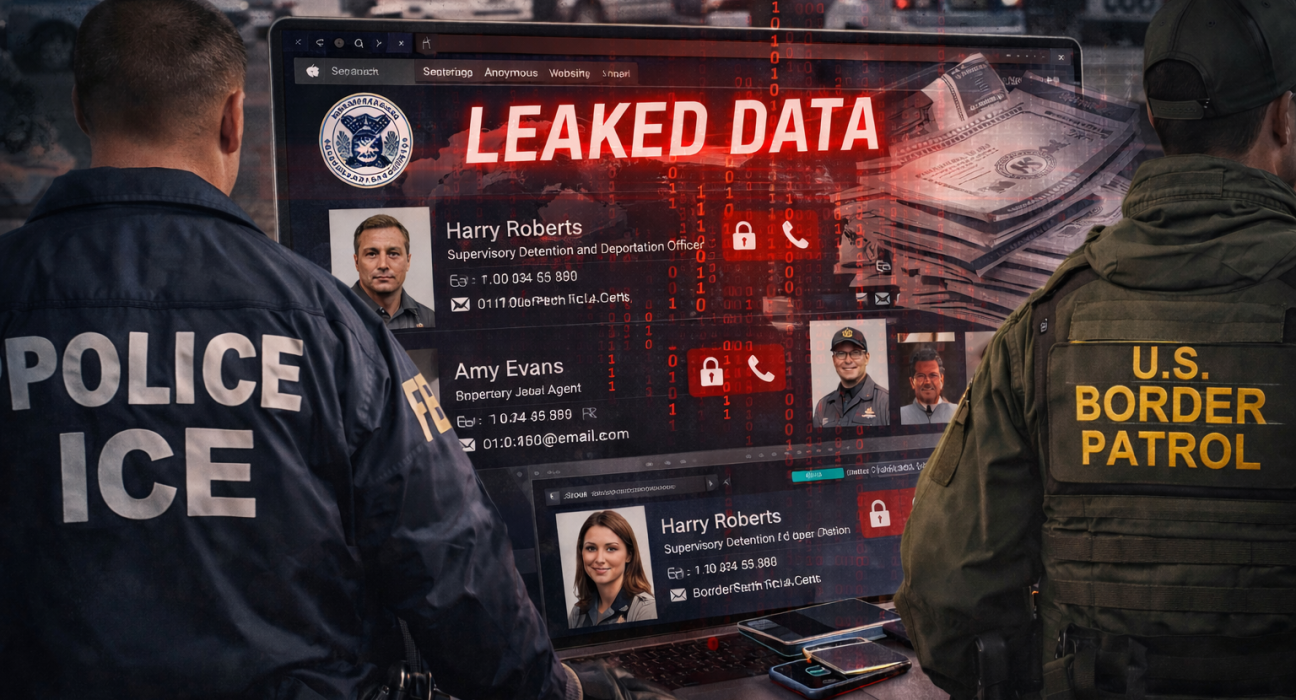
Recent reports say that personal information for thousands of Immigration and Customs Enforcement (ICE) and U.S. Border Patrol employees was published online following internal dissent within the Department of Homeland Security (DHS) after the controversial killing of Renee Nicole Good in Minneapolis. The data — shared with the volunteer-run ICE List website and hosted outside U.S. jurisdiction — allegedly includes names, work emails, phone numbers, job roles, and employment histories of an estimated 4,500 federal immigration officers, including roughly 2,000 frontline agents and 150 supervisors.
The leak was said to be facilitated by a DHS whistleblower and comes at a time of heightened public scrutiny of ICE operations and enforcement practices. The ICE List project, founded by Dominick Skinner, says it collates verified information on immigration personnel along with episodes of deportations, deaths in custody, and other activities related to federal enforcement.
Why the Leak Happened
According to advocates involved in the leak, the decision to release the information was driven by frustrations within and outside the agency over ICE’s internal culture and public accountability. The shooting of Renee Good — fatally shot by an ICE agent in Minneapolis on January 7, 2026 — triggered widespread protests, internal dissent, and increased activism aimed at revealing details about federal enforcement personnel. Some activists frame the leak as a form of counter-surveillance meant to expose an agency they see as resistant to reform.
DHS officials reject this framing and stress that such a release would potentially violate laws and pose serious safety concerns. Assistant DHS Secretary Tricia McLaughlin called the alleged leak “disgusting doxxing” that endangers officers and their families and argued that it would constitute thousands of felonies if prosecuted. She also pointed to significant increases in threats and attacks against law enforcement in recent months.
Security and Safety Impacts
The alleged data release carries significant security implications for both agents and broader community trust in law enforcement structures:
- Risk to Agents’ Safety: Public exposure of names, emails, and other contact details can increase vulnerability to threats, harassment, or physical harm from individuals motivated by anger or vigilante impulses. Exposed family details can also compromise agents’ loved ones.
- Operational Risks: Personal data exposure can be exploited for social engineering or identity theft, which could indirectly impact investigations or operations requiring confidentiality. A law enforcement privacy analysis highlights the dangers of doxxing to field officers and undercover sources.
- Effect on Law Enforcement Morale: Widespread leaks can contribute to lower morale, reluctance to serve in challenging roles, and possible recruitment and retention difficulties for federal enforcement agencies.
At the same time, critics argue that releasing data connected to far-reaching enforcement actions reflects public pressure and a demand for accountability in an agency long criticized for aggressive deportation tactics and internal resistance to reform.
Legal and Ethical Considerations
Doxxing — the act of publishing private personal information online — occupies a complex legal and ethical space. While sharing someone’s contact or identifying information without consent is often illegal, definitions and enforcement vary depending on context, jurisdiction, and intent. For example, posting sensitive personal data used to threaten or harm targets can fall under harassment, stalking, or privacy laws, and victims can pursue civil or criminal remedies.
In this case, DHS has argued that releasing agents’ personal details would likely constitute criminal offenses under U.S. law. Critics counter that supporters of transparency argue for exposing systemic issues within federal agencies, though they do not universally endorse doxxing as an appropriate method.
Public Reaction and Political Context
Reactions to the leak have been sharply divided along political and ideological lines:
- Supportive voices see the leak as an illustration of deep dissatisfaction with ICE tactics and enforcement policies, particularly in the wake of deadly incidents that some critics believe highlight systemic problems.
- Opponents, including DHS leadership and many law enforcement advocates, warn that making personal data public encourages harassment of officers, undermines rule of law, and jeopardizes both community and agent safety.
On social platforms, some observers have cheered the leak as a form of “accountability,” while others condemned doxxing outright as risky and illegal, reflecting broader polarization around immigration enforcement.
Pros and Cons
Pros (Accountability Perspective):
- Greater transparency: Publishing information may pressure federal agencies to change enforcement tactics or policies perceived as harmful.
- Public scrutiny: Highlights internal dissent within DHS and keeps enforcement practices in the public eye.
Cons (Security and Legal Perspective):
- Endangers individuals: Unconsented disclosure of personal data can lead to harassment, stalking, threats, or worse.
- Operational risk: Doxxing may compromise investigations and confidentiality critical to law enforcement work.
- Legal violations: Roles of privacy and anti-harassment laws mean such leaks are often unlawful and may lead to prosecution.
- Undermines cooperation: Risk of retaliatory actions or lack of trust between communities and law enforcement, potentially disrupting public safety collaboration.
Future Projections
Short-Term:
Federal authorities may pursue legal actions against those responsible for the leak, while platforms hosting the data face pressures to comply with U.S. law or block access. Internal investigations within DHS and Homeland Security may evaluate how the breach occurred and whether systemic vulnerabilities exist.
Medium-Term:
The incident could fuel legislative debate around data security, doxxing laws, and protections for federal law enforcement personnel. It may also intensify calls for broader immigration policy reform and oversight of enforcement agencies.
Long-Term:
If doxxing becomes easier or more common, agencies may increase internal data security measures and limit the availability of personnel information. The broader environment of political polarization may continue to push activists toward digital tactics that challenge traditional boundaries between transparency and safety.
References & Further Reading
The Independent – Personal information of ICE and Border Patrol agents leaked online
https://www.independent.co.uk/news/world/americas/us-politics/ice-agents-personal-information-leak-doxxed-b2899973.html
The Daily Beast – Personal details of thousands of Border Patrol and ICE agents allegedly leaked
https://www.thedailybeast.com/personal-details-of-thousands-of-border-patrol-and-ice-goons-allegedly-leaked-in-huge-data-breach
Homeland Security Today – ICE and HSI agents’ personal information released by activists
https://www.hstoday.us/featured/ice-and-hsi-agents-personal-information-released-by-activists
Police1 – Operational and safety risks of doxxing law enforcement
https://www.police1.com/Officer-Safety/protecting-law-enforcement-from-doxxing-balancing-officer-safety-and-constitutional-oversight
AirDroid – What is doxxing and potential legal implications
https://www.airdroid.com/parent-control/what-is-doxxing/





Leave feedback about this
You must be logged in to post a comment.