
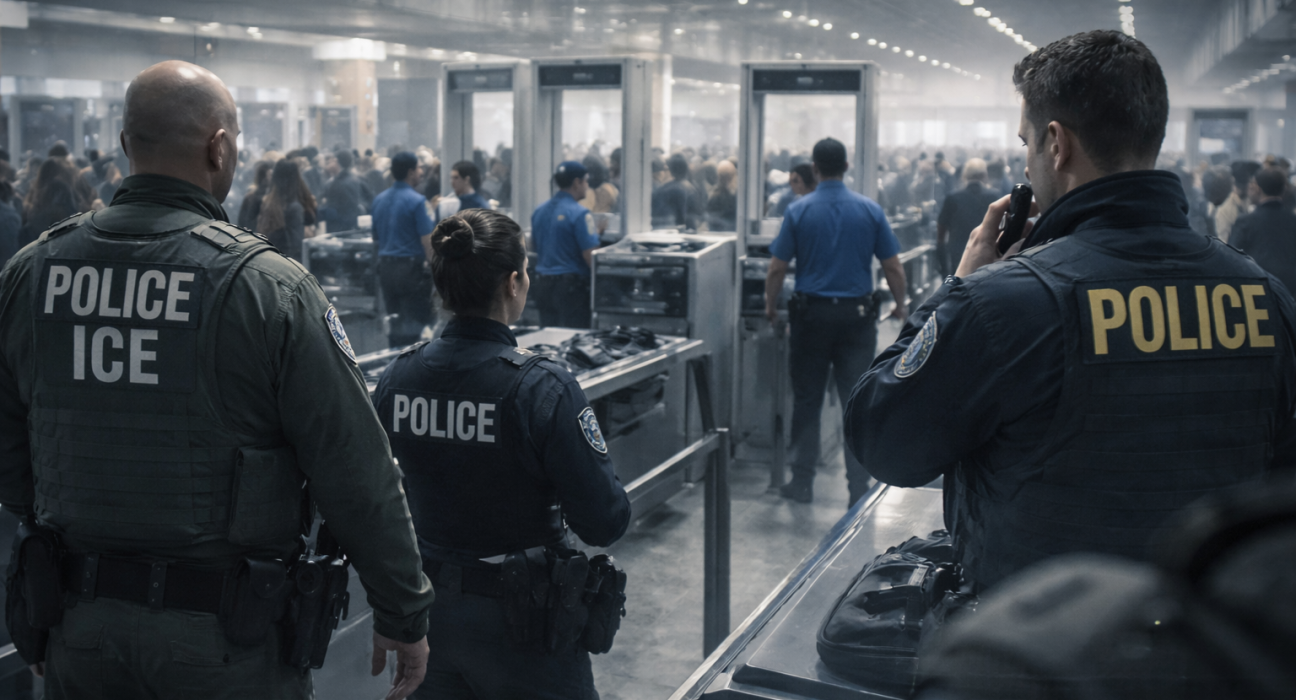
Recent reporting and policy documents highlight a convergence between current immigration enforcement actions and long-term policy proposals shaping federal agencies. Coverage from Reuters details a surge in arrests linked to airport security tips, while a policy blueprint known as “Project 2025” outlines potential structural changes to federal agencies, including those tied to transportation and security.
Together, these developments raise broader questions about the future of enforcement, surveillance, and agency coordination in the United States.
ICE Arrests Linked to TSA Tips
According to Reuters, U.S. Immigration and Customs Enforcement (ICE) has arrested more than 800 individuals based on information provided by the Transportation Security Administration.
Key elements of the report include:
- Arrests were triggered by tips originating from TSA screening processes
- Information sharing occurred between airport security personnel and immigration enforcement
- Individuals identified were reportedly flagged during routine travel screening
The scale of arrests suggests a high level of inter-agency coordination, particularly between transportation security and immigration enforcement bodies.
What This Indicates About Enforcement Strategy
The reported activity reflects a broader operational approach:
1. Data Sharing Across Agencies
Federal agencies increasingly share data to identify individuals of interest. In this case, TSA screening processes appear to serve as a source of actionable intelligence for ICE.
2. Expansion of Enforcement Touchpoints
Airports, traditionally focused on security threats, are also becoming points of immigration enforcement.
3. Targeted vs Broad Enforcement
While details remain limited, the use of tips suggests a targeted enforcement model, though critics question how individuals are flagged and selected.
Civil Liberties and Oversight Concerns
The coordination between TSA and ICE has raised concerns among civil liberties groups and legal analysts.
Key concerns include:
- Privacy: Whether passenger data is being used beyond its original purpose
- Due process: How individuals are identified and what legal recourse they have
- Scope of authority: The role of TSA as a security agency versus an enforcement partner
Supporters argue that such coordination enhances national security and ensures that existing laws are enforced efficiently.
“Project 2025”: A Broader Policy Blueprint
At the same time, the “Project 2025” document outlines a comprehensive vision for restructuring federal agencies under a future administration.
The document—developed by policy organizations and contributors aligned with conservative governance frameworks—includes proposals affecting:
- Federal agency leadership structures
- Immigration enforcement policies
- Transportation and security systems
- Executive branch authority
While not official policy, the document is widely viewed as a strategic roadmap for potential future administrative actions.
TSA and Security Policy in Project 2025
Within the document, sections referencing TSA suggest potential changes such as:
- Re-evaluating the agency’s structure and mission
- Increasing efficiency and coordination with other agencies
- Adjusting how transportation security intersects with broader enforcement goals
These proposals align with the Reuters report in one key way: a more integrated approach to federal enforcement systems.
Broader Context: Security vs Civil Liberties
The overlap between the Reuters report and Project 2025 highlights a longstanding policy debate:
Security Perspective
- Increased coordination improves enforcement effectiveness
- Data sharing allows faster identification of potential risks
- Integrated systems reduce operational gaps
Civil Liberties Perspective
- Expanded surveillance raises privacy concerns
- Blurring agency roles may reduce accountability
- Individuals may face enforcement actions without clear transparency
This tension has been central to U.S. policy discussions since the expansion of security measures following the early 2000s.
Competing Interpretations
View 1: Efficient Law Enforcement Integration
Supporters argue that:
- Coordination between TSA and ICE is a logical use of available data
- Enforcement should occur wherever individuals interact with federal systems
- Policy frameworks like Project 2025 provide clarity and direction
View 2: Expansion of Surveillance State
Critics argue that:
- Using airport screening data for immigration enforcement extends beyond TSA’s original mandate
- Policy proposals could centralize power and reduce checks and balances
- Increased enforcement integration may disproportionately affect certain populations
Pros (Supportive Perspectives)
• Improved coordination: Agencies working together can enhance efficiency
• Targeted enforcement: Data-driven approaches may focus resources effectively
• Policy clarity: Long-term planning documents provide strategic direction
• National security alignment: Integrated systems may reduce vulnerabilities
Cons (Concerns and Risks)
• Privacy implications: Expanded data use raises concerns about surveillance
• Blurred agency roles: TSA’s function may shift beyond transportation security
• Accountability challenges: Increased coordination can complicate oversight
• Public trust issues: Perception of expanded enforcement may affect confidence in institutions
Future Projections
1. Increased Inter-Agency Data Sharing
Collaboration between federal agencies is likely to expand further.
2. Policy Implementation Debates
Elements of Project 2025 may influence future legislative or executive actions.
3. Legal Challenges
Court cases may address the boundaries of data use and enforcement authority.
4. Technology Integration
Advanced data systems and AI may enhance identification and tracking capabilities.
5. Ongoing Public Debate
Discussions about security, privacy, and government authority will continue to shape policy.
Conclusion
The combination of ICE arrests linked to TSA tips and the broader policy proposals outlined in Project 2025 reflects a shifting landscape in U.S. enforcement strategy. While increased coordination may improve operational efficiency, it also raises important questions about privacy, oversight, and the appropriate scope of federal agencies.
As these developments continue, the balance between security and civil liberties will remain a central issue in shaping the future of U.S. policy.
References
Primary Sources
- Reuters – ICE arrests tied to TSA tips
https://www.reuters.com/world/ice-arrested-more-than-800-people-after-tips-us-airport-security-agency-2026-04-07/ - DocumentCloud – Project 2025 policy document
https://www.documentcloud.org/documents/25316605-project-2025/?mode=document





Leave feedback about this
You must be logged in to post a comment.