
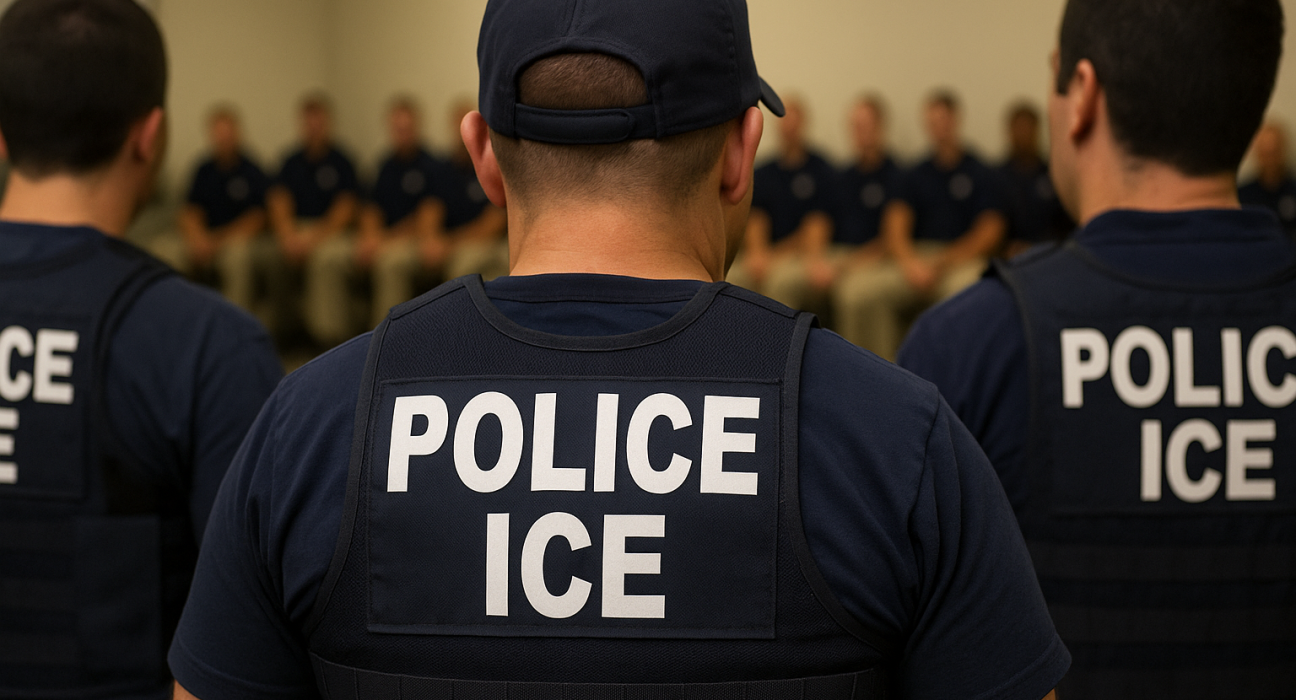
According to recent reports, ICE has admitted new recruits into training programs before completing key portions of their vetting processes. These lapses include missing fingerprint submissions, skipping full background checks, and entering training prior to final drug-test results. These details emerged from current and former officials within Department of Homeland Security (DHS) speaking to multiple media outlets, including a report attributed to NBC News.
One example cited: At the Brunswick, Georgia training facility, one recruit reportedly had a record including strong-arm robbery and a domestic-violence battery charge. This recruit had nonetheless been admitted to training while various parts of their background check remained incomplete. Other recruits reportedly began training without submitting fingerprints or passing final drug-screening steps.
ICE officials and DHS leadership have pushed back, stating that the majority of recruits are veterans or experienced law-enforcement officers, and that training standards remain robust. They acknowledge expedited timelines are driven by congressional mandates to rapidly expand staffing to meet deportation and border-control goals. However, critics caution that the rush may compromise quality, oversight, and public trust.
These developments are set against a backdrop of heightened hiring targets. ICE and DHS are under pressure to add thousands of new officers in short order, necessitating accelerated recruitment, background screening, and training pipelines. Some observers warn that speed may have come at the expense of thorough vetting.
The significance is two-fold: first, it raises questions of operational risk—recruits with incomplete checks may pose internal accountability or liability issues. Second, it raises policy and ethical questions—does a law-enforcement agency charged with enforcing immigration laws accept a lower standard of vetting when staffing pressures intensify?
Key Points
- ICE has admitted recruits into training before completion of standard vetting steps such as fingerprint submission and final drug testing.
- At least one recruit with a prior robbery and domestic-violence record entered training prematurely, according to DHS officials.
- The vetting irregularities are occurring amid a large‐scale staffing expansion mandated by Congress and pushed by ICE/DHS leadership.
- ICE asserts that most recruits are experienced officers and that training remains rigorous; critics contend that vetting shortcuts undermine accountability.
- The issue brings up concerns around law-enforcement integrity, public safety, and the balance between staffing demands and quality of oversight.
Projections & What It Means for the Future
Operational risk and liability: If recruits enter enforcement roles without full background checks, ICE may face heightened risks—internal misconduct, leaks, abuses, or compromised operations. Legal and reputational liability may rise.
Public trust and legitimacy: Immigration enforcement is already a highly contentious domain. Perceived shortcuts in recruitment may erode public trust, particularly among communities disproportionately affected by ICE action. Transparency around vetting will matter more.
Policy and oversight pressure: Congress, watchdogs, and oversight committees may demand more rigorous vetting standards or independent audits. Legislative responses could mandate minimum vetting steps before training begins.
Recruitment pipeline redesign: To reconcile speed with quality, ICE may restructure its pipeline: separate initial administrative training from full-clearance roles, allow provisional status under supervision, or increase retention incentives for fully vetted officers.
Broader implications for law-enforcement workforce expansion: The case may serve as a caution or precedent for other agencies facing hiring surges. How well ICE balances scale and standards could influence recruitment practices across homeland-security and federal law-enforcement agencies.
Political framing and narratives: Immigration enforcement is deeply political. Critics may use vetting lapses to argue for reform or limits on ICE powers; supporters may frame the issue as necessary expediency to meet enforcement commitments. How the narrative evolves will shape future policy and funding decisions.
In short, while ICE’s urgent hiring drive reflects policy priorities, the reported vetting gaps add layers of risk—both practical and reputational. How the agency and its overseers respond will influence enforcement credibility, workforce integrity, and public accountability in the years ahead.
References
- NBC News (via Facebook and other sharing): “ICE has placed new recruits into its training program before they have completed the agency’s vetting process” — https://www.facebook.com/NBCNews/posts/new-ice-has-placed-new-recruits-into-its-training-program-before-they-have-compl/1198219342169929/
- Yahoo News / aggregated: “Some new ICE recruits have showed up to training without full vetting” — https://www.yahoo.com/news/articles/ice-recruits-showed-training-without-200053259.html
- The Marshall Project: “ICE training” record collection — https://www.themarshallproject.org/records/20881-ice-training






Leave feedback about this
You must be logged in to post a comment.