
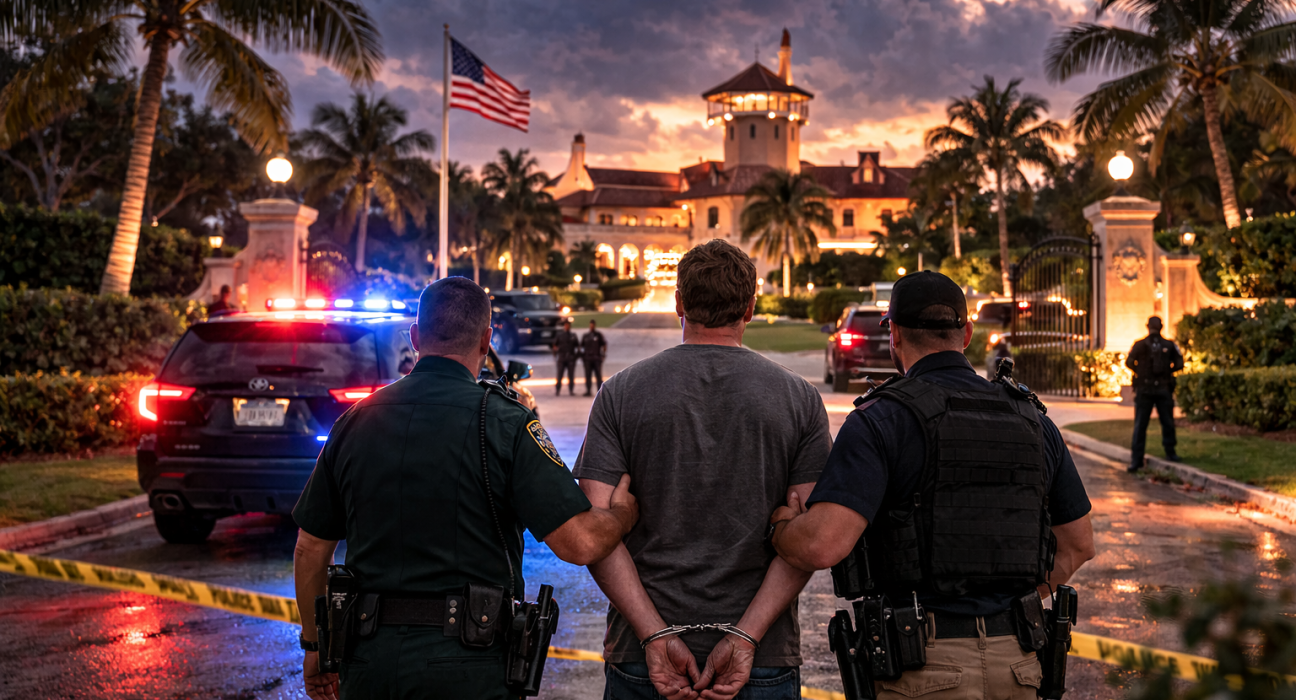
A man identified as Austin Martin has been arrested following an incident near former President Donald Trump’s Mar-a-Lago estate in Palm Beach, Florida, according to reporting from The Independent and other outlets. Authorities responded swiftly, detaining the suspect before any breach of secured areas was reported.
While details are still emerging, the event has once again drawn attention to the security challenges surrounding high-profile political figures and the broader environment of heightened political tension in the United States.
What Happened
According to available reporting:
- The suspect allegedly approached or attempted to access restricted areas near Mar-a-Lago.
- Law enforcement intercepted him before he gained entry to protected zones.
- He was arrested without reported injuries to officers or bystanders.
- Charges appear to include trespassing and related offenses, though formal charging documents may clarify specifics.
Officials have not indicated that the incident was part of a coordinated plot, and there is no public confirmation of a broader threat. As with many such cases, investigators will likely examine the suspect’s intent, background, and mental health considerations.
Security at Mar-a-Lago
Mar-a-Lago functions both as a private club and as the residence of a former president. When Trump is present, security is managed primarily by:
- The U.S. Secret Service
- Palm Beach Police Department
- Federal and local law enforcement coordination
Even when Trump is not in residence, protective protocols remain heightened due to his status as a former president and 2024 presidential candidate.
Incidents involving perimeter approaches are typically treated seriously, as protective agencies operate under a preventative doctrine — meaning suspicious actions are intercepted early rather than after escalation.
Why These Incidents Are Increasingly Common
Security incidents involving political figures have risen in recent years across the United States. Several factors contribute:
1. Polarized Political Environment
The U.S. is experiencing one of its most politically divided periods in modern history. High-profile figures attract both intense support and opposition.
2. Social Media Amplification
Online platforms amplify rhetoric, conspiracy theories, and grievances, sometimes motivating individuals to act impulsively.
3. Mental Health Factors
Many past incidents involving perimeter breaches or threats against public officials have involved individuals experiencing mental health crises rather than organized political violence.
At this stage, authorities have not publicly attributed the Mar-a-Lago case to ideological extremism.
Legal Ramifications
If charges remain limited to trespassing or unlawful entry:
- The case may be handled at the state level.
- Penalties could include fines, probation, or jail time depending on aggravating factors.
- If federal security zones were involved, additional federal charges could apply.
If investigators determine there was intent to harm or intimidate a protected individual, charges could escalate significantly.
Broader Implications
Political Security Concerns
Each incident reinforces the reality that former presidents and major political candidates require substantial ongoing security resources.
Public Safety Considerations
While the quick resolution of this incident suggests security protocols are functioning, repeated perimeter incidents raise questions about:
- The cost of protective details
- Public access versus security balance
- Whether political rhetoric contributes to volatile behavior
Symbolic Impact
Even minor breaches near prominent political figures tend to attract national attention, amplifying concerns about safety and stability.
Comparison to Past Incidents
Over the past several years, similar events have occurred involving:
- The White House perimeter
- Governors’ mansions
- Members of Congress
- Federal courthouses
Most of these incidents have been resolved without major violence, but they underscore a broader pattern of tension around public officials.
What Happens Next
Authorities will likely:
- Conduct background investigations into the suspect
- Review digital communications
- Assess whether additional charges are warranted
- Reevaluate perimeter security procedures if necessary
If the suspect is found to have acted alone and without violent intent, the case may proceed as a relatively routine security violation.
Conclusion
The arrest of Austin Martin near Mar-a-Lago highlights the persistent security challenges surrounding high-profile political figures in an era of heightened polarization. While the situation appears to have been contained quickly and without harm, it serves as a reminder of the delicate balance between openness in democratic society and necessary security precautions.
At present, the case appears localized and controlled, but its broader context — a politically charged environment with elevated tensions — ensures that similar incidents will continue to receive close scrutiny




Leave feedback about this
You must be logged in to post a comment.