
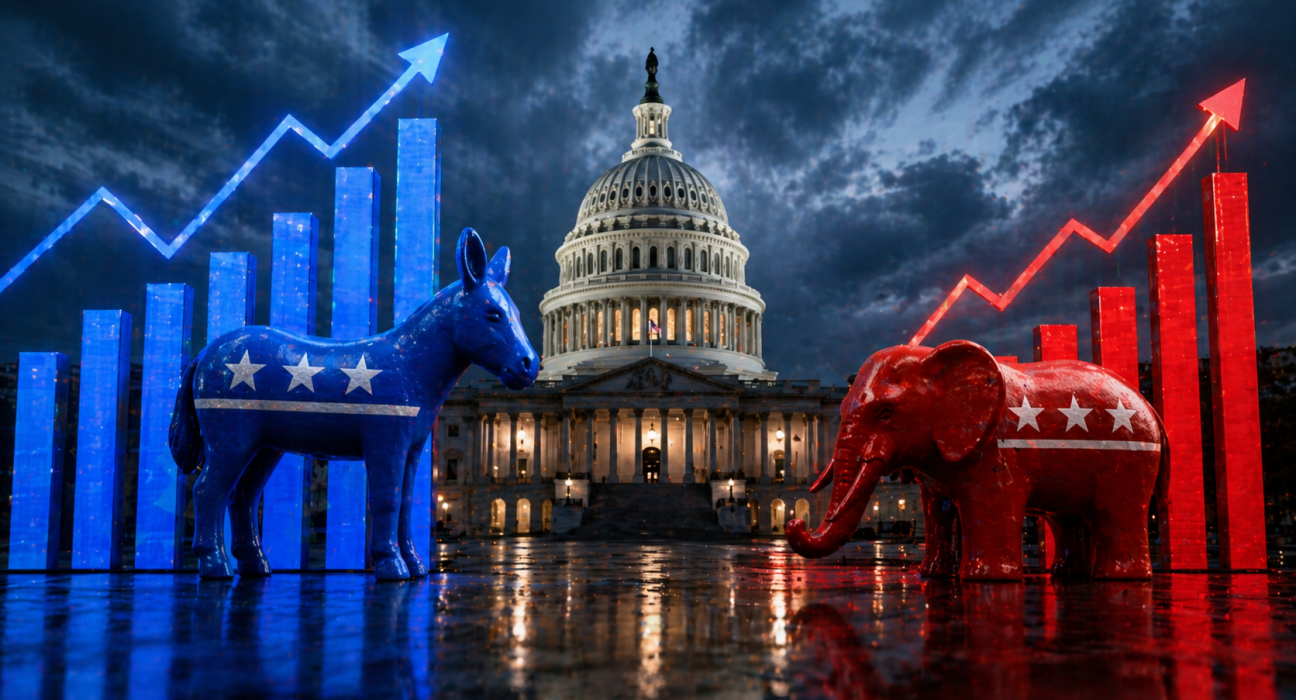
New polling data reported by The Hill indicates that Democrats currently hold a lead over Republicans in early midterm election sentiment, offering a snapshot of voter attitudes as the next election cycle begins to take shape.
While midterm outcomes remain highly uncertain this far in advance, the data reflects evolving dynamics tied to economic conditions, foreign policy developments, and public perception of leadership—all of which are influencing early voter preferences.
What the Polling Shows
According to The Hill’s reporting:
- Democrats have a narrow but measurable lead in voter preference for congressional control
- The margin varies depending on the specific poll and methodology
- The results represent a shift compared to earlier periods where Republicans held advantages
Such polling is typically based on generic ballot questions, where respondents are asked which party they would support in a congressional election.
Why the Lead Matters
Early polling does not predict outcomes but can indicate:
- Momentum trends in public opinion
- Reactions to current events and policy decisions
- Potential strengths or weaknesses for each party
Historically, generic ballot leads can correlate with eventual seat gains, though many factors—such as turnout and district-level dynamics—play a role.
Key Factors Influencing Voter Sentiment
1. Economic Conditions
Economic performance remains one of the most significant drivers of voter behavior.
Current considerations include:
- Inflation trends
- Energy prices (influenced by global conflicts)
- Employment and wage growth
Voters often evaluate the party in power based on economic conditions, even when external factors play a role.
2. Foreign Policy and Global Events
The ongoing Iran conflict and related geopolitical tensions may also be shaping public opinion.
Voters may consider:
- Perceived effectiveness of leadership during crises
- National security concerns
- Economic impacts of global instability
Foreign policy issues can influence elections, particularly when they affect domestic conditions such as fuel prices or military engagement.
3. Political Messaging and Media Coverage
Both parties are actively shaping narratives around:
- Economic performance
- National security
- Social and cultural issues
Media coverage and public discourse play a role in influencing how voters interpret events.
4. Voter Turnout and Engagement
Midterm elections often depend heavily on:
- Enthusiasm among core supporters
- Mobilization efforts by campaigns
- Participation levels among independent voters
Early polling does not capture turnout dynamics, which can significantly alter outcomes.
Historical Context
Midterm elections in the United States often follow certain patterns:
- The party of the sitting president frequently loses seats
- Economic conditions and approval ratings influence outcomes
- Regional and local factors can produce varied results
However, recent elections have shown that traditional patterns can shift due to:
- Polarization
- Changing voter coalitions
- Unpredictable external events
Competing Interpretations
View 1: Early Democratic Momentum
Some analysts interpret the polling as:
- A sign of improving public perception of Democratic leadership
- A reaction to current events favoring the party
- An indicator of potential gains if trends continue
View 2: Too Early to Draw Conclusions
Others caution that:
- Polling this far out is highly volatile
- Events between now and the election could shift sentiment significantly
- Historical trends may still favor opposition gains
This perspective emphasizes the uncertainty inherent in early polling data.
Pros (Implications of the Current Lead)
• Momentum indicator: Suggests potential advantages for Democrats if trends hold
• Policy validation: May reflect approval of certain policies or responses to events
• Strategic positioning: Provides a foundation for campaign planning
• Engagement signal: Indicates active voter interest in upcoming elections
Cons (Limitations and Risks)
• Volatility: Early polling can change quickly
• Turnout uncertainty: Actual election results depend on voter participation
• External factors: Economic or geopolitical changes could shift sentiment
• Overinterpretation risk: Small leads may not translate into electoral gains
Future Projections
1. Polling Fluctuations
Public opinion is likely to shift as new developments occur.
2. Increased Campaign Activity
Both parties will intensify messaging and outreach efforts.
3. Focus on Key Issues
Economic performance, foreign policy, and domestic concerns will remain central.
4. Role of Independent Voters
Swing voters may play a decisive role in determining outcomes.
5. Final Outcome Uncertainty
Midterm results will depend on a combination of national trends and local factors.
Conclusion
The current polling lead for Democrats provides an early glimpse into the evolving political landscape ahead of the midterm elections. While the data suggests a shift in voter sentiment, it remains only one piece of a complex picture shaped by economic conditions, global events, and campaign dynamics.
As the election approaches, the key question will be whether this early momentum can be sustained—or whether changing circumstances will reshape the balance of support.
References
Primary Source
- The Hill – Democrats lead Republicans in early midterm polling
https://thehill.com/homenews/campaign/5854114-democrats-lead-republicans-midterms/
Additional Context Sources
- Historical data on U.S. midterm election trends
- Polling analysis from major research organizations
- Coverage of economic and geopolitical factors influencing voter sentiment





Leave feedback about this
You must be logged in to post a comment.