
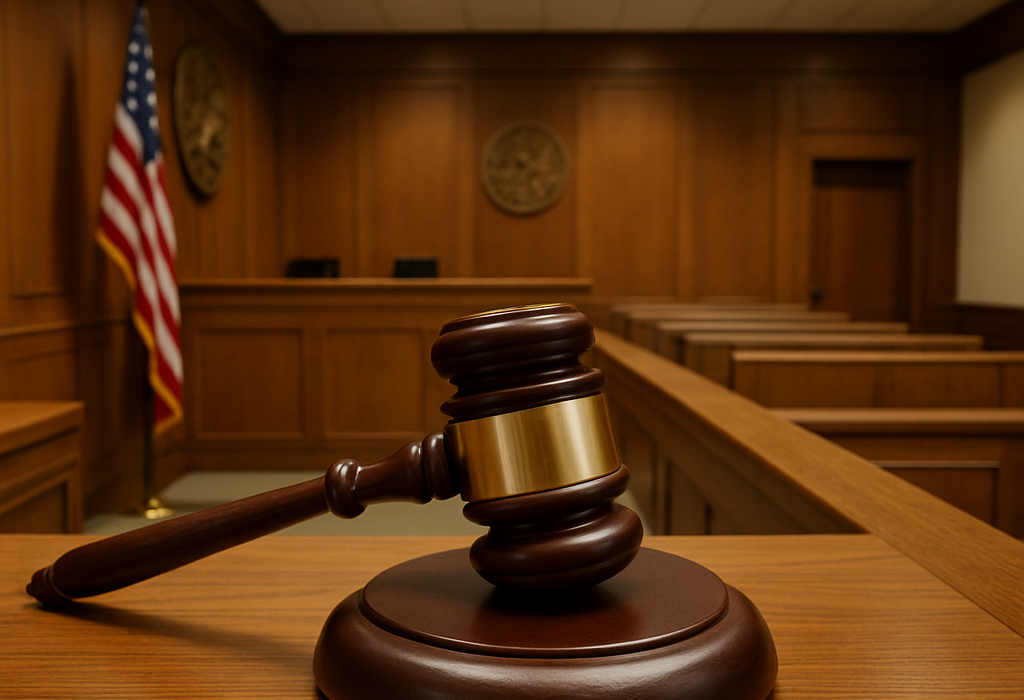
The man accused of assassinating conservative activist Charlie Kirk has made his first in-person court appearance, marking a new phase in one of the most politically charged criminal cases in recent U.S. history. The hearing in Provo, Utah, was less about the underlying facts of the killing and more about a fundamental tension: how to balance transparency and media access with a defendant’s right to a fair trial in an era of intense polarization and online outrage.
Tyler James Robinson, 22, is charged with aggravated murder and several related offenses in the September 10, 2025 shooting at Utah Valley University (UVU), where Kirk was speaking at a Turning Point USA event. Prosecutors say Robinson fired a single rifle round from a rooftop about 200 yards away, striking Kirk in the neck as he debated with students. Kirk, 31, a high-profile ally of former President Donald Trump and a central figure in the MAGA movement, later died in hospital.
Robinson faces seven criminal counts in Utah state court, including aggravated murder, felony discharge of a firearm causing serious bodily injury, obstruction of justice for allegedly disposing of evidence, witness tampering for allegedly asking his roommate to delete incriminating texts, and committing a violent offense in the presence of a child. Prosecutors have said they intend to seek the death penalty. Robinson has not yet entered a plea.
During his first in-person appearance on December 11, 2025, Robinson was brought into Fourth District Court in shackles but wore civilian attire—a light shirt and tie—after prior rulings by Judge Tony Graf allowing him to appear out of jail uniform in order to minimize prejudice with future jurors. Media pool cameras captured him occasionally smiling or speaking quietly with his attorneys as his parents and brother watched from the gallery.
Media Access vs. Fair Trial
The core of the December hearing centered on whether, and to what extent, cameras and live broadcasts will be allowed going forward. Robinson’s defense team argued that intense coverage has already generated “chaos” in the media ecosystem and that unrestrained filming—especially images of him in shackles—could bias the eventual jury pool. They sought tight limits or even a full camera ban.
Judge Graf has tried to chart a middle course. Earlier orders allow Robinson to wear street clothes but require physical restraints for security; at the same time, the court has prohibited filming or photographing those restraints to protect the presumption of innocence. When a livestream briefly showed his shackles, Graf temporarily halted the broadcast and repositioned a videographer.
Media organizations—including national outlets and local Utah press—have pushed back, seeking access to recordings, transcripts, and on-camera coverage. Their lawyers argue that this case, involving a political assassination at a public university, is precisely the kind of proceeding where public oversight is essential. A follow-up hearing is scheduled for December 29 to decide how far the court will go in restricting coverage.
In a notable twist, Erika Kirk, the victim’s widow and now head of Turning Point USA, has joined media advocates in supporting open cameras, saying that if her life has been scrutinized on camera, the courtroom should not be shielded from view. She has also stated publicly that she forgives Robinson while stressing her resolve to continue her late husband’s work. A judge has barred Robinson from contacting her.
Alleged Motive and Political Context
Court filings and public statements from Utah’s governor indicate that Robinson’s family recognized him from surveillance images, contacted authorities, and helped facilitate his surrender. According to officials, Robinson allegedly told a relative and his roommate he had planned the shooting for “over a week” and was motivated by a belief that Kirk represented “hatred.” These claims remain allegations and have not yet been tested at trial.
The killing of Charlie Kirk occurred against a backdrop of rising political violence in the U.S., including prior attacks on elected officials, government staff, and political figures from multiple parties and ideological camps. Analysts note that this high-profile assassination amplifies concerns about the normalization of violence as a form of political expression and the heightened risk around live political events, particularly on campuses.
Pros
From a systemic and societal perspective, there are a few potential positive elements in how the case is unfolding:
- Due process and security are being taken seriously. Robinson has court-appointed defense counsel, and the judge has explicitly framed orders—on clothing, restraints, and media access—in terms of protecting the presumption of innocence and ensuring a fair trial.
- Media and public scrutiny remain engaged. Rather than shutting the courtroom entirely, the judge has allowed some level of coverage and heard arguments from media lawyers, signaling that transparency concerns are on the table.
- Victim representation has formal standing. Designating Erika Kirk as the official victim representative ensures that the victim’s family has a recognized voice in proceedings, consistent with victims’ rights frameworks in many U.S. jurisdictions.
Cons
However, the case also highlights serious risks and challenges:
- Risk of pretrial prejudice. Extensive media coverage, viral clips of the attack, and social media narratives—some highly partisan—may make it more difficult to seat an impartial jury, particularly when the victim was a nationally known political figure.
- Politicization of a criminal proceeding. Because Kirk was closely associated with Trump and conservative politics, the case may be framed through partisan lenses rather than legal ones, potentially pressuring both prosecution and defense and complicating public understanding.
- Public trust and safety concerns. For many, the assassination reinforces fears that attending political events—even at universities—carries physical risk, which can chill civic participation and public discourse.
Future Projections
Short Term (Next 6–12 Months)
The immediate focus will remain on procedural battles: media access, discovery, scheduling, and venue questions. The May 2026 preliminary hearing will likely reveal more about the evidence, including ballistics, digital communications, and any alleged statements by Robinson to family or law enforcement. Expect continued debate over whether cameras help or harm fairness.
Medium Term (Through Trial Phase)
If prosecutors proceed with the death penalty, the case may become a major national flashpoint, intersecting with ongoing debates over capital punishment, political violence, and the role of rhetoric in motivating attacks. Defense strategy may focus on mental health, motive, or constitutional challenges around pretrial publicity.
Long Term (Beyond This Case)
Regardless of the verdict, this case is likely to influence:
- Courtroom transparency norms in high-profile political-violence cases, especially as courts confront the realities of livestreaming and viral social media clips.
- Security protocols at political and campus events, with organizers reassessing physical perimeter control, sniper risks, and threat monitoring.
- Political rhetoric and responsibility conversations, as leaders across the spectrum face pressure to lower the temperature and unequivocally condemn political violence against any target, including controversial figures.
For now, the legal process is in its early stages. Robinson remains presumed innocent, and many key questions—about his intent, state of mind, and the precise circumstances of the shooting—will be decided in court, not online. How the justice system handles this case will be a test of its ability to uphold both fair trial rights and public transparency in a deeply polarized era.
References & Further Reading
Reuters – Suspect in Charlie Kirk killing appears in court, judge mulls media access
https://www.reuters.com/legal/government/suspect-charlie-kirk-killing-makes-first-in-court-appearance-2025-12-11/
People – Tyler Robinson, Accused of Killing Charlie Kirk, Smiles in First In-Person Court Appearance
https://people.com/tyler-robinson-first-in-person-court-appearance-charlie-kirk-11816573
Wikipedia – Assassination of Charlie Kirk (background and legal proceedings)
https://en.wikipedia.org/wiki/Assassination_of_Charlie_Kirk
ABC7 / Local coverage – Charlie Kirk murder suspect makes first in-person court appearance
https://abc7chicago.com/charlie-kirk-murder-suspect-tyler-robinson-court-appearance/
Politico – Suspect in Charlie Kirk killing appears in court as judge weighs media limits
https://www.politico.com/news/2025/12/11/charlie-kirk-tyler-robinson-court-appearance-00688476
GV Wire / Reuters reprint – Suspect in Charlie Kirk Killing Makes First in-Court Appearance
https://gvwire.com/2025/12/11/suspect-in-charlie-kirk-killing-makes-first-in-court-appearance/


Leave feedback about this
You must be logged in to post a comment.