
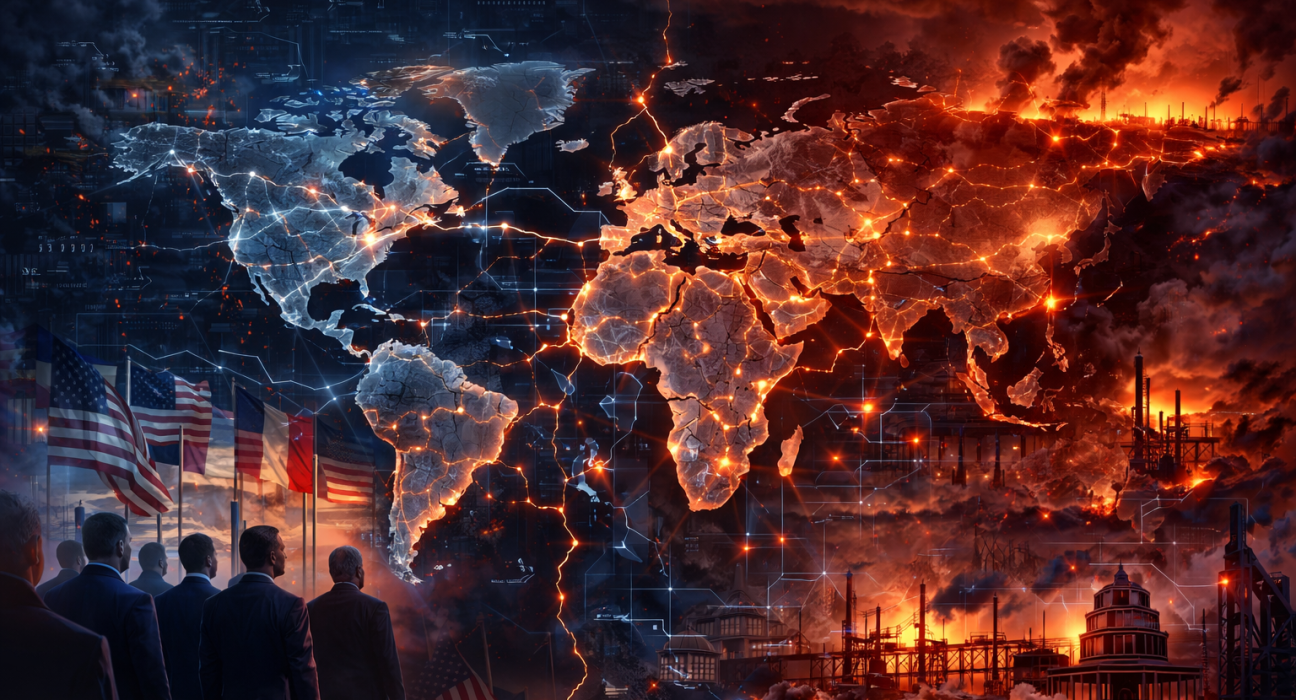
A recent opinion analysis by Carla Norrlöf, published via Project Syndicate, argues that the ongoing Iran war may be exposing deeper fractures within the United States’ global alliance system. While the article reflects an interpretive viewpoint rather than hard reporting, it contributes to a broader academic and policy discussion about whether U.S. global influence is weakening under current geopolitical conditions.
Core Argument: Alliance Network Under Pressure
The central thesis of Norrlöf’s analysis is that U.S. global power has historically depended not just on military strength, but on a complex network of alliances and partnerships. These alliances—spanning Europe, the Middle East, and Asia—have been a defining feature of U.S. influence since World War II.
However, the article suggests that the current Iran conflict is placing stress on that network, as some traditional allies appear reluctant to fully support U.S. military actions. According to the analysis, this hesitation could signal a shift in how allies view American leadership.
Norrlöf argues that U.S. hegemony is sustained through cooperation, not unilateral action, and that weakening alliance cohesion could reduce the country’s long-term global influence.
Historical Context: How U.S. Alliances Function
For decades, the United States has maintained a system of alliances designed to:
- Provide mutual defense (e.g., NATO)
- Support global trade and economic stability
- Coordinate diplomatic and military responses
- Maintain influence in key regions
Scholars of international relations often describe this as a form of “networked power”, where influence comes from interconnected relationships rather than direct control.
Research from policy institutions and academic sources supports this framework, noting that U.S. leadership has depended heavily on shared security commitments and institutional cooperation.
Impact of the Iran War on Alliances
The Iran conflict, which began in early 2026 following coordinated U.S.–Israeli strikes, has created a situation where allies are forced to evaluate their own strategic interests.
Recent developments suggest:
- Some European nations have expressed hesitation or opposition to military escalation
- Middle Eastern partners are balancing cooperation with concerns about regional stability
- Other global powers are observing the conflict while pursuing independent strategies
Norrlöf’s argument is that these responses indicate a loosening of alignment with U.S. policy, rather than automatic support.
Competing Interpretations
View 1: Evidence of Declining U.S. Influence
Supporters of Norrlöf’s perspective argue that:
- The U.S. alliance system is becoming less cohesive
- Partners are increasingly pursuing strategic autonomy
- The global order may be shifting toward a more multipolar system
In this view, the Iran war is not the cause of the shift, but a catalyst revealing existing tensions.
View 2: Temporary Strategic Divergence
Other analysts caution against interpreting current disagreements as long-term decline.
They argue that:
- Alliances often experience temporary disagreements during conflicts
- Many partners still rely heavily on U.S. military and economic support
- Strategic cooperation may continue even if public positions differ
From this perspective, the current tensions may reflect normal alliance dynamics rather than structural breakdown.
Broader Geopolitical Context
The debate over U.S. alliances is part of a larger conversation about the global balance of power.
Key trends include:
- The rise of China as a competing global power
- Increased regional influence of countries like India and Brazil
- Growing emphasis on regional alliances and economic blocs
- Shifts in energy markets and supply chains due to conflict
These developments have led many analysts to describe the current era as transitioning from unipolar (U.S.-dominated) to multipolar (shared influence).
Pros (Arguments Supporting the “Alliance Strain” Perspective)
• Highlights dependence on alliances: Emphasizes that U.S. power relies on cooperation, not just military strength
• Reflects observable tensions: Aligns with recent disagreements among Western allies over the Iran conflict
• Accounts for global shifts: Considers the rise of alternative power centers
• Encourages strategic reassessment: Promotes discussion about long-term foreign policy direction
Cons (Criticism and Limitations)
• Opinion-based analysis: The article reflects interpretation rather than empirical measurement
• Short-term vs long-term ambiguity: Current disagreements may not indicate lasting decline
• Underestimation of U.S. resilience: The U.S. still maintains significant military, economic, and institutional advantages
• Selective evidence risk: Focus on alliance tensions may overlook ongoing cooperation
Future Projections
1. Increased Strategic Autonomy Among Allies
Countries, particularly in Europe, may continue to pursue independent foreign policy decisions.
2. Evolution of Alliance Structures
Traditional alliances like NATO may adapt to new geopolitical realities rather than dissolve.
3. Continued U.S. Influence With Adjustments
The U.S. is likely to remain a major global power but may need to rely more on negotiation and coalition-building.
4. Multipolar World Development
Global influence may increasingly be shared among several major powers.
5. Ongoing Debate Over U.S. Leadership
Academic and policy discussions about American hegemony will likely intensify as global conditions evolve.
Conclusion
Carla Norrlöf’s analysis presents one perspective on how the Iran war may be affecting the United States’ global alliance network. While the argument suggests that alliance cohesion is weakening, the broader reality remains complex and contested.
The current situation reflects a key question in international relations: whether shifts in alliance behavior represent temporary adjustments or deeper structural change. As the conflict continues, the durability of U.S. alliances—and their role in global stability—will remain a central issue in geopolitical analysis.
References
Primary Source
- Project Syndicate – Carla Norrlöf on U.S. alliances and Iran war
https://www.project-syndicate.org/commentary/iran-war-american-alliance-network-beginning-to-crumble-by-carla-norrlof-2026-03


Leave feedback about this
You must be logged in to post a comment.