
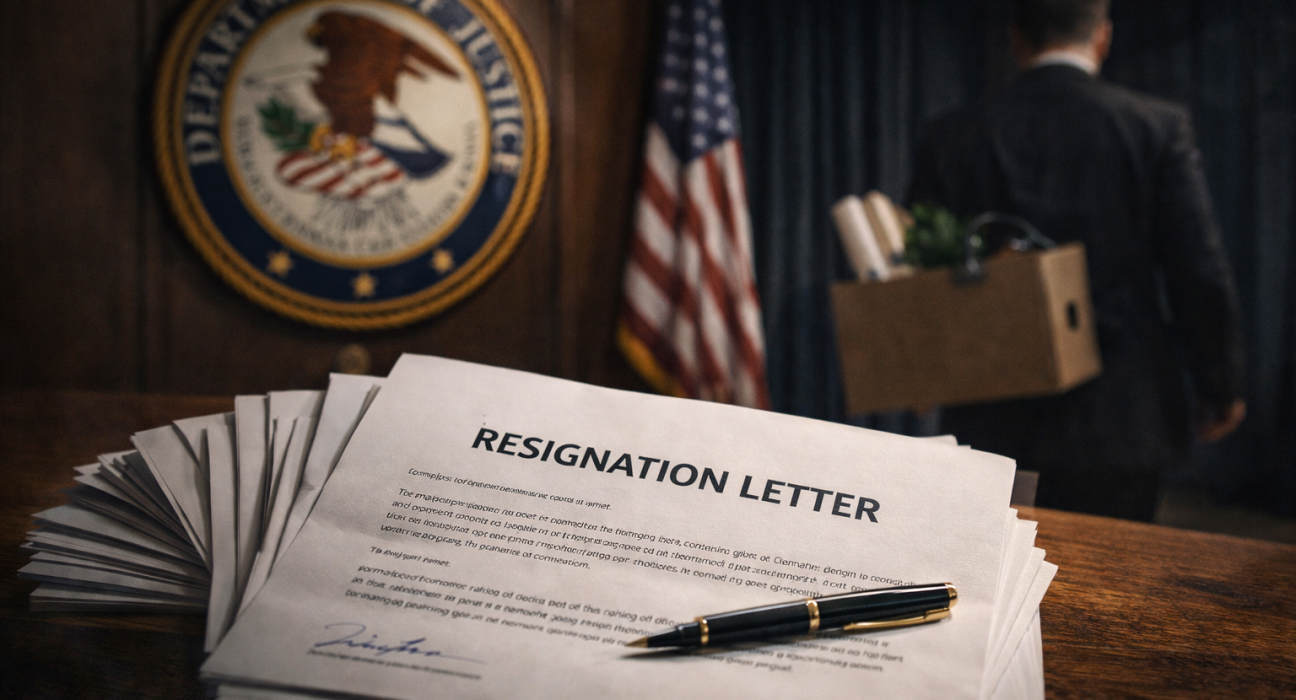
A wave of resignations by federal prosecutors has shaken the U.S. Justice Department amid controversy over the Trump administration’s handling of the federal investigation into the fatal shooting of Renee Nicole Good by an Immigration and Customs Enforcement (ICE) agent in Minneapolis. The decision not to pursue a civil rights inquiry and the suggestion that authorities focus on investigating Good’s widow prompted multiple senior prosecutors to step down in protest — highlighting deep internal dissent over policy, legal priorities, and prosecutorial independence.
The incident began on January 7, 2026, when Good, 37, was shot and killed by an ICE officer during a federal immigration enforcement operation in Minneapolis. Federal authorities have publicly defended the agent’s actions as self-defense, asserting that Good’s vehicle posed a threat; local officials and video evidence challenge that characterization, raising questions about whether force was justified. The Department of Justice (DOJ) opted not to launch a criminal civil rights investigation, a decision that marks a departure from past practice for officer-involved shootings.
Within days, at least six federal prosecutors in the U.S. Attorney’s Office in Minnesota announced resignations. Among them was First Assistant U.S. Attorney Joseph H. Thompson, widely respected for leading significant fraud prosecutions. These departures occurred amid tensions over DOJ leadership’s directives, including pressure to investigate Good’s widow and the refusal to include local and state authorities in the inquiry — a routine practice in many law enforcement shootings.
Similar resignations have also been reported in the DOJ’s Civil Rights Division, which traditionally handles high-profile use-of-force cases. Several senior attorneys in that division have given notice of their departures, reflecting broader dissatisfaction with the department’s refusal to engage in the Minnesota case and possible shifts in enforcement priorities under current leadership.
Why Prosecutors Are Resigning
Resignations stem from principled objections, perceived politicization, and legal disagreements over how the case has been handled:
- Ethical concerns: Prosecutors were reportedly disturbed that the DOJ appeared more inclined to pursue a narrow focus on Good’s widow than to scrutinize the use of lethal force by the ICE agent — a move they believed conflicted with their professional obligations and norms for civil rights enforcement.
- Exclusion of civil rights experts: Traditional practice in officer-involved shootings involves the Civil Rights Division early in the process. Here, division attorneys were reportedly sidelined despite repeated calls by career prosecutors to involve civil rights experts, contributing to frustration and departures.
- Blocked cooperation with state authorities: Prosecutors in Minnesota had been working with the Minnesota Bureau of Criminal Apprehension, but the FBI and federal leadership reportedly prohibited joint investigation, isolating federal prosecutors and undermining customary collaboration.
- Political influence concerns: Resignations also reflect broader anxiety among career attorneys about political pressure shaping prosecutorial decisions, especially when DOJ leadership is perceived to prioritize political objectives over impartial legal judgment.
National and Local Reactions
The resignations have inflamed debates across political and civic arenas:
- Local officials — including Minneapolis Mayor Jacob Frey — sharply criticized the federal response, rejecting claims that Good’s actions justified lethal force and demanding accountability and transparency. Frey called the federal framing of the incident misleading and urged ICE to withdraw from the city.
- Minnesota and national lawmakers — particularly Democrats — have expressed alarm that political considerations may be influencing DOJ decisions, warning that prosecutorial independence and public safety could be compromised.
- Federal leadership has maintained that the agent acted lawfully and that there’s currently no basis for a civil rights prosecution, a statement that contrasts sharply with how similar shootings were handled in prior administrations.
The resignations have also drawn attention to long-running debates about how law enforcement officers — especially federal agents — are held accountable, how civil rights laws are enforced, and how political dynamics intersect with legal processes. Some activists and legal experts argue the DOJ’s stance erodes public trust, while others caution that prosecutors must exercise sound judgment and adhere to existing legal standards for civil rights cases.
Pros and Cons
Pros (Policy and DOJ Leadership Perspective):
- Grounded in legal interpretation: DOJ officials assert that current information does not support opening a criminal civil rights case, which requires high evidentiary standards.
- Maintains prosecutorial discretion: The department’s autonomy in deciding where and how to pursue investigations reflects established prosecutorial authority.
- Avoids unnecessary legal action: If DOJ leaders believe evidence does not justify civil rights charges, refraining from prosecution could avoid misuse of legal resources.
Cons (Resigning Prosecutors and Critics):
- Perception of politicized justice: Critics argue that sidelining civil rights experts and pushing an investigation into the victim’s widow reflects political motives rather than legal necessities.
- Undermines accountability: Excluding specialized prosecutors from the investigation harms institutional expertise aimed at ensuring impartial review of officer-involved shootings.
- Public trust erosion: Lack of an independent, transparent civil rights investigation into a controversial shooting exacerbates distrust in government and law enforcement among communities and observers.
Security and Justice System Implications
The resignations and controversy have broader implications:
- Diminished prosecutorial capacity: Loss of experienced prosecutors can weaken federal law enforcement capacity not just for this case but for other complex investigations, including fraud and organized crime.
- Intergovernmental friction: Blocking state and local participation in policing incidents traditionally investigated jointly intensifies tensions between federal and local authorities, complicating community safety efforts.
- Precedent for future cases: How this situation is resolved could influence future decisions about civil rights enforcement, especially regarding federal agents’ use of force and the DOJ’s willingness to investigate them.
Future Projections
Short-Term:
- Resignations are likely to prompt congressional scrutiny and hearings on DOJ independence and prosecutorial decision-making.
- State officials may pursue independent investigations, civil lawsuits, or other legal challenges to the federal approach.
Medium-Term:
- Public confidence in federal civil rights enforcement may remain strained, especially if perceived inconsistency persists.
- Career prosecutors remaining at DOJ may face increased pressure balancing political directives against professional standards.
Long-Term:
- The case could inform legislative efforts to clarify norms for federal investigations of law enforcement shootings or protections for prosecutorial independence.
- It may influence future appointments and leadership choices within DOJ, particularly in divisions charged with civil rights enforcement.
References & Further Reading
Associated Press / WBALTV – DOJ declines civil rights probe into Minnesota ICE shooting, prompting resignations
https://www.wbaltv.com/article/doj-prosecutors-resign-minnesota-ice-shooting-investigation/69991561
AP News / Times Union – DOJ sees no basis for civil rights investigation into ICE shooting
https://www.timesunion.com/news/politics/article/justice-department-prosecutors-resign-amid-21293087.php
Forbes – Six prosecutors resign over DOJ directive to probe victim’s widow
https://www.forbes.com/sites/antoniopequenoiv/2026/01/13/six-minnesota-doj-prosecutors-resign-after-request-for-probe-into-renee-goods-widow/
PBS NewsHour – DOJ prosecutors resign in protest over handling of ICE shooting
https://www.pbs.org/newshour/show/doj-prosecutors-resign-in-protest-over-handling-of-ice-shooting-investigation
GV Wire – GOP fraud prosecutor resigns amid controversy
https://gvwire.com/2026/01/13/six-prosecutors-in-minnesota-quit-over-push-to-investigate-ice-shooting-victims-widow/
Guardian – DOJ attorneys resign amid political pressure controversy
https://www.theguardian.com/us-news/2026/jan/13/doj-attorneys-resign-minneapolis-ice-shooting?utm_source=chatgpt.com



Leave feedback about this
You must be logged in to post a comment.