
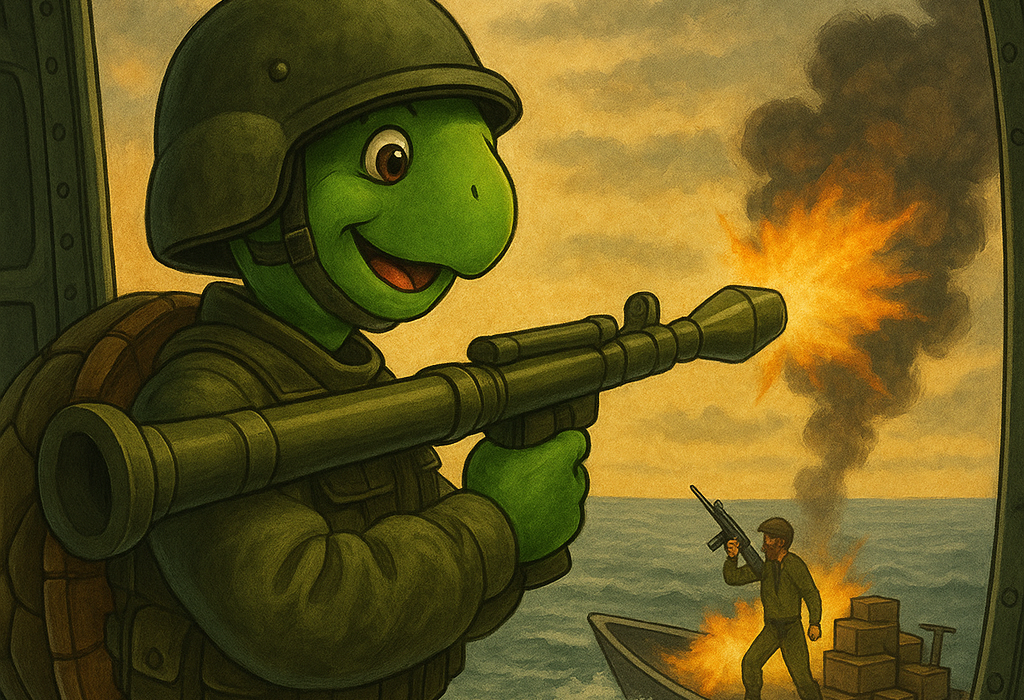
The controversy erupted after U.S. Defence Secretary Pete Hegseth posted an edited mock book cover featuring Franklin the Turtle — a cherished Canadian children’s character — firing a bazooka at alleged drug traffickers. The attempt at humor, tied to ongoing U.S. military operations in the Caribbean and eastern Pacific, set off a wave of criticism that quickly crossed borders.
1. Why Franklin? Why It Backfired
Franklin is a symbol of kindness, empathy, and childhood innocence across Canada and beyond. Transforming him into a weaponized mascot for a real-world military campaign clashed sharply with those values.
- The creators and publisher condemned the image, calling it violent, unauthorized, and incompatible with Franklin’s identity.
- The Canadian public reacted strongly, viewing it as disrespectful and alarming.
- Critics pointed out that Franklin is not American, emphasizing cultural overreach and misuse of intellectual property.
This cultural dimension amplified the backlash beyond typical political criticism.
2. Political Response: Bipartisan Alarm
Members of Congress, including Democrats on the Armed Services Committee, expressed serious concern:
- Senate Minority Leader Chuck Schumer called the post “ridiculous” and unbecoming of a top defense official.
- Rep. Adam Smith noted it trivialized military operations and undermined public trust.
- The broader message: the U.S. needs a defense secretary who recognizes the seriousness of his role.
The backlash reflects a growing discomfort in Washington with how the administration communicates wartime actions, especially those under scrutiny.
3. The Military Operation Behind the Meme
Hegseth’s post did not exist in a vacuum — it was tied to an increasingly controversial military campaign:
- The U.S. has been conducting lethal strikes on suspected drug-smuggling vessels.
- A major Washington Post investigation reported that Hegseth had verbally ordered a second strike on a boat — one allegedly intended to kill survivors.
- Critics, including Senator Tim Kaine, said if true, this would constitute a war crime.
- The White House later clarified that a second strike did occur, but claimed it was self-defense and legally justified.
The mock Franklin cover trivialized what many lawmakers consider a potentially grave legal issue.
4. Legal and Ethical Issues: War Crimes, Oversight, and Transparency
The core concerns:
A. War Crimes Implications
International law prohibits:
- Killing survivors who no longer pose a threat
- Executing individuals who are hors de combat (incapacitated)
If investigations confirm that survivors were intentionally targeted, it could trigger:
- ICC interest
- Congressional review
- Major legal consequences for the chain of command
B. Lack of Congressional Oversight
The administration has argued:
- It does not need congressional authorization for these lethal operations.
- It is not bound by the War Powers Resolution.
Inside Congress, both Democratic and Republican members have expressed alarm at this legal position.
C. The Role of Culture and Propaganda
Using a children’s character to frame real military actions raises questions about:
- Militarization of media
- Normalizing lethal force for public consumption
- The psychological impact on children and the public
5. International Cultural and Diplomatic Impact
Because Franklin is a globally beloved character — and deeply Canadian — the controversy:
- Strains cultural goodwill
- Sparked outrage in Canadian media and government circles
- Highlights differences in American and Canadian cultural approaches to military force
For many Canadians, the image felt like a distortion of a treasured national symbol.
6. Online Reaction and Public Humour
Social media users transformed the controversy into widespread satire:
- “Franklin Goes to the Hague”
- “Franklin and Pete Hegseth violate the Geneva Convention”
- “Franklin Targets Venezuela’s Oil”
- “Franklin on Trial at the ICC”
The humor underscores deeper discomfort about blending children’s culture with lethal operations.
Conclusion: More Than a Meme
What began as an attempt at political humor has escalated into:
- A cultural dispute involving a Canadian icon
- A political crisis questioning Hegseth’s judgment
- A legal controversy around the conduct of U.S. forces
- A policy debate over oversight and transparency in military operations
The Franklin image was not just inappropriate — it symbolized a broader clash between official power, public accountability, and the boundaries of political communication in an era of conflict and social media.



Leave feedback about this
You must be logged in to post a comment.