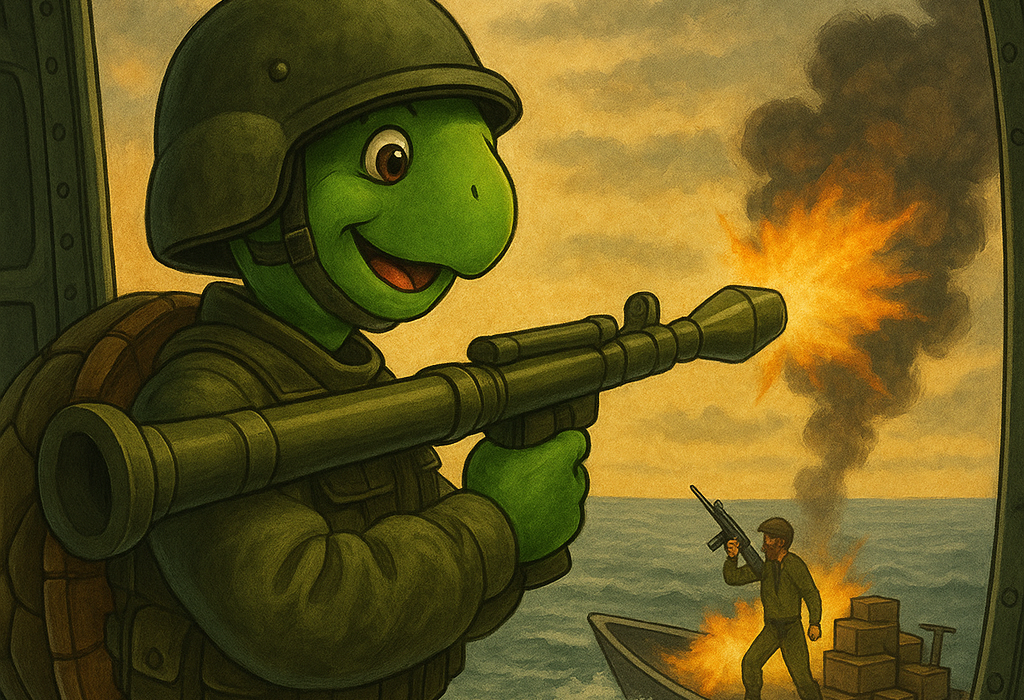
The controversy erupted after U.S. Defence Secretary Pete Hegseth posted an edited mock book cover featuring Franklin the Turtle — a cherished Canadian children’s character — firing a bazooka at alleged drug traffickers. The attempt at humor, tied to ongoing U.S. military operations in the Caribbean and eastern Pacific, set off a wave of criticism that quickly crossed borders.
1. Why Franklin? Why It Backfired
Franklin is a symbol of kindness, empathy, and childhood innocence across Canada and beyond. Transforming him into a weaponized mascot for a real-world military campaign clashed sharply with those values.
- The creators and publisher condemned the image, calling it violent, unauthorized, and incompatible with Franklin’s identity.
- The Canadian public reacted strongly, viewing it as disrespectful and alarming.
- Critics pointed out that Franklin is not American, emphasizing cultural overreach and misuse of intellectual property.
This cultural dimension amplified the backlash beyond typical political criticism.
2. Political Response: Bipartisan Alarm
Members of Congress, including Democrats on the Armed Services Committee, expressed serious concern:
- Senate Minority Leader Chuck Schumer called the post “ridiculous” and unbecoming of a top defense official.
- Rep. Adam Smith noted it trivialized military operations and undermined public trust.
- The broader message: the U.S. needs a defense secretary who recognizes the seriousness of his role.
The backlash reflects a growing discomfort in Washington with how the administration communicates wartime actions, especially those under scrutiny.
3. The Military Operation Behind the Meme
Hegseth’s post did not exist in a vacuum — it was tied to an increasingly controversial military campaign:
- The U.S. has been conducting lethal strikes on suspected drug-smuggling vessels.
- A major Washington Post investigation reported that Hegseth had verbally ordered a second strike on a boat — one allegedly intended to kill survivors.
- Critics, including Senator Tim Kaine, said if true, this would constitute a war crime.
- The White House later clarified that a second strike did occur, but claimed it was self-defense and legally justified.
The mock Franklin cover trivialized what many lawmakers consider a potentially grave legal issue.
4. Legal and Ethical Issues: War Crimes, Oversight, and Transparency
The core concerns:
A. War Crimes Implications
International law prohibits:
- Killing survivors who no longer pose a threat
- Executing individuals who are hors de combat (incapacitated)
If investigations confirm that survivors were intentionally targeted, it could trigger:
- ICC interest
- Congressional review
- Major legal consequences for the chain of command
B. Lack of Congressional Oversight
The administration has argued:
- It does not need congressional authorization for these lethal operations.
- It is not bound by the War Powers Resolution.
Inside Congress, both Democratic and Republican members have expressed alarm at this legal position.
C. The Role of Culture and Propaganda
Using a children’s character to frame real military actions raises questions about:
- Militarization of media
- Normalizing lethal force for public consumption
- The psychological impact on children and the public
5. International Cultural and Diplomatic Impact
Because Franklin is a globally beloved character — and deeply Canadian — the controversy:
- Strains cultural goodwill
- Sparked outrage in Canadian media and government circles
- Highlights differences in American and Canadian cultural approaches to military force
For many Canadians, the image felt like a distortion of a treasured national symbol.
6. Online Reaction and Public Humour
Social media users transformed the controversy into widespread satire:
- “Franklin Goes to the Hague”
- “Franklin and Pete Hegseth violate the Geneva Convention”
- “Franklin Targets Venezuela’s Oil”
- “Franklin on Trial at the ICC”
The humor underscores deeper discomfort about blending children’s culture with lethal operations.
Conclusion: More Than a Meme
What began as an attempt at political humor has escalated into:
- A cultural dispute involving a Canadian icon
- A political crisis questioning Hegseth’s judgment
- A legal controversy around the conduct of U.S. forces
- A policy debate over oversight and transparency in military operations
The Franklin image was not just inappropriate — it symbolized a broader clash between official power, public accountability, and the boundaries of political communication in an era of conflict and social media.