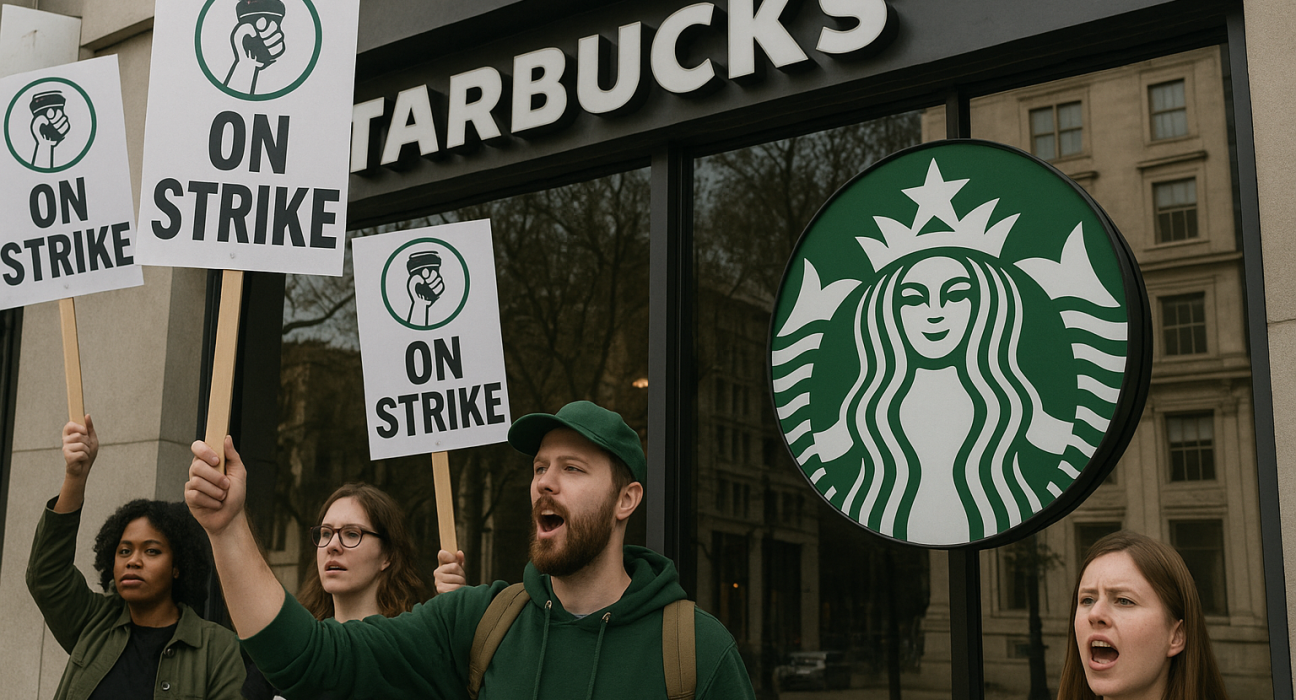
Starbucks will pay approximately $35 million to more than 15,000 New York City baristas after city investigators concluded the company violated the city’s Fair Workweek Law, which guarantees predictable schedules, access to additional hours, and protections against last-minute shift changes. The agreement, announced by the city’s Department of Consumer and Worker Protection, arrives at a moment of heightened labor turmoil as Starbucks baristas across the U.S. continue a widespread strike demanding better staffing, stable hours, and progress on contract negotiations.
The allegations at the heart of the case center around Starbucks’ long-standing practice of flexible but unpredictable scheduling, which its advocates say keeps operational costs low yet workers say creates severe instability. Many of the affected NYC workers will receive $50 per week for every week worked from July 2021 through July 2024. Starbucks must also pay $3.4 million in civil penalties and commit to full compliance with local scheduling laws going forward.
Workers, represented by Starbucks Workers United, have argued for years that “flexibility” in scheduling often meant chronic understaffing, erratic hours, and near-constant pressure to fill shifts on short notice. Many baristas say the unpredictable workweeks made it difficult to maintain childcare, attend school, or rely on income levels. Shift supervisors testifying at picket lines described online drink orders so backed-up and elaborate that the ticket length can exceed the cup itself — a symbol of how intense and unmanageable peak-hour staffing has become.
The settlement itself does not resolve the underlying labor conflict. Starbucks has roughly 550 unionized stores, but none have successfully negotiated a contract nearly four years after the first location in Buffalo voted to unionize. The company says it is “ready to negotiate when the union is ready to return to the table,” while worker organizers argue Starbucks deliberately delays negotiations to weaken momentum. The ongoing strike — which began in November and continues at dozens of stores — is an effort to force movement.
Political leaders have begun treating the strike as a national labor test case. New York City Mayor-elect Zohran Mamdani, U.S. Senator Bernie Sanders, and other local officials visited a Brooklyn picket line Monday, telling workers that their demands are “not about greed but about decency.” Their presence significantly elevated the stakes and visibility of the dispute, signaling the growing role of progressive lawmakers in labor activism.
From Starbucks’ perspective, the settlement reflects the complex logistics of managing one of the largest retail scheduling operations in the world. The company says more than 1 million people apply for Starbucks jobs each year, and it prides itself on providing above-market wages, healthcare, and tuition assistance — benefits uncommon across the broader retail sector. Company representatives point out that New York City’s scheduling rules are unusually intricate, and violations across hundreds of stores can occur unintentionally despite robust internal systems.
However, advocates argue that Starbucks’ difficulties are structural rather than accidental. As inflation-weary consumers question whether $7–$9 specialty beverages are worth the cost, Starbucks has launched store redesigns and operational changes that often intensify pressure on baristas. Workers say these redesigns prioritize efficiency and mobile orders but worsen labor shortages and burnout if staffing is not adjusted accordingly. Starbucks disputes this characterization and maintains that store operations are stable and improving.
The strike and settlement also sit against the backdrop of slowing sales growth for the chain. Starbucks recently reported its first same-store sales increase in nearly two years — a promising sign — but restructuring and operational costs eroded its quarterly profits. Investors have taken note, and the company is under pressure to balance worker satisfaction with financial performance. The ongoing labor conflict complicates those efforts, especially given how central the Starbucks brand is to the image of progressive corporate culture.
From a labor law perspective, the case reinforces the power of municipal-level protections like NYC’s Fair Workweek Law. The investigation, which expanded from a handful of complaints to hundreds of stores, demonstrates the ability of cities to enforce workplace standards even on global corporations. The settlement also guarantees reinstatement opportunities for workers recently laid off due to store closings — a notable concession that strengthens worker security.
Pros and cons emerge on both sides. Workers gain financial compensation and greater legal protections, and their strike has drawn national attention. Yet a prolonged conflict without a contract can fatigue workers and create uncertainty in unionized stores. For Starbucks, the settlement allows the company to put a major legal dispute behind it and signals willingness to comply with city law. At the same time, the company faces reputational risks, operational disruptions, and increased scrutiny from lawmakers who say Starbucks must honor union efforts more fully.
In the broader picture, the Starbucks case mirrors a national shift toward workers demanding predictable schedules, living wages, and representation — especially in service industries long associated with volatility. Whether Starbucks and the union eventually reach a contract will shape not only the future of the chain but the direction of the labor movement in America’s retail and food-service sectors.