
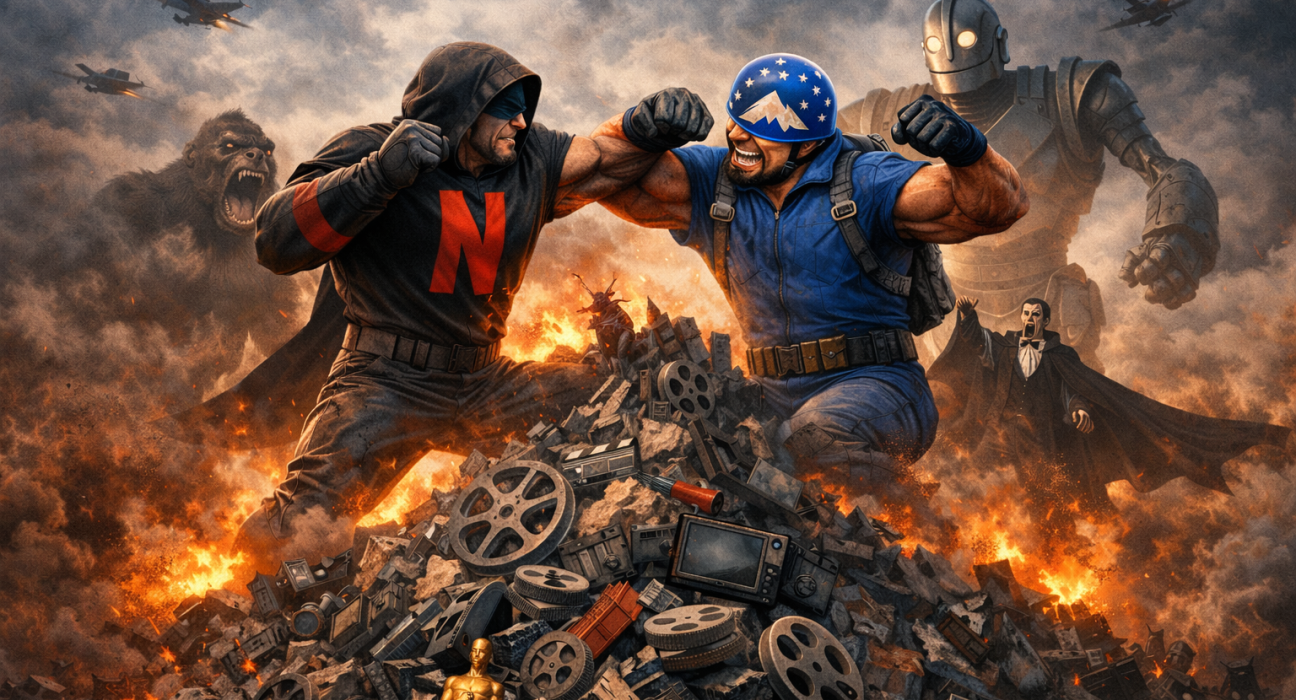
Warner Bros Discovery’s board has unanimously urged shareholders to reject Paramount Skydance’s $108.4bn takeover bid, choosing instead to proceed with a $72bn deal to sell its film and streaming businesses to Netflix. While Paramount argued its offer was financially superior, Warner Bros’ leadership cited significant regulatory, financial, and structural risks—many tied to the broader implications of media consolidation and data power.
At the center of those concerns is the Ellison family, which backs Paramount Skydance. Larry Ellison, founder of Oracle, is deeply invested not only in media but in cloud infrastructure, data centers, and enterprise data systems—raising alarms about how media ownership, data aggregation, and content control could converge.
Why the Paramount Skydance Offer Was Rejected
Regulatory and Monopoly Risk
Warner Bros’ board emphasized that Paramount’s bid posed substantial antitrust risk. Paramount already owns major broadcast and cable brands including CBS, MTV, and Showtime. Acquiring Warner Bros in its entirety would combine competing television networks, film studios, and streaming assets under one corporate umbrella.
Regulators in the U.S. and Europe are already scrutinizing consolidation in entertainment. A Paramount-Warner merger could significantly reduce consumer choice, limit competition for advertising dollars, and centralize decision-making over what content gets produced, distributed, and promoted.
Financial and Structural Uncertainty
The board also questioned the clarity of funding behind the Paramount bid, pushing back on claims that the Ellison family was providing direct financial backing. By contrast, Netflix’s offer was described as cleaner, better financed, and less exposed to regulatory delays.
Netflix’s bid is narrower: it targets Warner Bros’ movie studio and HBO streaming service, leaving legacy TV networks like CNN and TNT to be spun off separately—reducing overlap and antitrust exposure.
Media Monopoly Concerns and the Ellison Factor
Critics argue that a Paramount-Warner merger backed by the Ellison family could have created a new kind of media monopoly, blending content ownership with massive data infrastructure.
Larry Ellison’s Oracle dominates enterprise databases, cloud services, and data analytics. If a media empire controlling film studios, TV networks, and streaming platforms were aligned with one of the world’s most powerful data companies, it could reshape how content is produced and monetized.
Potential outcomes critics flagged include:
- Data-driven content prioritization, where algorithms optimized for engagement and advertising override creative risk or cultural value.
- Increased surveillance-style analytics, tracking viewer behavior across platforms tied into broader data ecosystems.
- Reduced editorial independence, as business intelligence and political relationships influence programming decisions.
Former regulators and labor groups warned this convergence could fundamentally change the media landscape, shifting power away from creators and audiences toward data-centric corporate strategy.
How Media Content Might Have Changed
Under a fully consolidated Paramount-Warner structure, industry observers feared:
- Fewer original films and shows, as overlapping studios and networks are streamlined.
- Greater reliance on franchise content (Harry Potter, MonsterVerse, legacy TV brands) at the expense of mid-budget, experimental, or socially challenging projects.
- Algorithm-first storytelling, where content is designed to maximize retention rather than artistic or journalistic merit.
The Writers Guild of America publicly opposed such mergers, warning they often lead to job cuts, lower wages, and reduced creative diversity.
Impact on Actors, Creators, and Theaters
Actors and Creative Labor
Actors, writers, and directors could face fewer buyers for their work as ownership consolidates. With fewer studios competing for talent, negotiating power shifts toward corporate platforms, potentially driving down compensation and residuals—especially in streaming, where transparency is already limited.
Movie Theaters
A streaming-centric owner controlling content libraries could deprioritize theatrical releases in favor of direct-to-streaming premieres. Independent theaters and smaller chains would be particularly vulnerable if blockbuster content is withheld or shortened in theatrical windows.
Theaters rely on exclusive access and release timing. Consolidation risks turning cinemas into secondary outlets rather than central pillars of film culture.
Why Netflix Was Seen as the “Safer” Option
Netflix’s deal avoids acquiring Warner Bros’ television networks, limiting consolidation concerns. It secures access to Warner Bros’ iconic library and HBO brand while allowing those assets to operate within a platform already built for global distribution.
From Warner Bros’ perspective, Netflix offers scale without total industry absorption—though critics still worry about streaming dominance overall.
The Bigger Picture
The rejection of Paramount Skydance’s bid reflects growing unease about who controls culture in the digital age. As entertainment merges with data infrastructure and cloud computing, decisions about ownership are no longer just financial—they shape speech, creativity, labor, and democracy itself.
The takeover battle may not be over, but Warner Bros’ decision signals that bigger is not always better, especially when media power, data power, and political influence begin to intersect.
Sources
- Associated Press (AP) – Warner Bros Discovery sale process and climate of media consolidation
https://apnews.com - BBC News – Warner Bros Discovery, Netflix agreement, and Paramount Skydance bid coverage
https://www.bbc.com/news - Warner Bros Discovery – SEC filings and shareholder communications
https://www.sec.gov/edgar/browse/?CIK=1437107 - Netflix – Investor statements and merger-related disclosures
https://ir.netflix.net - Writers Guild of America (East & West) – Statements opposing media consolidation
https://www.wga.org - U.S. Department of Justice, Antitrust Division – Media merger and competition guidance
https://www.justice.gov/atr - Federal Trade Commission (FTC) – Media ownership and antitrust policy resources
https://www.ftc.gov - European Commission – Competition policy and media market consolidation
https://competition-policy.ec.europa.eu - Oracle Corporation – Public disclosures on cloud infrastructure, data centers, and enterprise systems
https://www.oracle.com - Congressional Research Service – Media consolidation and antitrust analysis
https://crsreports.congress.gov - Columbia Journalism Review – Analysis of media consolidation and newsroom impact
https://www.cjr.org - Variety – Industry reporting on Hollywood mergers and streaming economics
https://variety.com - The Hollywood Reporter – Coverage of studio consolidation and labor impacts
https://www.hollywoodreporter.com





Leave feedback about this
You must be logged in to post a comment.