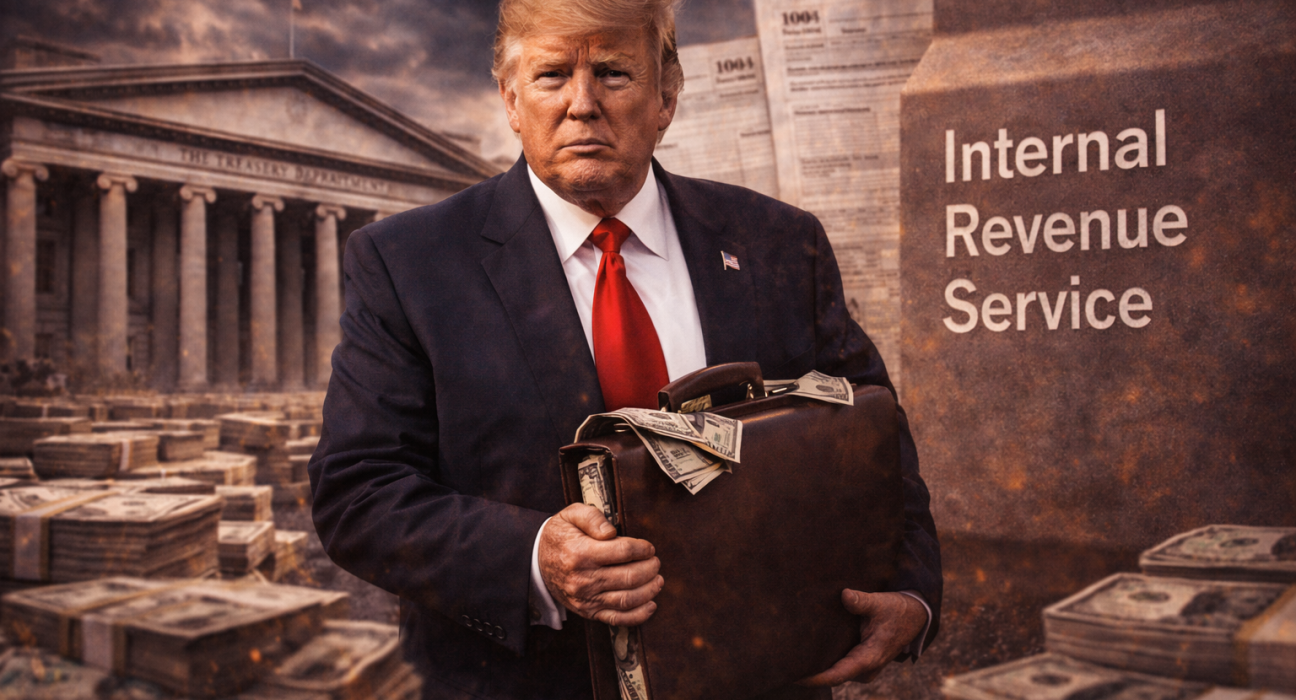
Former President Donald Trump has filed a $10 billion lawsuit against the Internal Revenue Service (IRS) and the U.S. Treasury Department, alleging that his confidential tax information was unlawfully disclosed. The case revives long-running debates about taxpayer privacy, executive authority, and whether a president can shield wrongdoing while in office — and what legal exposure may remain afterward.
What Was Allegedly Leaked
According to court filings and reporting, the lawsuit centers on the unauthorized disclosure of Trump’s federal tax return information by an IRS contractor. Prosecutors previously charged Charles Littlejohn, a former IRS consultant, who pleaded guilty in 2023 to leaking tax data of high-profile individuals, including Trump and other wealthy Americans, to news organizations.
The leaked materials reportedly included:
- Federal tax returns and associated schedules
- Income, deductions, and business information
- Data spanning multiple tax years
U.S. law (26 U.S.C. § 6103) strictly protects tax return information. Even disclosure without malicious intent can constitute a felony. Trump’s lawsuit argues that the government failed to safeguard his data and is liable for damages resulting from the breach.
The Treasury Department has acknowledged the seriousness of the breach, while emphasizing that the disclosures were carried out by an individual acting outside the scope of lawful authority.
Why Trump Is Suing — and What He’s Seeking
Trump’s complaint seeks $10 billion in damages, asserting that:
- The IRS and Treasury had a duty of care to protect his information.
- Systemic failures enabled repeated leaks.
- The disclosures caused reputational harm, legal costs, and emotional distress.
The size of the claim reflects both statutory penalties and punitive damages Trump’s lawyers say are warranted due to the scale and sensitivity of the disclosures. The government is expected to contest both liability and the damages amount.
Is Executive Power Being Used to Protect Illegal Activity?
A key public question is whether Trump is using (or used) executive authority to shield illegal conduct. Legally, this requires careful distinction:
- While in office, a president has broad discretion over executive agencies, but cannot lawfully authorize crimes, including the release of protected tax information.
- The alleged leak occurred via a contractor, not by presidential directive.
- The Justice Department prosecuted the leaker, which undercuts claims of an official cover-up.
Trump’s lawsuit does not allege that he directed or condoned the leak; rather, it claims the government failed in its duty to protect confidential records. From a legal standpoint, pursuing civil damages is not evidence of using executive power to conceal wrongdoing. It is a conventional remedy for alleged statutory violations.
That said, critics argue that presidential rhetoric and pressure on institutions can influence enforcement priorities. Supporters counter that the prosecution of the leaker demonstrates institutional independence.
Could Trump Be Held Responsible After Leaving Office?
Another recurring question is whether a former president can be held legally responsible for illegal acts committed during a presidency. The answer is nuanced:
Criminal Liability
- No blanket immunity exists for former presidents.
- Courts have long held that presidents are not above the law.
- Immunity may apply to certain official acts, but not to personal conduct or crimes outside constitutional authority.
Civil Liability
- Former presidents can be sued for actions taken outside official duties.
- Even for official acts, immunity is not absolute and can be litigated.
Practical Constraints
- Proving intent, causation, and jurisdiction can be difficult.
- Political considerations and prosecutorial discretion often influence timing and scope.
Importantly, this lawsuit does not assert criminal conduct by Trump; it alleges harm caused by a government breach of privacy. Whether Trump could face liability for unrelated conduct depends on facts, evidence, and legal standards specific to each case.
What This Case Means for Privacy and Government Accountability
Beyond Trump personally, the lawsuit raises broader issues:
- Taxpayer privacy: The breach exposed vulnerabilities in how sensitive data is accessed by contractors.
- Institutional safeguards: Agencies may face pressure to tighten controls, audits, and contractor oversight.
- Precedent: Large damages claims could influence how courts assess government liability for data breaches.
Congress and the Treasury have already signaled interest in reforms to contractor access and monitoring.
Pros and Cons of the Lawsuit
Pros
- Reinforces the sanctity of taxpayer privacy.
- Holds institutions accountable for security failures.
- May lead to stronger data protection reforms.
Cons
- High damages claim may face skepticism.
- Risks politicizing data-security enforcement.
- Could chill legitimate whistleblowing if boundaries are not clearly defined.
Conclusion
Trump’s $10 billion lawsuit focuses on a concrete legal issue: the unlawful disclosure of protected tax information. While it inevitably intersects with political debates about power and accountability, the case itself does not establish that executive authority was used to conceal illegal activity. Nor does it determine future liability for unrelated conduct.
Ultimately, the courts will decide whether the government bears civil responsibility for the breach and what remedies, if any, are appropriate. The outcome could have lasting implications for how the federal government protects sensitive data — and how former presidents seek redress when those protections fail.