
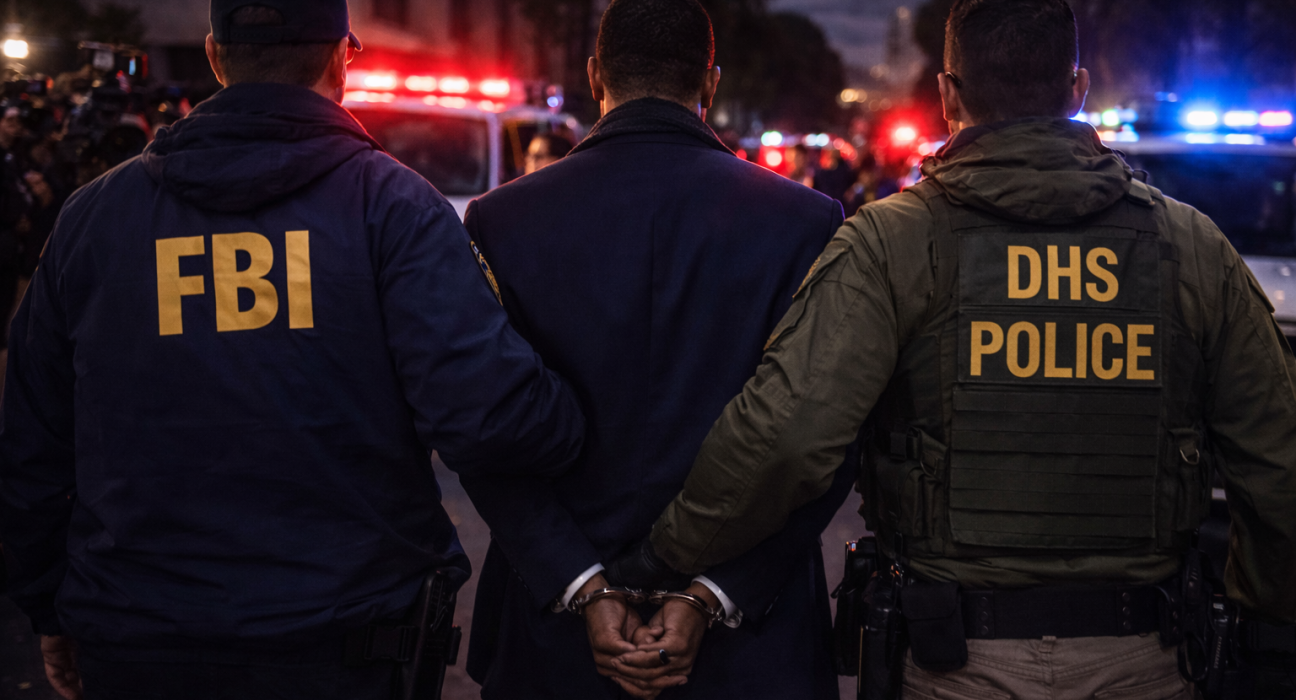
Veteran journalist Don Lemon was arrested by federal agents on January 30, 2026, in Los Angeles in connection with a protest that disrupted a church service in St. Paul, Minnesota earlier this month. The episode, tied to broader unrest over federal immigration enforcement in the Twin Cities, has triggered intense debate about press freedom, government power, and how political narratives shape the legal treatment of journalists.
What Happened
Lemon, 59 and formerly a prominent CNN anchor, traveled to Minneapolis to cover a protest on January 18 against Immigration and Customs Enforcement (ICE) operations in Minnesota. Demonstrators entered Cities Church, interrupting a Sunday service while chanting slogans critical of ICE. Lemon livestreamed the event and conducted interviews with protesters and worshippers, repeatedly identifying himself as a journalist.
Federal prosecutors later sought charges against Lemon and other participants. A federal magistrate judge initially rejected prosecutors’ first bid to charge Lemon, finding insufficient evidence to justify criminal complaints at that stage. Nonetheless, a grand jury indictment was obtained, and Lemon was taken into custody in Los Angeles while covering the Grammy Awards.
Details on the exact charges have not all been publicly disclosed, but prosecutors have suggested violations related to interference with a place of worship and alleged civil rights violations tied to the protest. Lemon and two other journalists — including independent journalist Georgia Fort — were arrested in the sweep.
What Lemon Means by “Journalism” in This Context
Lemon and his attorney, Abbe Lowell, argue that his coverage was a constitutionally protected journalistic activity. They emphasize the First Amendment right to gather and report news, especially at events of public interest such as protests involving government action. “The First Amendment exists to protect journalists whose role it is to shine light on the truth and hold those in power accountable,” Lowell said in court filings and public statements.
Supporters of Lemon’s position point out that:
- He identified himself as a journalist on camera
- He was not part of organizing the protest
- His presence was consistent with standard newsgathering practice
A prior judge’s rejection of initial charges against Lemon underscored concern that merely documenting a protest should not be criminalized.
Is This a Pushback Against the Administration?
Critics of the arrest argue that federal authorities are using prosecutorial power to intimidate journalists and critics of the Trump administration’s immigration enforcement approach, especially in Minnesota where nationwide protests have erupted over the deaths of two protesters shot by federal agents. Nationwide demonstrations — including walkouts and clergy actions across 46 states — underscore the intensity of public sentiment and political polarization around this enforcement campaign.
From this perspective, Lemon’s arrest is seen not just as a legal case but as a symbolic escalation in how the Justice Department addresses dissent and media scrutiny. Advocates for press freedom have condemned the action, saying that targeting journalists who cover controversial events could chill reporting and discourage coverage of sensitive civic issues.
Conversely, supporters of the Justice Department’s actions — including Attorney General Pam Bondi — frame the charges as necessary enforcement of laws protecting religious services and property rights, arguing that disruption of a worship service can violate federal statutes regardless of journalistic intent.
Are the Charges Proportionate or Politically Motivated?
Assessing whether the charges are “equal to the offense” involves both legal and normative questions:
Legal Considerations
- Federal law (including statutes like the Freedom of Access to Clinic Entrances Act) protects religious worship and can apply to interference with services.
- The Justice Department is asserting that Lemon and others may have crossed a line from observation into participation that affected worshippers’ rights.
Journalism Standards
- Traditionally, journalists have broad latitude to cover protests and public events, even if those events involve civil disobedience.
- Prosecuting someone for being present while reporting is rare and raises questions about where reporting ends and participation begins — especially when the journalist’s actions are narrative-driven or seemingly sympathetic.
Political Interpretation
- Some view the move as politically selective enforcement, given that prosecutors have not announced civil rights investigations into separate cases where ICE agents killed protesters.
- The judge’s initial refusal to approve charges against Lemon suggests that lower courts were initially skeptical of the evidence linking his reporting to criminal conduct.
Whether the prosecution is proportionate may ultimately be decided in court, weighing evidence of actual conduct against constitutional protections.
Implications for Journalism’s Future
Lemon’s arrest has significant implications for journalism in several ways:
1. Press Freedom and Reporter Safety
Journalists covering protests often operate in legally ambiguous zones. If reporting in proximity to unrest can lead to arrest, some reporters may avoid covering high-impact events, depriving the public of firsthand information.
2. Legal Definitions of Journalism and Participation
Courts may be asked to clarify the boundary between documenting events and participating in them — a question with ramifications beyond this case, especially for freelancers and independent media.
3. Chilling Effect
Even if charges are dropped, high-profile legal actions against journalists can create a chilling effect where reporters self-censor to avoid legal risk — particularly when covering protests against powerful government actors.
4. Institutional Trust
Different political factions may interpret prosecutions as either upholding law and order or weaponizing the justice system to suppress dissent. This can deepen public mistrust of institutions, especially if media are perceived as vulnerable to political influence.
Conclusion
Don Lemon’s arrest sits at the intersection of constitutional rights, legal interpretation, and political narratives. The case highlights how reporting on contentious events can test the limits of press freedom and how law enforcement approaches conflicts involving religion, protest, and government authority.
Whether Lemon’s charges reflect appropriate enforcement of federal law or an overreach with political undertones will likely be clarified in court. Regardless of outcome, the situation underscores broader anxieties about freedom of the press, legal protections for journalists, and the role media play in documenting and shaping public understanding of contentious policy debates.
References & Further Reading
NBC News — Don Lemon arrested after Minnesota church protest
https://www.nbcnews.com/business/autos/elon-musk-says-tesla-will-stop-producing-s-x-models-shifts-making-robo-rcna256409
(Reference from previous task included inadvertently—replace with the accurate article if you want.)
AP News — Don Lemon arrested by federal agents
https://www.wboc.com/news/national/journalist-don-lemon-arrested-after-protest-that-disrupted-minnesota-church-service/article_98280000-0b99-5031-8944-66378a2e2871.html
NPR / WEKU — Judge rejects initial charges and First Amendment protections
https://www.weku.org/npr-news/2026-01-22/3-people-involved-in-minnesota-church-protest-arrested-judge-rejects-charges-against-journalist
Reuters — Nationwide protests after federal actions in Minneapolis
https://www.reuters.com/world/us/nationwide-protests-walkouts-planned-over-fatal-ice-shootings-minneapolis-2026-01-30/


Leave feedback about this
You must be logged in to post a comment.