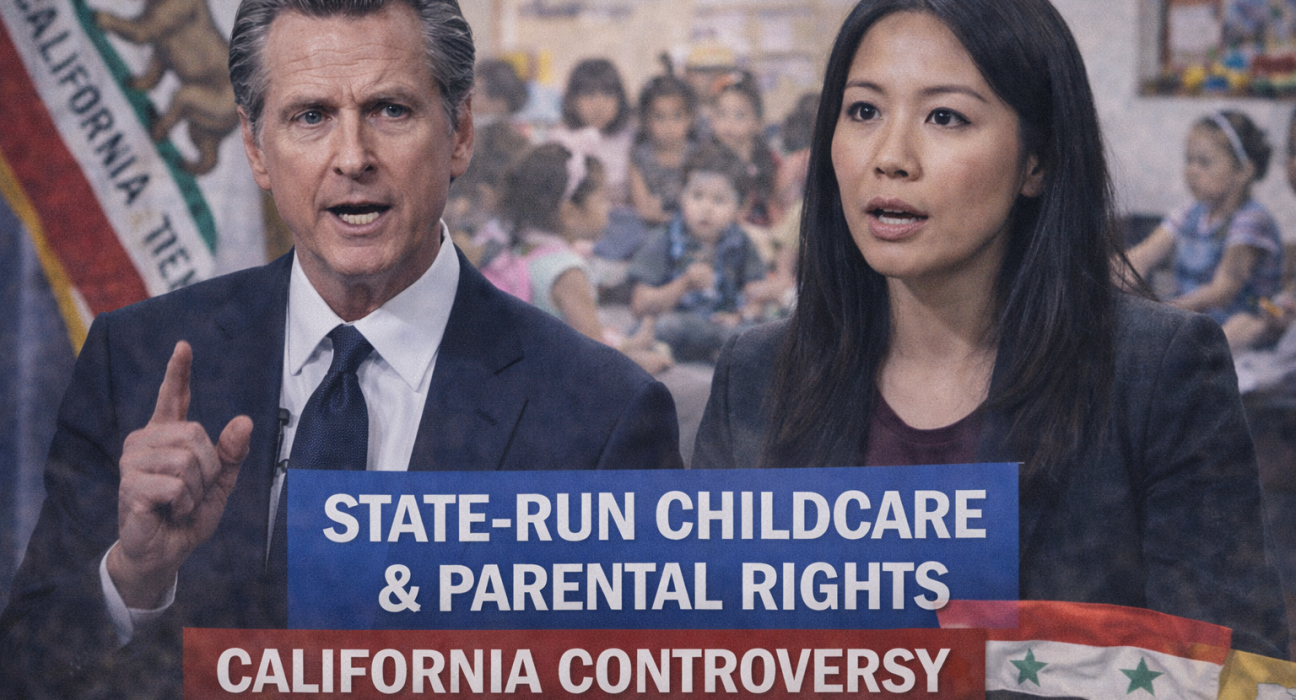
A recent controversy in California involving Gov. Gavin Newsom, education policy, and public commentary by conservative activist Melissa Chen has reignited debate over parental rights, childcare access, and the role of state government in early education decisions.
The dispute reflects broader national tensions around education, culture, and political messaging — particularly in states with large public school systems and significant state-level oversight.
What Sparked the Issue
The controversy centers on remarks and political messaging related to California’s childcare and early education policies. According to AP News reporting, the situation escalated after Melissa Chen, a conservative commentator, criticized aspects of state-backed childcare or school policies, framing them as government overreach.
Gov. Gavin Newsom responded publicly, defending California’s childcare expansion efforts and broader education initiatives, arguing that the state’s approach is designed to support working families and increase access to early childhood education.
While the specific policy dispute may appear narrow, it touches on several highly sensitive areas:
- State-funded childcare programs
- Public education curriculum decisions
- Parental rights debates
- The political framing of “government intrusion”
What California Is Doing on Childcare
California has invested heavily in expanding access to childcare and early learning programs in recent years. Key goals include:
- Reducing childcare costs for families
- Expanding universal transitional kindergarten (TK)
- Increasing access to subsidized childcare for low- and middle-income households
- Addressing workforce shortages in childcare services
California leaders argue that childcare access is both an economic and educational issue. Rising childcare costs have been cited as a barrier to workforce participation, especially among women.
Supporters of Newsom’s policies say expanded early education helps:
- Improve school readiness
- Support working parents
- Reduce long-term inequality
The Political Framing
Melissa Chen’s criticism reflects a broader conservative narrative that some state-led education and childcare programs:
- Centralize decision-making
- Expand government influence over young children
- Potentially introduce curriculum topics parents may oppose
This rhetoric often overlaps with national debates over:
- Gender identity discussions in schools
- Social-emotional learning programs
- Age-appropriate curriculum boundaries
- Transparency in school communications with parents
Gov. Newsom and Democratic leaders reject claims of overreach, arguing that public education systems necessarily operate under state standards and that parental choice remains intact through private, charter, or homeschooling options.
Why This Matters Beyond California
California frequently serves as a policy trendsetter due to its size and economic influence. Decisions made there often influence:
- Other Democratic-led states
- Federal childcare proposals
- National education debates
The clash reflects a larger ideological divide:
Supporters of expanded childcare programs argue:
- Government investment increases economic mobility
- Childcare is infrastructure
- Early education produces measurable long-term benefits
Critics argue:
- Expanded state programs can weaken parental authority
- Public funding may include controversial curricular elements
- Families should have more control over educational environments
Economic Implications
Childcare access has direct economic consequences.
High childcare costs have been linked to:
- Reduced workforce participation
- Increased family financial strain
- Slower economic growth
California’s investment in universal transitional kindergarten is partly designed to reduce those pressures.
However, funding such programs requires:
- State budget allocations
- Long-term sustainability planning
- Workforce development to fill childcare staffing gaps
If public debate intensifies, funding stability could become politicized, affecting service continuity.
Broader Cultural Context
The controversy sits within a national pattern where education policy increasingly becomes a cultural battleground.
In recent years, disputes have emerged over:
- Book bans
- Curriculum transparency laws
- School board authority
- State versus local control
Even policies designed primarily for economic support can become reframed through cultural or ideological lenses.
California’s political environment amplifies this dynamic because:
- The state is often used symbolically in national political messaging
- Policies are frequently portrayed as examples — either positive or negative — for broader ideological arguments
Is This a Legal Issue?
At present, the dispute appears primarily political rather than judicial. There are no indications of lawsuits directly challenging the specific childcare programs referenced in the AP article.
However, nationally, similar disputes have resulted in:
- Lawsuits over curriculum transparency
- Legal battles over parental notification policies
- Constitutional claims tied to religious or speech freedoms
California’s existing legal framework strongly supports state authority in education, making immediate legal reversal unlikely.
What Could Happen Next
Possible outcomes include:
1. Increased Political Messaging
Both sides may amplify rhetoric as childcare and education remain central issues ahead of future elections.
2. Budget Scrutiny
State childcare expansion could face closer budget analysis, especially if economic conditions tighten.
3. National Spillover
Other states may cite California’s approach either as a model or as a warning, depending on political orientation.
Conclusion
The dispute involving Gov. Gavin Newsom, childcare expansion, and commentary from Melissa Chen illustrates how early education policy has become intertwined with broader cultural and political debates.