
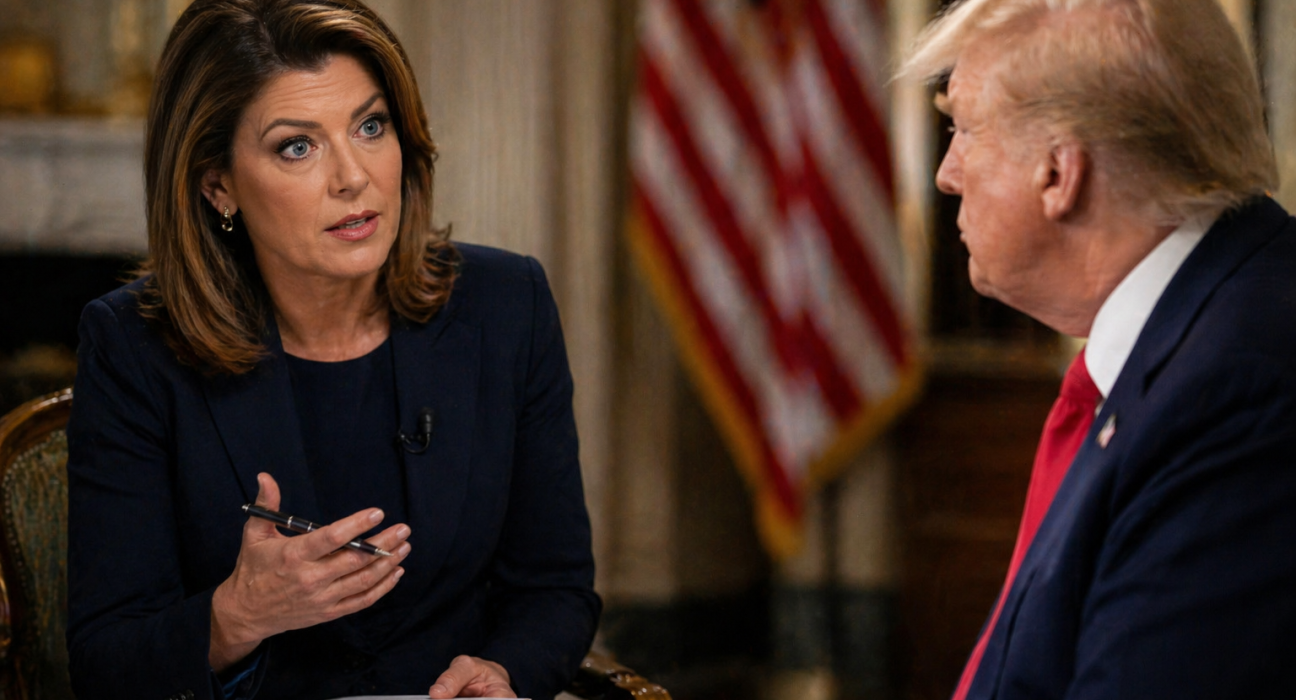
A recent on-air exchange between Donald Trump and Norah O’Donnell, reported by The Daily Beast, underscores ongoing tensions between political leadership and the media—particularly in moments tied to national security and public safety.
The exchange, which took place in the context of coverage involving a gunman’s manifesto, reflects broader debates about journalistic responsibility, political messaging, and the role of media in shaping public understanding of sensitive events.
What Happened in the Exchange
According to reporting, Norah O’Donnell questioned Trump during an interview about aspects of a gunman’s manifesto and how such information should be addressed publicly.
Key elements of the interaction include:
- O’Donnell referencing the existence or content of the manifesto
- Trump responding critically to the line of questioning
- A tense back-and-forth regarding what should or should not be emphasized in coverage
The exchange reflects a recurring dynamic in political-media interactions, where journalists press for detail and accountability, while public officials may challenge framing or interpretation.
Why Manifestos Are Controversial in Coverage
The discussion centers on a longstanding media debate: how to handle information left behind by perpetrators of violence.
Key considerations include:
1. Informing the Public
Journalists may argue that referencing a manifesto helps provide context about motivations or ideology.
2. Risk of Amplification
Critics warn that publicizing such documents can:
- Spread harmful ideas
- Give attention to perpetrators
- Encourage copycat incidents
3. Editorial Judgment
Media organizations often balance:
- Transparency
- Public safety concerns
- Ethical guidelines
Different outlets may approach this issue in different ways.
Political Perspective on Media Coverage
Public officials, including Trump, often express concerns about how events are framed in the media.
Common arguments include:
- Coverage may focus too heavily on perpetrators rather than victims
- Media framing can influence public perception
- Certain narratives may be seen as politicized
In this case, Trump’s response appears to reflect concern about how the issue was presented and interpreted.
Broader Context: Media–Government Tensions
The exchange fits into a larger pattern of tension between political leaders and the press.
1. Accountability vs Messaging
Journalists aim to ask challenging questions, while leaders seek to control messaging.
2. Trust in Media
Public trust in media institutions varies, influencing how such exchanges are perceived.
3. Role of Interviews
High-profile interviews serve as key moments where:
- Policy positions are clarified
- Public narratives are shaped
- Conflicts between perspectives become visible
Coverage of Violence and Ethics
The incident also connects to broader discussions about how media covers violent events.
Guidelines often include:
- Avoiding unnecessary detail about perpetrators
- Focusing on victims and community impact
- Providing context without amplifying harmful content
However, these guidelines are not uniform, leading to differences in coverage approaches.
Competing Interpretations
View 1: Necessary Journalistic Inquiry
Supporters of O’Donnell’s approach argue:
- Journalists have a duty to ask difficult questions
- Referencing available information can provide context
- Transparency supports informed public discussion
View 2: Risky or Misleading Framing
Supporters of Trump’s response argue:
- Highlighting manifestos may give undue attention to perpetrators
- Media framing can influence public perception in unintended ways
- Sensitivity is required when discussing violent incidents
Pros (Supportive Perspectives on Media Inquiry)
• Accountability: Journalists hold public officials responsible
• Transparency: Providing information helps inform the public
• Contextual understanding: Discussion of motivations may aid analysis
• Public debate: Encourages dialogue about complex issues
Cons (Concerns and Criticism)
• Potential amplification: Risk of spreading harmful ideas
• Emotional impact: Coverage may affect victims and communities
• Framing disputes: Differing perspectives can lead to conflict
• Trust challenges: Public perception of bias may increase
Future Projections
1. Continued Media–Political Tensions
Interactions between journalists and political leaders are likely to remain contentious.
2. Evolving Coverage Standards
Media organizations may continue refining guidelines for reporting on violent events.
3. Increased Public Scrutiny
Audiences will continue to evaluate both media coverage and political responses.
4. Debate Over Information Sharing
Questions about what should be reported—and how—will persist.
5. Influence on Public Perception
High-profile exchanges will continue shaping narratives around major events.
Conclusion
The exchange between Donald Trump and Norah O’Donnell highlights the ongoing tension between journalistic inquiry and political messaging, particularly in sensitive contexts involving violence. While both perspectives reflect legitimate concerns—transparency on one hand and caution on the other—the challenge lies in balancing these priorities in a way that serves the public interest.
As media landscapes evolve and public expectations shift, these debates are likely to remain central to how information is reported and understood.
References
Primary Source
- The Daily Beast – Trump and Norah O’Donnell exchange
https://www.thedailybeast.com/60-minutes-anchor-norah-odonnell-corners-trump-after-he-lashes-out-at-her-for-noting-gunmans-manifesto/
Additional Context Sources
- Journalism ethics guidelines on reporting violence
- Studies on media framing and public perception
- Coverage of media–government relations


Leave feedback about this
You must be logged in to post a comment.