
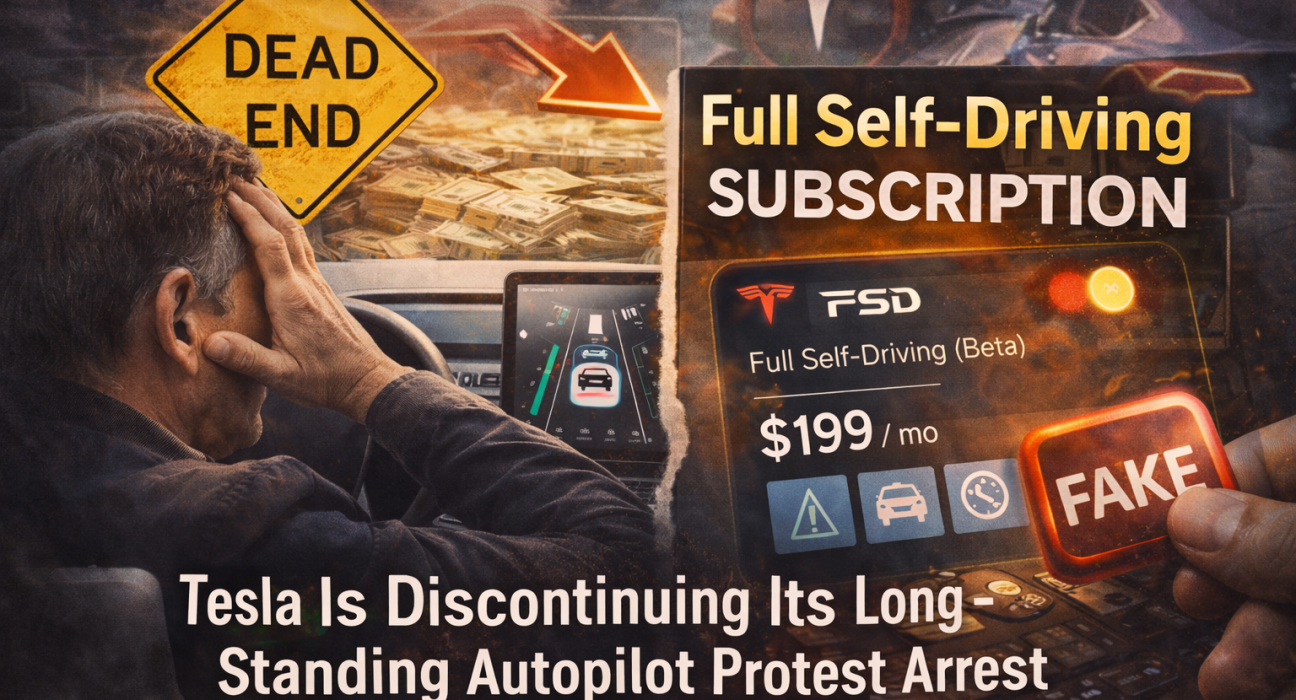
According to reporting by Ars Technica, Tesla is discontinuing its long-standing Autopilot offering in favor of pushing customers toward its more expensive Full Self-Driving (FSD) system, a move widely interpreted as part of the company’s strategy to generate recurring software revenue. The shift has sparked backlash among owners and analysts, raising questions about vehicle pricing, resale value, and waning trust in Tesla’s brand promises.
What Tesla Is Changing
Historically, Tesla vehicles came with basic Autopilot (traffic-aware cruise control and lane-keeping) included in the vehicle price, while FSD was an optional upgrade sold either as a one-time purchase or subscription.
Under the new approach:
- Autopilot is no longer marketed as a standalone feature
- Advanced driver assistance is increasingly bundled into FSD subscriptions
- Tesla is emphasizing monthly recurring revenue rather than one-time software sales
While Tesla has not removed all driver-assistance functionality overnight, the branding and upgrade pathway has changed in ways that materially affect buyers and owners.
How This Will Affect Vehicle Prices
New Buyers
For new buyers, the change effectively raises the functional cost of ownership. While the sticker price of Tesla vehicles may not immediately increase, access to features that were once included now requires:
- An FSD subscription, or
- A large one-time FSD purchase
This means buyers who want comparable functionality to what earlier owners received may now pay thousands more over time, especially if they keep the vehicle for several years.
Subscription Economics
Recurring software fees can surpass the original purchase price of FSD over the life of a vehicle. Analysts note that this shifts Tesla from a hardware-centric model to something closer to a software-as-a-service (SaaS) structure — beneficial for Tesla’s margins, but controversial among consumers accustomed to permanent ownership.
Why Some Owners Are Losing Faith in Tesla
The backlash is not just about cost — it’s about trust.
Key reasons for declining confidence include:
1. Moving Goalposts
Many owners purchased vehicles years ago based on promises that Autopilot and FSD would steadily improve toward full autonomy. Instead, Tesla has:
- Rebranded features
- Changed pricing structures
- Required new payments for similar capabilities
This has fueled perceptions that earlier buyers subsidized development without receiving the promised end result.
2. FSD’s Name vs. Reality
Despite its name, FSD remains a Level 2 driver-assistance system, requiring constant human supervision. Regulatory scrutiny and repeated disclaimers have reinforced the gap between marketing language and technical reality.
3. Safety and Regulatory Concerns
Ongoing investigations and recalls related to driver-assistance behavior have further eroded confidence, especially among buyers who expected steady progress toward autonomy.
4. Ownership vs. Access
Tesla’s shift mirrors broader tech-industry trends where users license features rather than own them, a model many car buyers explicitly reject.
Will Owners Still Be Able to Use Autopilot?
Short answer: yes, but with limitations.
- Existing vehicles retain basic safety features required by regulation
- Some lane-keeping and cruise functionality remains
- However, feature sets may vary by software version, region, and vehicle
The larger issue is that Tesla controls functionality via over-the-air updates, meaning:
- Capabilities can be altered or restricted without physical modification
- Features are increasingly tied to active subscriptions
Owners without FSD may find themselves with reduced or stagnant functionality compared to earlier expectations.
What Happens to Resale Value?
Depreciation Risk
Used-car analysts warn that Tesla resale values could face downward pressure because:
- Features are not permanently tied to the vehicle
- Buyers must factor in future subscription costs
- Software access may not transfer fully between owners
A used Tesla without active FSD may appear less competitive against rivals offering standard driver-assistance features without subscriptions.
Market Uncertainty
Resale buyers tend to value predictability. Tesla’s shifting software policies introduce uncertainty, which typically translates into lower resale premiums.
Who Benefits From This Shift?
Tesla
- Predictable recurring revenue
- Higher lifetime value per customer
- Greater control over feature access
Investors
- SaaS-style revenue streams are often valued more highly by markets
Who Loses?
Consumers
- Higher long-term costs
- Reduced sense of ownership
- Uncertainty around feature permanence
Brand Loyalty
Tesla built its reputation on innovation and customer evangelism. Frequent pricing and policy changes risk converting loyalists into skeptics.
Broader Industry Implications
Tesla’s move may influence the broader auto industry, normalizing:
- Subscription-based vehicle features
- Software-locked capabilities
- Post-purchase monetization
However, competitors are watching closely. Pushback against Tesla suggests consumers may resist paying indefinitely for core vehicle functions.
Future Outlook
Short Term:
Expect continued owner frustration and increased scrutiny of Tesla’s marketing claims.
Medium Term:
Resale values may soften, especially for vehicles without transferable FSD.
Long Term:
If consumers reject subscription-locked driving features, Tesla may face competitive pressure from automakers offering ownership-based models.
Conclusion
Tesla’s decision to phase out Autopilot in favor of FSD subscriptions marks a turning point in how cars are sold and owned. While the strategy may boost recurring revenue, it risks alienating customers who believed they were buying a vehicle — not a long-term software contract. Whether this gamble strengthens Tesla’s future or accelerates brand erosion will depend on how much value drivers believe they are actually getting in return.



Leave feedback about this
You must be logged in to post a comment.