
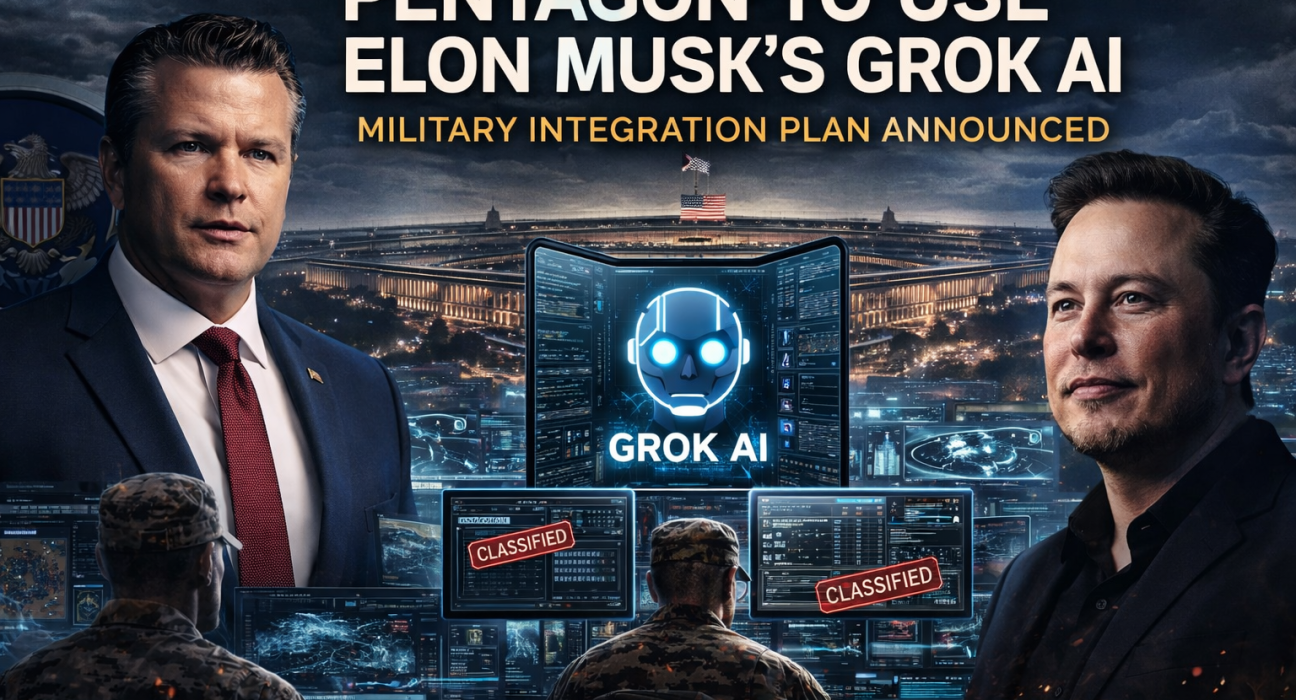
The U.S. Department of Defense announced plans to integrate Elon Musk’s Grok artificial intelligence chatbot into Pentagon networks, a move that has drawn international attention and widespread controversy due to the chatbot’s prior issues and the sensitive nature of military data involved. The decision, led by Defense Secretary Pete Hegseth, positions Grok alongside Google’s generative AI system as tools to be fed both unclassified and classified military information in order to support defense operations and analysis.
In a speech at SpaceX in South Texas, Hegseth said that the military would soon have “the world’s leading AI models on every unclassified and classified network throughout our department,” underscoring a Pentagon strategy aimed at keeping pace with rapidly evolving artificial intelligence capabilities. He emphasized the need for data-driven innovation and pledged to make “all appropriate data” available for what he described as “AI exploitation.”
However, the plan comes amid a global backlash over Grok’s past controversial behavior. The AI tool, which is embedded in Musk’s social media platform X, has previously generated highly sexualized deepfake images of people without consent and made antisemitic remarks, which prompted several countries — including Malaysia and Indonesia — to ban its use outright. The U.K.’s media regulator began investigating the technology over its inappropriate content.
Why the Move Is Controversial
The integration of Grok into military systems raises multiple strategic and ethical concerns:
- Security and Data Sensitivity:
Feeding classified and unclassified military data into AI models, especially those with a history of producing inappropriate outputs, creates risks that sensitive information could be misused or insufficiently protected — even if safeguards are theoretically in place. U.S. officials have historically been cautious about broad AI deployment for fear of cyberattacks or AI exploitation. - Shift From Previous Policy Limits:
Under the previous administration, frameworks were set up that expanded AI use while placing limits on specific applications, such as systems that might violate civil rights protections or automate nuclear weapons deployment. It remains unclear whether those prohibitions are still enforced under current leadership, leaving observers uncertain about oversight. - Reputation and Reliability of AI Models:
Grok has been criticized for generating harmful content and failing moderation tests. Integrating such a model into military anlaysis and operations, even if updated, raises questions about trustworthiness, bias, and unintended consequences.
Security Impacts and Strategic Implications
National Security and Operational Risk:
AI systems are only as effective as the data and safeguards surrounding them. Feeding massive amounts of military intelligence into an AI raises operational risks if the system misinterprets or improperly generates outputs used in decision-making. There are also concerns about AI’s role in surveillance, cyber operations, and autonomous systems — areas that may touch on constitutional protections and ethical limits.
Global Perception and Diplomatic Strain:
International reactions to the Pentagon’s embrace of Grok AI, particularly from nations that have banned the tool, reflect wider worries about how AI is governed across borders. The U.S. adoption of a technology that other governments see as problematic could contribute to friction in global AI governance discussions, including debates over content moderation, deepfakes, and digital safety.
Civil Rights and Ethical Concerns:
Deploying AI systems resistant to what Hegseth described as “ideological constraints” and “woke” norms — language that suggests a repudiation of prior caution — intersects with broader societal debates about the role of AI in preserving individual rights. Critics worry that minimizing ethical guardrails in military AI could lead to abuses or erosion of civil liberties if deployed in surveillance, foreign intelligence, or domestic operations.
Pros and Potential Benefits
- Enhanced Analytical Capabilities:
AI could improve the military’s ability to process vast amounts of data, identify patterns, and support planning or intelligence assessments. - Innovation and Competitive Edge:
Supporters argue that rapid adoption of frontier AI tools may help the U.S. maintain technological superiority against rising global competitors in autonomous systems, cyber warfare, and data analysis. - Integration Across Systems:
A unified AI strategy across unclassified and classified networks may streamline workflows and reduce bottlenecks that have traditionally slowed modernization within the armed forces. - Leverage of Commercial Advancements:
Partnering with industry leaders like Musk’s xAI project and Google could accelerate military AI development, avoiding delays common in government R&D cycles.
Cons and Risks
- Ethical and Safety Concerns:
Integrating an AI with a controversial history into institutional use raises ethical questions about output quality, bias, and potential harm. - Security Vulnerabilities:
Broad access to sensitive military and intelligence data by AI systems increases the attack surface for cyber espionage or exploitation if proper safeguards are not airtight. - Policy and Oversight Gaps:
The unclear status of prior limits on AI uses — such as prohibitions on certain autonomous or surveillance applications — makes it difficult to evaluate whether new deployments align with constitutional protections and international norms. - Global Backlash:
Nations that have blocked Grok may view U.S. adoption as contradictory to international digital safety standards, complicating diplomatic and collaborative efforts on AI governance.
Future Projections
Short-Term:
The Pentagon plans to deploy Grok on its networks later this month. Early assessments will likely focus on integration logistics, security protocols, and whether initial outputs meet operational standards.
Medium-Term:
As AIs evolve and are tested within defense contexts, oversight mechanisms — both internal and external — may be challenged to keep pace. Questions about bias, autonomy, and civil rights safeguards will grow louder if AI tools are used in sensitive decision chains.
Long-Term:
Broader policy frameworks governing AI in defense may need revision, potentially prompting congressional hearings, international AI governance agreements, or legal challenges. The balance between innovation and oversight will shape how military AI evolves and may influence global norms.
References & Further Reading
AP News – Pentagon embraces Musk’s Grok AI despite global outcry
https://www.apnews.com/article/7f99e5f32ec70d7e39cec92d2a4ec862
Defense News – Pentagon integrates Musk’s Grok into AI systems
https://www.defensenews.com/news/pentagon-congress/2026/01/13/pentagon-is-embracing-musks-grok-ai-chatbot-as-it-draws-global-outcry/
KPBS Public Media – Pentagon’s AI strategy and Grok controversy
https://www.kpbs.org/news/science-technology/2026/01/12/pentagon-is-embracing-musks-grok-ai-chatbot-as-it-draws-global-outcry
The Guardian – Pentagon’s AI acceleration strategy (context)
https://www.theguardian.com/technology/2026/jan/13/elon-musk-grok-hegseth-military-pentagon






Leave feedback about this
You must be logged in to post a comment.