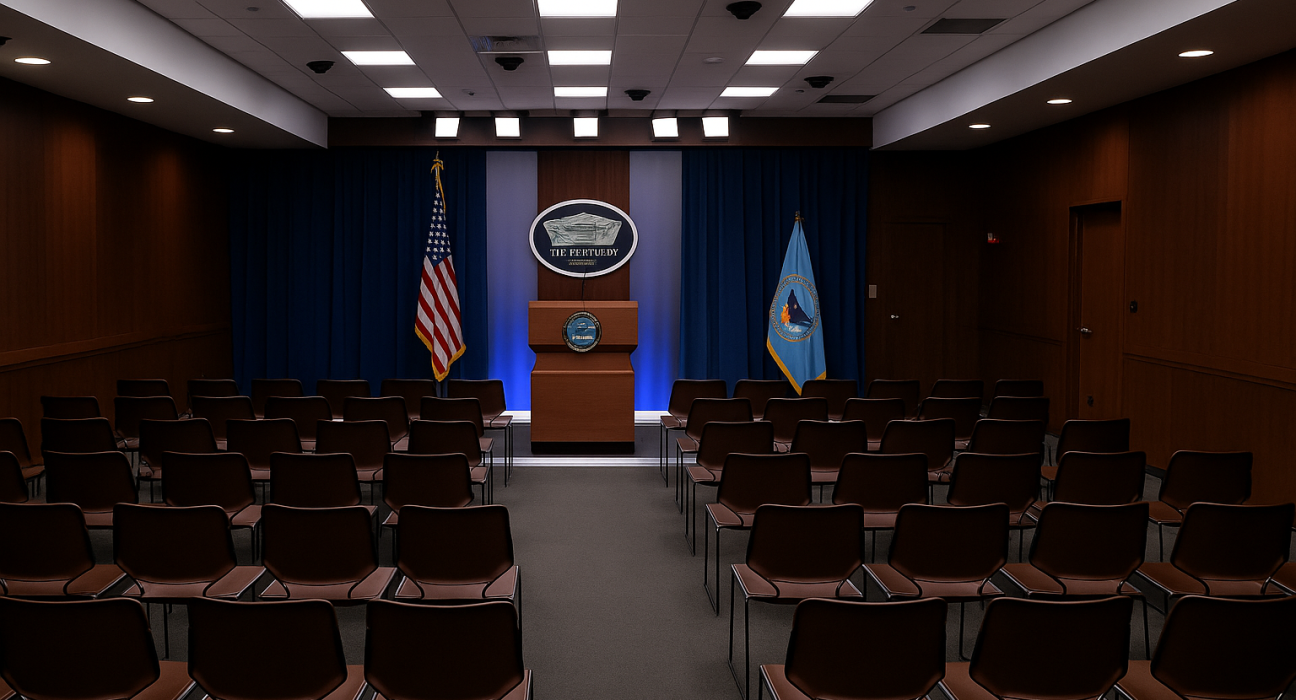
The Pentagon’s decision to grant exclusive access to a select group of hand-picked media outlets while denying entry to major mainstream news organizations marks one of the most significant shifts in U.S. defense press operations in modern history. The move comes at a highly sensitive moment: both chambers of Congress are examining potentially unlawful U.S. military strikes that may have resulted in the execution of survivors aboard alleged drug-smuggling vessels.
Below is a breakdown of what happened, the implications, and the broader concerns raised by lawmakers, journalists, and public transparency experts.
1. What Happened
A New “Pentagon Press Corps”
Defense Secretary Pete Hegseth has restructured Pentagon media access, requiring outlets to agree to new rules described as “common sense” security protections.
Most major outlets declined, saying the rules would effectively restrict their ability to cover the Pentagon independently.
Who Lost Access
The following organizations confirm they were denied entry to this week’s briefings:
- The Washington Post
- The Associated Press
- Reuters
- CNN
- AFP (Agence France-Presse)
- Newsmax
These outlets regularly cover national security, military operations, war powers, and defense spending on behalf of millions of readers.
Who Received Access
Several newly credentialed, pro-administration outlets have been admitted:
- One America News (OAN)
- The Daily Signal
- Influencers aligned with the administration, including Laura Loomer
- A number of conservative digital publications with small staff sizes
Many posted photos of themselves at the Pentagon press room, highlighting desks once used by major outlets.
2. What Prompted This?
The shakeup follows a Washington Post investigation revealing that Hegseth allegedly ordered — or verbally endorsed — a second strike on a suspected drug-smuggling boat in September after survivors were spotted following the initial missile attack.
If true, members of Congress from both parties say the act could constitute a war crime.
The administration denies wrongdoing, but congressional committees have launched inquiries.
3. Why the Access Restrictions Matter
Transparency and Accountability
The Pentagon is one of the largest institutions in the world, operating with:
- A massive budget (>$800 billion annually)
- Global military reach
- Significant impact on foreign policy, national security, and international law
Restricting independent press access reduces scrutiny at a time when:
- Military operations in the Caribbean and Pacific are escalating
- Civilian deaths and legality concerns are being raised
- The administration is invoking war-powers logic without Congressional oversight
Public’s Right to Know
Major outlets denied access collectively serve hundreds of millions of readers.
Their exclusion means many Americans may only receive defense information through filtered or friendly sources.
Precedent and Institutional Trust
Historically:
- Pentagon briefings were open to all credentialed outlets
- Press conferences were routinely livestreamed
- Questions could be asked freely
The new approach mirrors controlled-access media strategies seen in governments with reduced press freedom.
4. Security vs. Manipulation: The Debate
Pentagon’s Argument
- Rules prevent accidental leaks of classified information
- Media must meet security standards to access sensitive buildings
- New outlets were previously excluded unfairly
Journalistic Counterarguments
- These policies allow the government to only select outlets likely to report favorably
- They erode transparency and violate norms of a free press
- They concentrate control over wartime information
- The timing — during a major misconduct investigation — raises red flags
5. Implications Moving Forward
For Democratic Oversight
Congress relies heavily on media reporting to inform hearings and legislative review.
Reduced transparency hampers:
- Investigations into potential misconduct
- Evaluation of war powers
- Public understanding of military operations
For Public Trust
A shrinking watchdog press corps may undermine faith in:
- Pentagon credibility
- Military decision-making
- Civil-military relations
For Global Perception
Other nations observe U.S. press freedoms closely.
When the U.S. restricts media access:
- Authoritarian governments gain justification for their own censorship
- The U.S. loses moral authority to criticize suppression abroad
6. What Comes Next?
Key unknowns:
- Will future Pentagon briefings remain restricted?
- Will Congress subpoena officials to circumvent media blackout?
- Will investigations into the strikes intensify or stall?
Many analysts expect:
- Increasing political pressure
- Legal challenges from media organizations
- A potential showdown in Congressional hearings