Overview
The FBI has arrested a suspect, identified as Brian Cole, for allegedly planting two pipe bombs outside the Republican National Committee (RNC) and Democratic National Committee (DNC) headquarters on January 5, 2021 — the night before the Capitol riot. The bombs never detonated, but the case became one of the most high-profile unsolved investigations tied to the January 6 attacks. After nearly five years of inquiries, the arrest represents a major development, though the revelation that the arrest was based on evidence available years earlier raises concerns about investigative delays.
Key Details of the Case
Federal authorities arrested Cole Thursday morning, marking what officials called a major breakthrough. According to multiple law-enforcement sources, the suspect is charged with placing both explosive devices. Early reporting suggests investigators tied Cole to online statements supporting anarchist ideology, though no finalized motive has been announced.
New evidence did not lead to the arrest. Instead, investigators re-examined existing data collected between 2021 and 2022, discovering connections they had not previously followed. This has raised internal questions about whether the FBI should have acted sooner.
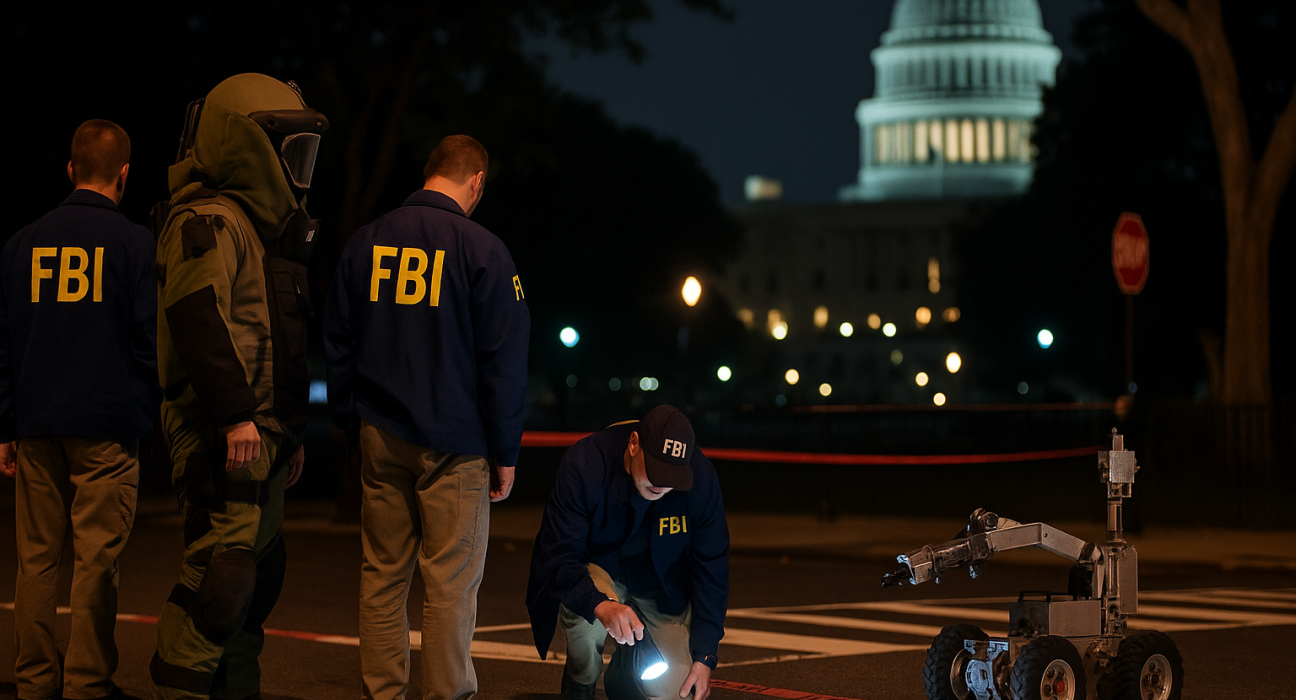
The pipe bombs were discovered before they detonated, though their placement caused massive resource diversion on Jan. 6. Surveillance footage showed a masked, hooded suspect placing each device within a 22-minute window. The bombs were located close to the Capitol complex hours before the riot escalated.
The FBI had offered a $500,000 reward and conducted a broad outreach effort reviewing 40,000 video files, 1,000 interviews, and analytics of credit-card purchases and shoe sales. They also cross-referenced phone data and box-store battery purchases but found no matches until recently reevaluating the evidence.
Implications
For ongoing federal investigations
- The arrest may help close one of the last major unanswered questions from the January 6 security failures.
- A successful prosecution could add clarity about potential motives, ideological associations, or external coordination.
- It also raises questions for Congressional oversight committees about why the arrest could conceivably have happened years earlier.
For the FBI’s public standing
- The case may renew debates over investigative competence and resource allocation.
- Critics may argue that analytical or procedural failures delayed justice.
- Supporters may point to the complexity of identifying a disguised suspect in a chaotic environment.
For political narratives
The arrest affects multiple political lanes — conspiracy theories, criticisms of DOJ efforts, and narratives about January 6 responsibility. Federal confirmation of suspect identity may quiet some speculation but not all.
Pros & Cons (Neutral)
Pros
- Major breakthrough in a long-running domestic terrorism investigation
- Potential closure for a high-risk case that threatened two major political parties
- Strengthens accountability around January 6 threats
- Demonstrates re-evaluation of old evidence can still lead to results
Cons
- Reveals possible investigative gaps within FBI operations
- May undermine public confidence that federal agencies act swiftly
- Could fuel political criticism from both sides, depending on perceived motives
- Raises concerns about case management, evidence prioritization, and internal oversight
Neutral Assessment
The arrest of Brian Cole marks a significant step in resolving one of the most concerning security threats surrounding January 6. Yet the fact that investigators relied on material available years earlier sparks legitimate questions about the FBI’s processes and prioritization. Until the motive becomes clear, the case will remain a politically sensitive touchpoint, but the breakthrough nonetheless represents a substantial development in domestic terrorism investigations.