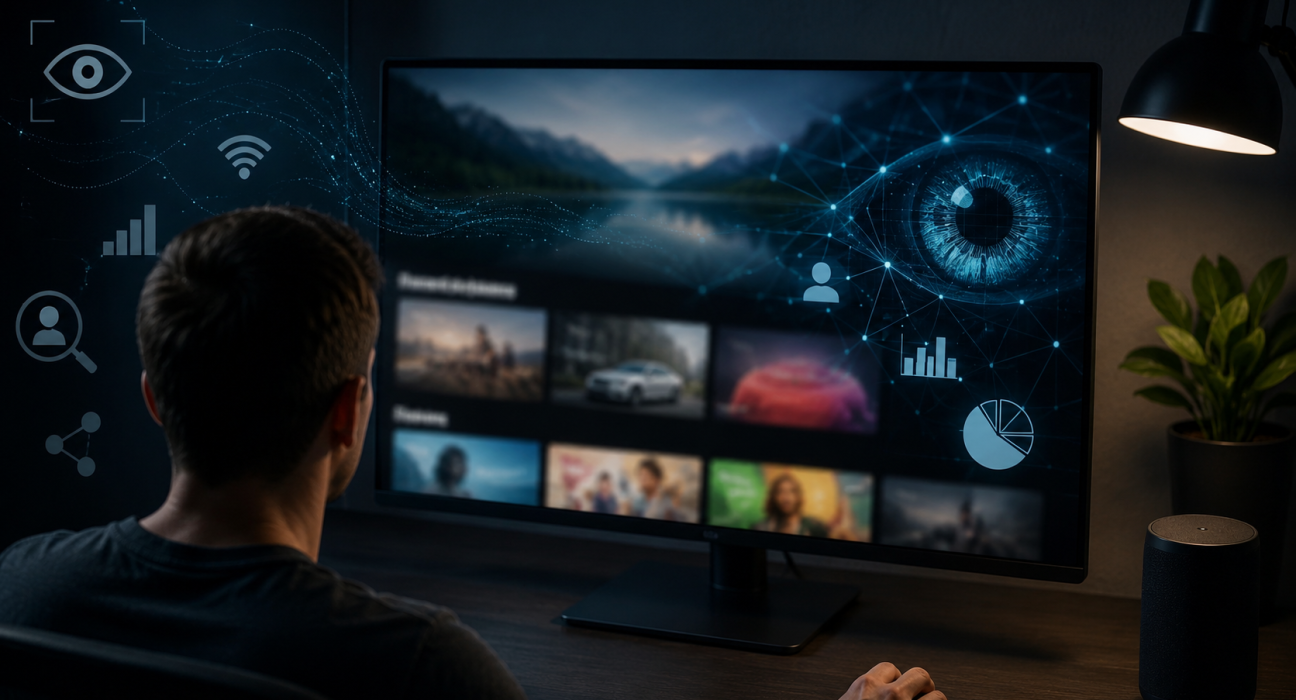
Computer monitors have traditionally been relatively simple devices: connect a computer, display its output, and little else. But an investigation from Ars Technica warns that this relationship is changing as manufacturers increasingly add operating systems, Internet connections, applications, advertising capabilities, and data collection to displays.
The concern is that monitors may be following the same path smart TVs took over the past decade. Smart-TV manufacturers increasingly turned their operating systems into advertising platforms, with some collecting viewing information through technologies such as Automatic Content Recognition (ACR). Smart monitors now use many of those same operating systems and privacy frameworks.
The development doesn’t mean every modern monitor is secretly recording its owner. Traditional non-connected monitors remain widely available, and many tracking features on smart displays can be disabled. But the business incentives behind connected screens are changing—and that deserves attention.
What Triggered the Concern
A recent controversy involving LG illustrates how far manufacturers can potentially reach beyond the physical monitor.
Ars Technica reports that certain LG monitors caused an application called LG Monitor App Installer to be installed on connected Windows computers through Windows Update. The software was ostensibly designed to identify compatible LG displays and offer monitor-related applications.
But users discovered it could also produce advertisements, including promotions for McAfee software. Microsoft subsequently required LG to remove the McAfee advertisements.
LG told Ars that the application does not collect personal information from customers’ computers and is intended to identify compatible monitors and recommend supporting applications.
That distinction is important: there is currently no evidence presented by Ars that this LG application itself was secretly collecting personal data for advertisers.
The concern is instead about precedent. A piece of hardware that historically functioned as a passive display was capable of installing software that delivered commercial promotions onto another device.
Smart Monitors Create a Bigger Issue
The larger development involves smart monitors.
Products from companies including LG, Samsung and Acer can operate without a computer. They may include:
- Streaming applications
- Wi-Fi connectivity
- Operating systems
- Cloud services
- Video conferencing
- Smart-home controls
For many consumers, those are genuinely useful features. Someone living in a small apartment, for example, can use one display as both a computer monitor and television.
But once a monitor contains essentially the same software platform as a smart TV, the economics of the device change.
The manufacturer is no longer necessarily earning money only when it sells the screen. Advertising and data-driven services can potentially produce revenue throughout the device’s lifetime.
What Is ACR — and Why Does It Matter?
Automatic Content Recognition is central to the privacy debate.
ACR generates identifying signatures from content appearing on a display and compares them against databases to determine what someone is watching.
Samsung explicitly states that, when users opt into its ACR-based Viewing Information Services on supported smart TVs, information can include:
- Programs viewed
- How long they were viewed
- Device identifiers
- IP address.
Samsung says users can disable the feature.
The broader capability is particularly significant because ACR can potentially recognize content that isn’t coming from the television’s own apps.
Vizio, for example, explains that its ACR technology can identify programming, advertisements, gaming content and even material coming from devices connected through HDMI.
That means the screen itself can potentially become another layer of data collection independent of the computer, streaming stick or game console feeding it content.
Are LG and Samsung Smart Monitors Definitely Using ACR?
Here the Ars investigation makes an important distinction.
The company’s smart monitors run operating systems related to those used on their televisions, and reviewers have demonstrated tracking capabilities. The manufacturers’ broader monitor privacy policies also contemplate sharing certain collected information with advertisers.
However, Ars says it asked LG and Samsung specifically whether their smart monitors currently employ ACR and had not received confirmation at publication time.
So it would be inaccurate to say every Samsung or LG smart monitor is currently scanning everything displayed on it.
The verified concern is that the technical and commercial infrastructure enabling TV-style tracking is increasingly present in monitors.
Why Companies Want the Data
Advertising has become a significant business attached to connected televisions.
Samsung’s own advertising division openly promotes its first-party device data as a way for advertisers to construct predictive audiences. Its 2026 advertising offerings use machine learning to determine audiences, context and advertising opportunities.
This helps explain the industry’s incentive.
A conventional monitor generates revenue once:
Consumer → buys monitor → manufacturer gets paid.
A connected advertising-supported monitor potentially creates another model:
Consumer → buys monitor → uses monitor → manufacturer/platform continues generating advertising revenue.
That recurring-revenue opportunity is potentially extremely valuable.
We’ve Already Seen This Happen With TVs
Smart TVs provide a useful historical comparison.
Connected televisions originally offered obvious consumer advantages: Netflix, YouTube, streaming services and Internet connectivity without additional hardware.
Over time, advertising became increasingly prominent.
Roku’s latest operating-system redesign, for example, places a large permanent advertisement directly on the home screen.
Consumer Reports previously found that every smart TV it tested requested permission to collect viewing or related information and warned that consumers could easily enable extensive ACR collection simply by quickly accepting setup screens.
Ars’ concern is therefore not hypothetical speculation about an entirely new business model.
It is essentially asking:
Are computer monitors beginning the same progression televisions already experienced?
There Is an Economic Benefit
There is another side to the argument.
Advertising and software revenue can subsidize hardware.
One reason sophisticated smart televisions can sometimes be remarkably inexpensive is that manufacturers and platform operators can generate revenue after the original sale.
Smart-monitor advertising could theoretically produce similar economics, allowing companies to offer:
- Better displays at lower prices
- Free streaming channels
- Longer software support
- Integrated applications and services
Consumers might willingly accept that trade if it is transparent.
The dispute therefore isn’t necessarily about advertising existing at all.
It is largely about whether buyers meaningfully understand what they’re agreeing to.
Pros
Lower hardware prices: Advertising revenue could subsidize display prices.
More functionality: Smart monitors can replace several devices in small spaces.
Convenience: Streaming and cloud applications work without a connected PC.
Personalization: Users who actively choose tracking may receive more relevant recommendations.
Choice currently exists: Conventional monitors remain readily available, while many tracking options can be disabled.
Cons
Privacy complexity: A monitor creates another device capable of collecting behavioral information.
Advertising after purchase: Consumers may reasonably believe purchasing hardware means they have already paid for the product.
Potential HDMI visibility: ACR technology can identify content originating from external devices on some connected-screen platforms.
Difficult consent: Long privacy policies and buried settings can make technically optional tracking practically difficult to understand.
Precedent: LG’s software controversy demonstrates that monitor manufacturers can potentially reach beyond the display and into connected computers.
What This Could Mean for the Future
The biggest risk isn’t that advertisements suddenly appear inside your Excel spreadsheet tomorrow.
It is business-model normalization.
Smart TVs demonstrated that once advertising becomes economically important to a hardware platform, the amount and sophistication of advertising can gradually increase.
Smart monitors could follow that path.
The most likely near-term future is therefore a split market: traditional monitors for consumers who want passive displays, alongside increasingly sophisticated smart monitors functioning more like televisions or miniature computers.
Longer term, manufacturers may increasingly compete not simply over resolution, refresh rate and image quality but over operating systems and recurring service revenue.
Privacy regulation may consequently become important. Consumers may demand simple setup screens that clearly ask whether viewing information can be collected rather than burying those decisions inside lengthy agreements.
The strongest consumer protection may ultimately be very simple: preserve the ability to buy a genuinely “dumb” monitor.
Conclusion
The Ars Technica investigation isn’t evidence that every computer monitor has suddenly become a surveillance device. Its warning is subtler—and arguably more important.
Computer monitors are beginning to acquire the same ingredients that transformed televisions: Internet connectivity, operating systems, apps, advertising systems and potentially increasingly sophisticated behavioral data collection.
Smart features can make monitors significantly more useful. Advertising can potentially make them cheaper. Neither development is inherently harmful.
The critical issue is whether consumers retain meaningful control.
A monitor occupies a particularly sensitive position because people may spend eight or more hours each day using one for work, banking, communication, entertainment and private activity. If displays evolve from passive hardware into active advertising platforms, consumers should know exactly what the screen can see, what information leaves the device, who receives it, and how to shut those systems off.
The smart-TV industry demonstrated what can happen when those questions are addressed only after advertising becomes entrenched. The monitor industry now has an opportunity not to repeat that history.
References
Primary Source: Ars Technica — Ads and tracking infiltrated TVs. Now they’re coming for monitors
Additional research: Samsung — Automatic Content Recognition explained and opt-out controls; Samsung — Smart TV privacy practices; Samsung Ads — 2026 advertising and AI audience technology; Consumer Reports — Smart-TV privacy and ACR investigation; Vizio — Viewing Data and ACR privacy disclosure; Vizio — Advertising and privacy controls; Ars Technica — Roku adds permanent home-screen advertising.