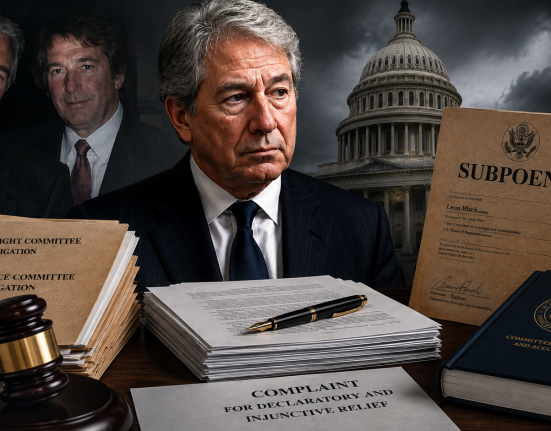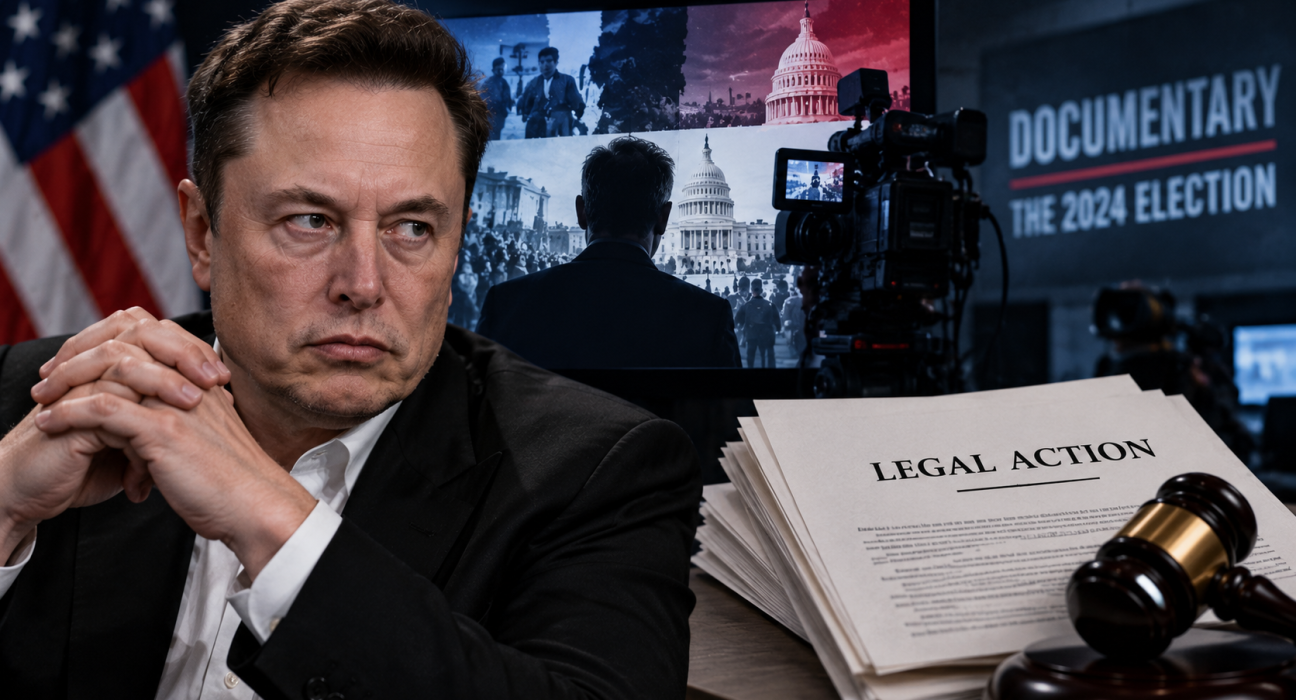
Elon Musk’s attorney, Alex Spiro, has threatened legal action against filmmaker Alex Gibney and the team behind the new documentary “Musk,” arguing that the film falsely implies Musk may have used Starlink to influence or manipulate the 2024 presidential election. People reported that Spiro sent a letter to Gibney ahead of the documentary’s wider release, accusing the filmmakers of creating a defamatory impression through editing, sequencing, narration and omission rather than necessarily making a direct accusation.
The documentary premiered at the Venice Film Festival in early September 2026 and is scheduled for U.S. theatrical release in October. The film, directed by Oscar-winning documentarian Alex Gibney, examines Musk’s business power, political influence, social-media control, use of artificial intelligence imagery, and relationship to Donald Trump’s political movement. AP and Reuters both confirm that Gibney says he began work on the project in 2023 and that Musk declined to participate in the film.
What the People Article Says
The key dispute involves a sequence featuring Ashley St. Clair, Musk’s former partner and the mother of one of his children. According to People, St. Clair says in the documentary that Musk seemed unusually certain Donald Trump would win the 2024 election. She recalls Musk allegedly saying he would “unleash the anomaly in the matrix,” followed by a text shown onscreen that reads, “I have ten thousand lasers in space.” Gibney then asks whether she believed Musk was referring to Starlink, and she replies that she does not know where else he has “space lasers.”
Spiro’s argument is that this sequence could lead viewers to infer that Musk used Starlink to affect the election. He says Starlink “was not connected to vote tabulation,” and argues the film could be defamatory even without a direct spoken accusation.
The production company, Jigsaw, defended the film on First Amendment grounds, saying fact-based examinations of powerful public figures are protected speech. However, People reported that the production company did not specifically answer Spiro’s criticism about the Starlink-election sequence.
What Outside Sources Confirm
Outside reporting confirms several important points.
First, the documentary is real, high-profile and intentionally critical of Musk. The Venice Film Festival’s own description says Gibney frames Musk as a modern “confidence man” and presents the film as a study of power and its abuse.
Second, AP and Reuters confirm that the film explores Musk’s role in politics, X/Twitter, artificial intelligence, government access, and his relationship to Trump-era power. Gibney told Reuters the film became more expansive after Musk became more deeply connected to Trump and the presidency.
Third, Musk’s real political spending in 2024 is well documented. Reuters reported that Musk gave about $259 million to groups supporting Trump’s 2024 campaign, including $239 million to America PAC and another $20 million to RBG PAC. That establishes major political influence through lawful campaign spending, not through vote manipulation.
The Critical Difference: Political Influence vs. Election Manipulation
This is the most important distinction for an unbiased breakdown.
It is accurate to say Musk became a major political actor in 2024. He donated extraordinary sums, used his public platform, supported Trump politically, and became closely associated with Trump’s post-election agenda.
It is not accurate, based on available public evidence, to say Musk used Starlink to alter votes.
Multiple election-security sources and fact-checking organizations rejected the Starlink vote-rigging theory after the 2024 election. FactCheck.org reported that federal and state officials, along with election-security experts, found no evidence that Starlink was involved in vote tabulation. It also reported that voting machines are not connected to the internet during tabulation in the way the theory would require.
PolitiFact likewise found that swing states including Arizona, Georgia, Michigan, Nevada, North Carolina, Pennsylvania and Wisconsin had procedures ensuring voting equipment was not connected to the internet during ballot tabulation.
AP also reported in 2024 that election officials from multiple swing states said their voting equipment did not use Starlink and was not connected to the internet. CISA reported no evidence of malicious activity that materially affected the security or integrity of the 2024 election infrastructure.
So the evidence supports this careful statement:
Musk had major political influence in 2024, but there is no verified evidence that Starlink was used to manipulate the presidential vote count.
Musk’s Strongest Argument
Musk’s side has a legitimate concern if the documentary’s editing causes viewers to believe an unsupported claim: that Starlink helped manipulate the election.
Defamation law does not require a publication to state something explicitly if the overall presentation creates a false defamatory implication. Spiro’s argument appears to rely on that idea.
Because Musk is a very public figure and the topic involves public affairs, he would likely face a high legal burden if he sued in the United States. Public figures generally must prove “actual malice,” meaning the speaker knew the statement was false or acted with reckless disregard for whether it was false.
Still, the legal threat is not automatically baseless. If a film strongly implies a factual claim that election systems were manipulated, and that implication is unsupported, that could create real legal risk for the filmmakers.
The Filmmakers’ Strongest Argument
The filmmakers also have a strong First Amendment position.
Musk is one of the most powerful and influential private citizens in the world. His companies touch electric vehicles, space infrastructure, satellite communications, artificial intelligence, social media, defense-adjacent technology, and federal contracting. His 2024 political activity was significant and newsworthy.
A documentary has broad freedom to investigate, criticize and interpret public figures, especially when discussing political power, corporate power, and public policy. Gibney also told Reuters that lawyers reviewed the film and gave approval before it moved forward.
The question is not whether the film can criticize Musk. It clearly can. The narrower question is whether one sequence crosses from criticism or speculation into a false factual implication about election manipulation.
Pros of the Documentary’s Approach
A hard-hitting documentary about Musk can serve a public-interest function because Musk’s companies and political activity now affect government, technology, media, defense, elections and public debate.
The film may also push viewers to examine how much influence one private individual can accumulate through wealth, technology platforms, government contracts, and political spending.
Cons and Risks
The risk is that a documentary can blur the line between documented influence and unverified conspiracy.
If viewers leave believing Starlink altered votes without evidence, that would be a serious misinformation problem. Election conspiracy theories have already damaged public trust in democratic institutions, and unsupported claims from any political direction should be treated cautiously.
There is also a credibility risk for the filmmakers. Even a single weakly supported insinuation can distract from better-documented issues, such as Musk’s campaign spending, X/Twitter influence, federal contracting, and political access.
What This Means Going Forward
The legal fight may depend on how the film presents the Starlink sequence. If the film merely shows St. Clair’s recollection, asks a question, and leaves uncertainty, the filmmakers may argue they are presenting a source’s perspective and inviting public debate.
If the film appears to endorse the idea that Musk manipulated the election through Starlink, the legal and reputational risks become much greater because public evidence does not support that claim.
The smartest neutral takeaway is this:
Musk’s political influence is documented. The Starlink election-manipulation theory is not.
Conclusion
People’s report is credible in showing that Musk’s attorney has threatened legal action over Alex Gibney’s documentary. Outside reporting confirms that the film is a major, critical documentary about Musk’s power and political role.
But the specific issue at the center of the legal threat requires caution. Musk’s 2024 campaign spending and political influence are matters of public record. Claims that Starlink manipulated vote counts have been repeatedly rejected by election officials, AP, FactCheck.org and PolitiFact.
A fair version of the story should therefore avoid both extremes.
It should not dismiss all scrutiny of Musk as unfair, because his political and technological power is clearly newsworthy.
It also should not present the Starlink election theory as established fact, because the available evidence does not support it.
The real story is not simply “Musk sues critics” or “documentary exposes election manipulation.” The better framing is:
A major documentary is testing the boundary between legitimate scrutiny of Musk’s political power and potentially defamatory implication about an unsupported election-fraud theory.
References
People — report on Musk’s attorney threatening legal action over the documentary.
AP — reporting from Venice on Gibney, Ashley St. Clair, the AI Musk avatar, and the film’s themes.
Reuters — Gibney interview and context on the documentary’s development.
Venice Film Festival — official festival description of “Musk.”
Variety — details on the film’s Venice premiere, interview subjects, and release plans.
Reuters — Musk’s 2024 political spending through America PAC and related groups.
FactCheck.org — fact-check rejecting claims that Starlink was connected to vote tabulation.
PolitiFact — fact-check on Starlink and 2024 vote-counting claims.
AP Fact Focus — election officials rejecting Starlink vote-rigging claims.
Cornell Legal Information Institute — defamation and public-figure actual-malice standards.