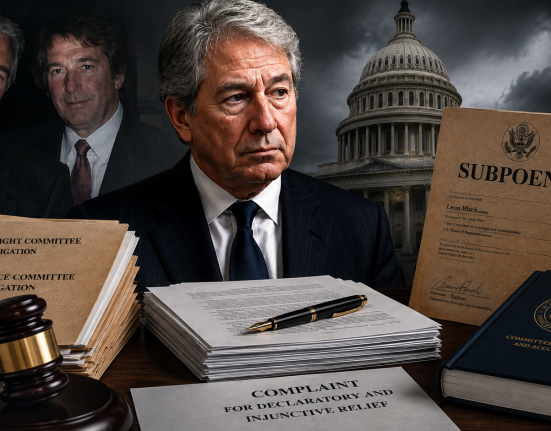
A policy brief titled “The Oracle Layer: Infrastructure, Conflict, and the Paramount–Warner Bros. Deal” argues that a proposed merger between major media companies could have implications beyond media consolidation. The document was prepared for the U.S. Senate Judiciary Committee’s Subcommittee on Antitrust and Competition Policy and focuses on the role of Oracle Corporation in federal infrastructure and data systems. The_Oracle_Layer_Senate_Brief_U…
The report suggests that the merger—combined with Oracle’s expanding role in government technology systems—could concentrate significant data infrastructure and media influence within a single corporate ecosystem. Importantly, the brief states that it does not allege illegality, but instead calls for regulators to evaluate potential conflicts of interest under existing federal rules. The_Oracle_Layer_Senate_Brief_U…
The central argument is that Oracle’s infrastructure contracts across healthcare, defense, and data services—combined with the financing structure behind the Paramount–Warner Bros. Discovery deal—create overlapping positions that may warrant further regulatory scrutiny.
Major Developments Highlighted in the Brief
Government Technology Contracts
The document describes two major contracts awarded to Oracle in February 2026.
The Centers for Medicare & Medicaid Services (CMS) reportedly selected Oracle Cloud Infrastructure to modernize core technology systems supporting programs including Medicare, Medicaid, the Affordable Care Act marketplace, and the Children’s Health Insurance Program. These programs collectively affect more than 150 million Americans. The_Oracle_Layer_Senate_Brief_U…
During the same period, Oracle secured an $88 million task order under the U.S. Air Force Cloud One program, which authorizes the company to operate systems capable of handling classified government workloads at various security levels. The_Oracle_Layer_Senate_Brief_U…
The report notes that few commercial cloud providers possess simultaneous authorization to process unclassified, secret, and top-secret workloads for the federal government.
Media Merger Context
The brief links those contracts to a proposed Paramount–Warner Bros. Discovery merger valued at approximately $111 billion, which would combine major media brands including:
- HBO
- CNN
- Paramount Pictures
- CBS News
- MTV
- Nickelodeon
- Showtime
- Warner Bros. studios
If completed, the combined entity would represent one of the largest media companies in U.S. history. The_Oracle_Layer_Senate_Brief_U…
The report highlights that Larry Ellison, chairman of Oracle, is personally backing a large portion of the financing for the merger through a multibillion-dollar guarantee secured by Oracle stock. His son, David Ellison, runs Skydance Media and is expected to lead the merged company. The_Oracle_Layer_Senate_Brief_U…
According to the brief, this arrangement could create overlapping relationships between the infrastructure provider and the media entity using that infrastructure.
Historical Data Infrastructure Expansion
The report also reviews Oracle’s earlier acquisitions involving data analytics and tracking technology, including companies such as BlueKai, Datalogix, and AddThis.
These services historically collected and linked consumer data—such as browsing behavior, purchasing activity, and device information—into unified advertising profiles sometimes referred to as “identity graphs.” The_Oracle_Layer_Senate_Brief_U…
A federal privacy lawsuit over these data practices resulted in a $115 million settlement in 2024. Oracle later shut down its advertising data business but retained its infrastructure and cloud computing platforms. The_Oracle_Layer_Senate_Brief_U…
The brief argues that these earlier data systems demonstrate the company’s technical capability to combine datasets from different domains.
Infrastructure Across Multiple Sectors
According to the report, Oracle currently operates technology systems across several major sectors:
Healthcare
- Electronic health records used by the Department of Veterans Affairs and Department of Defense
- Medicare and Medicaid data infrastructure
Social media
- Hosting and oversight functions related to TikTok’s U.S. data operations
Broadcast and media
- Technology systems supporting television groups and streaming platforms
Defense and intelligence
- Cloud services for multiple federal agencies
Artificial intelligence
- Participation in large AI infrastructure initiatives involving international investors
The brief describes this as an “infrastructure layer” spanning multiple domains of American digital life. The_Oracle_Layer_Senate_Brief_U…
Conflicts of Interest Raised in the Brief
The document outlines three categories of potential conflicts.
Data Position
Oracle could simultaneously process healthcare data, government intelligence data, and commercial media data. While technical separation exists between systems, the report questions whether organizational safeguards are sufficient. The_Oracle_Layer_Senate_Brief_U…
Revolving Door Concerns
Former CMS administrator Seema Verma later joined Oracle Health. The report notes this relationship while raising questions about whether conflict-of-interest reviews were conducted when Oracle later secured CMS contracts. The_Oracle_Layer_Senate_Brief_U…
Financial Structure
Larry Ellison’s financing of the merger through shares of Oracle stock creates a financial linkage between federal government contracts and the media transaction. The_Oracle_Layer_Senate_Brief_U…
The brief argues this could create a “circular dependency” in which government contracts help sustain the company valuation backing the merger.
Policy Recommendations
The document proposes three actions for regulators:
- Conduct a formal organizational conflict-of-interest review under federal acquisition rules before approving the merger.
- Require data firewalls separating government cloud environments from commercial media systems.
- Treat Oracle as a related party in merger review because of the financial relationship between Oracle leadership and the media transaction. The_Oracle_Layer_Senate_Brief_U…
The report also provides suggested questions for lawmakers to ask executives and federal contracting agencies.
Pros (Arguments Supporting the Report’s Concerns)
- Highlights potential regulatory blind spots across multiple sectors.
- Encourages transparency in government contracting and data governance.
- Raises questions about data concentration and AI infrastructure power.
- Promotes congressional oversight of large media mergers.
Cons (Criticism or Limitations)
- The report presents an analytical argument but does not provide evidence of wrongdoing.
- Some relationships described may reflect standard industry practices in cloud infrastructure markets.
- The document relies on interpretation of corporate and regulatory structures rather than new investigative findings.
- Many of the concerns depend on future decisions regarding the merger and infrastructure arrangements.
Future Implications
If policymakers adopt the report’s recommendations, several developments could follow:
- Increased scrutiny of cloud providers managing both government and commercial data systems
- Expanded antitrust review of media mergers involving infrastructure dependencies
- New federal rules requiring data separation and AI governance frameworks
- Broader debate over digital infrastructure concentration among major technology firms
The brief ultimately frames the issue as a regulatory oversight question rather than a legal accusation, asking whether existing federal procurement and antitrust rules are sufficient to address modern technology conglomerates.
Source
Uploaded Document
The Oracle Layer: Infrastructure, Conflict, and the Paramount–Warner Bros. Deal
Prepared for the U.S. Senate Judiciary Committee Subcommittee on Antitrust, Competition Policy, and Consumer Rights. The_Oracle_Layer_Senate_Brief_U…