A convergence of political, religious, and military developments is reshaping public perception of Donald Trump amid the ongoing Iran conflict. Reporting from Associated Press, Reuters, National Catholic Register, and The New Republic highlights a complex intersection of religious response, public opinion shifts, and escalating military strategy.
At the center of the moment are three key developments: criticism from Pope Leo XIV, declining Catholic support for Trump, and controversial imagery circulating in political media—occurring alongside a significant military escalation in the form of a planned naval blockade of Iran.
Vatican Response and Moral Framing
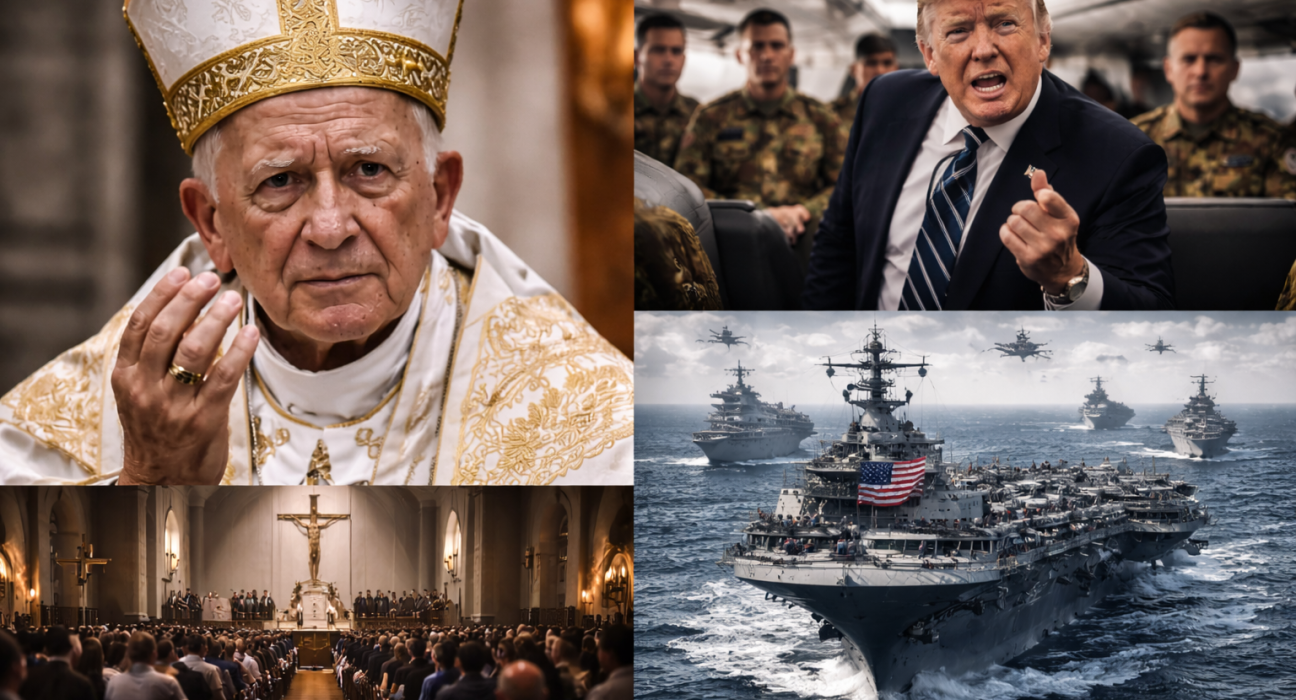
According to the Associated Press, Pope Leo XIV has issued criticism of rhetoric tied to the Iran conflict, particularly statements suggesting large-scale destruction.
The Pope’s response is notable because:
- The Vatican typically maintains diplomatic neutrality
- Public criticism signals ethical and humanitarian concern
- It reflects broader unease within religious communities
Religious leaders often frame conflicts in terms of moral responsibility, emphasizing:
- Protection of civilian life
- Avoidance of escalation
- The importance of diplomacy
This adds a moral dimension to what is otherwise a geopolitical and military crisis.
Declining Catholic Support
Polling cited by the National Catholic Register indicates that support for Trump among Catholic voters has fallen below 50%, a notable shift for a demographic that has historically been politically influential.
Factors contributing to the decline may include:
- Concerns about war escalation
- Reaction to public rhetoric
- Broader political polarization
Catholic voters represent a significant voting bloc in U.S. elections, and shifts in their support can have broader political implications.
Media Controversy: AI-Generated Religious Imagery
Reporting from The New Republic highlights controversy surrounding AI-generated images depicting Trump in religious contexts, including imagery resembling Jesus.
These images have sparked debate about:
- The use of AI in political messaging
- The blending of religion and politics
- Ethical boundaries in digital media
Critics argue such imagery may:
- Be seen as inappropriate or offensive
- Contribute to misinformation or confusion
- Blur lines between satire, propaganda, and genuine belief
Supporters or defenders may view it as:
- Symbolic or expressive content
- Part of broader digital culture and meme ecosystems
The incident reflects how AI-generated media is becoming a powerful tool in shaping political narratives.
Military Escalation: U.S. Naval Blockade
At the same time, Reuters reports that the U.S. military plans to begin a blockade of ships heading to Iran, marking a significant escalation in the conflict.
Key aspects of the blockade include:
- Intercepting or restricting maritime traffic
- Targeting supply routes linked to Iran
- Increasing pressure on Iran’s economy and logistics
The move carries several implications:
- Potential disruption of global trade routes
- Increased risk of confrontation at sea
- Legal and diplomatic questions regarding enforcement
Naval blockades are considered a serious escalation in international relations, often associated with heightened conflict conditions.
Broader Context: Religion, Politics, and War
The current situation reflects an intersection of multiple domains:
1. Religious Influence in Politics
Religious leaders and communities continue to play a role in shaping public discourse, particularly during times of conflict.
2. Public Opinion and Electoral Impact
Shifts in support among key demographics—such as Catholic voters—can influence:
- Political strategy
- Election outcomes
- Policy decisions
3. Information Environment
The spread of AI-generated imagery and commentary highlights the evolving nature of political communication.
4. Geopolitical Strategy
Military actions such as blockades reflect:
- Efforts to exert pressure without direct invasion
- Strategic control of trade and supply routes
- Escalation risks in contested regions
Competing Interpretations
View 1: Strategic Pressure and Leadership
Supporters of current actions argue:
- Military pressure may be necessary to achieve strategic objectives
- Strong leadership requires decisive action
- Public messaging—including symbolic imagery—can mobilize support
View 2: Escalation and Ethical Concerns
Critics argue:
- Religious criticism reflects genuine moral concerns
- Declining support indicates public unease
- AI-generated imagery risks undermining credibility
- Military escalation increases the risk of broader conflict
Pros (Supportive Perspectives)
• Strategic leverage: Military actions may increase negotiating power
• Clear messaging: Strong rhetoric and symbolism can mobilize supporters
• Global attention: Focus on the conflict may encourage diplomatic engagement
• Active public discourse: Multiple perspectives contribute to debate
Cons (Concerns and Risks)
• Religious backlash: Criticism from faith leaders may influence public opinion
• Declining support: Shifts among key voter groups could have political impact
• Escalation risk: Blockade increases potential for conflict expansion
• Media controversy: AI-generated imagery raises ethical and credibility concerns
Future Projections
1. Continued Religious Engagement
Religious leaders may remain active in advocating for de-escalation.
2. Public Opinion Shifts
Polling trends could continue to evolve as the conflict progresses.
3. Escalation or Negotiation
The blockade may lead to increased tension or force renewed diplomatic efforts.
4. Growth of AI in Political Messaging
Use of AI-generated content in politics is likely to expand.
5. Electoral Implications
Changes in voter sentiment may influence upcoming political dynamics.
Conclusion
The intersection of religious response, public opinion, and military escalation underscores the complexity of the current moment. As the Iran conflict continues, its impact extends beyond traditional geopolitical considerations into cultural, ethical, and technological domains.
The outcome will depend not only on military and diplomatic decisions but also on how leaders navigate public perception, moral considerations, and evolving communication landscapes.
References
Primary Sources
- Associated Press – Pope Leo XIV response to Trump and Iran conflict
https://apnews.com/article/trump-pope-leo-xiv-02f6b4554ea4b83af02af15987ae1f2d - Reuters – U.S. naval blockade of ships heading to Iran
https://www.reuters.com/world/middle-east/us-military-says-it-will-start-blockade-all-ships-going-iran-monday-2026-04-12/ - National Catholic Register – Poll showing decline in Catholic support
https://www.ncregister.com/cna/poll-catholic-support-for-president-donald-trump-drops-below-50-amid-iran-war - The New Republic – AI-generated imagery controversy
https://newrepublic.com/post/208979/maga-donald-trump-ai-photo-jesus
Additional Context Sources
- Reuters and AP – Coverage of Iran conflict escalation
- Analysis of religious influence on political behavior
- Research on AI-generated media and political communication