Article Breakdown
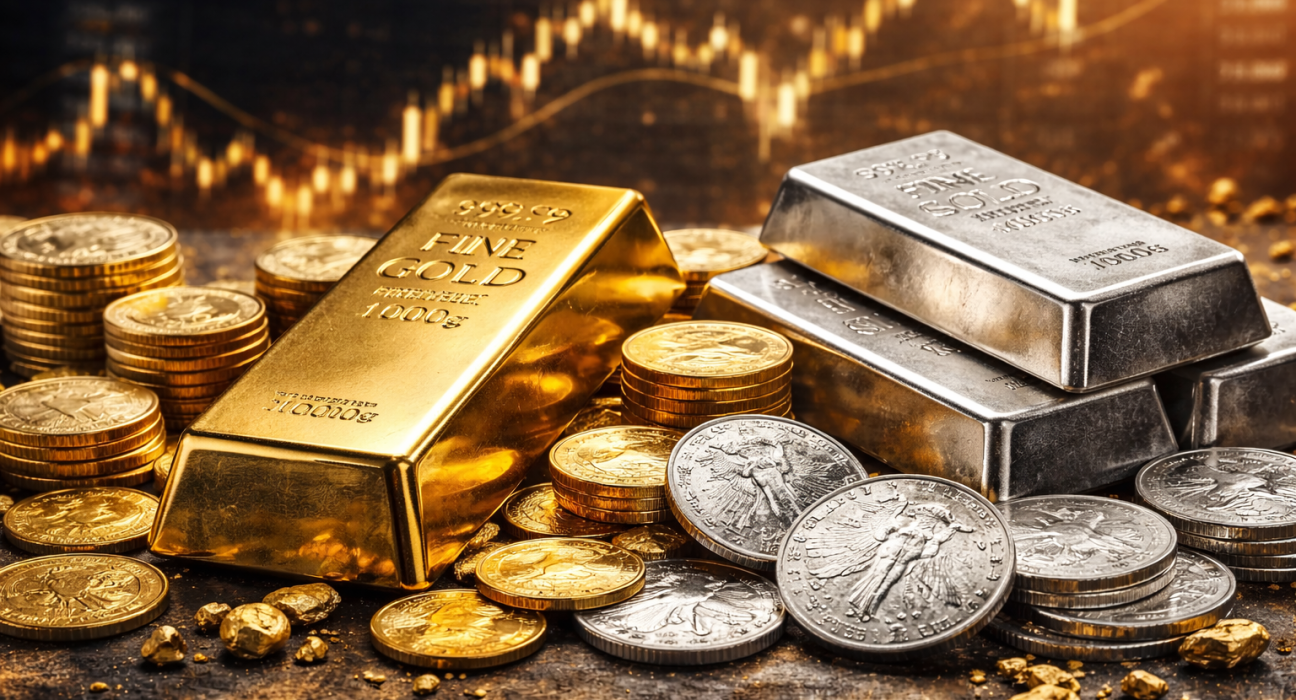
Gold and silver prices reached historic highs in mid-January 2026 as investors increasingly turned to precious metals amid growing expectations of U.S. interest rate cuts, persistent geopolitical uncertainty, and concerns about global economic stability. The surge reflects renewed demand for traditional “safe-haven” assets during a period marked by market volatility and shifting monetary policy signals.
According to market data, gold prices climbed to an all-time high, while silver followed closely, benefiting both from its status as a precious metal and its role in industrial applications. Analysts cited a combination of cooling inflation data, softer U.S. economic indicators, and expectations that the Federal Reserve may begin easing policy later in 2026 as key drivers behind the rally.
Why Prices Are Rising
Interest rate expectations:
Precious metals typically benefit when interest rates are expected to fall. Lower rates reduce the opportunity cost of holding non-yielding assets like gold and silver, making them more attractive compared to bonds or cash. Recent Federal Reserve commentary and economic data have strengthened market bets that rate cuts could arrive sooner than previously anticipated.
Safe-haven demand:
Heightened geopolitical tensions, including conflicts in the Middle East, ongoing instability in Eastern Europe, and concerns over U.S.–China relations, have reinforced investor appetite for assets perceived as stores of value during uncertainty. Gold, in particular, has long served this role during periods of global stress.
Currency dynamics:
A weaker U.S. dollar has also supported metal prices. Since gold and silver are priced in dollars, a softer dollar makes them cheaper for holders of other currencies, boosting global demand.
Central bank buying:
Central banks, especially in emerging markets, have continued accumulating gold reserves as part of efforts to diversify away from dollar-denominated assets. This structural demand has provided an additional tailwind for prices.
Silver’s Dual Role
Silver’s rally has been notable because it is influenced by both investment demand and industrial use, particularly in electronics, renewable energy, and electric vehicles. Expectations of long-term growth in clean energy infrastructure have bolstered silver’s outlook, even as near-term economic uncertainty weighs on some industrial metals.
However, silver remains more volatile than gold, as shifts in manufacturing demand can amplify price swings during economic slowdowns.
Broader Market Implications
The surge in precious metals highlights investor caution across broader financial markets. Equity markets have shown mixed performance, while bond yields have declined as traders position for looser monetary policy. Some analysts interpret the move into gold and silver as a hedge not only against recession risk, but also against longer-term concerns such as rising government debt levels and fiscal uncertainty.
Pros
- Portfolio diversification: Gold and silver can reduce overall portfolio risk during market turbulence.
- Inflation and currency hedge: Precious metals historically protect against inflation and currency depreciation.
- Safe-haven appeal: Demand tends to rise during geopolitical or financial crises.
- Central bank support: Continued institutional buying underpins long-term demand.
Cons
- No yield: Unlike bonds or dividend-paying stocks, precious metals generate no income.
- Price volatility: Silver in particular can experience sharp swings tied to industrial demand.
- Policy reversal risk: If inflation reaccelerates or rate cuts are delayed, prices could pull back.
- Speculative flows: Short-term rallies can attract speculative trading, increasing downside risk.
Future Projections
Short-term:
Prices may remain elevated as markets continue to price in potential Federal Reserve rate cuts and monitor geopolitical developments. Volatility is likely to persist as investors react to economic data and central bank signals.
Medium-term:
If rate cuts materialize and global growth remains uneven, gold and silver could maintain strong support levels. However, stronger-than-expected economic performance or renewed inflation could temper gains.
Long-term:
Structural factors such as central bank diversification, rising global debt, and silver’s role in energy transition technologies may provide ongoing support. Still, long-term performance will depend on macroeconomic stability, technological shifts, and monetary policy discipline.
Conclusion
The record highs in gold and silver underscore a broader shift in investor sentiment toward caution and capital preservation. While precious metals offer clear benefits during uncertain times, their performance remains closely tied to macroeconomic conditions and policy decisions. As markets navigate 2026, gold and silver are likely to remain closely watched barometers of global confidence.
References & Further Reading
CNBC – Gold and silver hit record highs on safe-haven demand and Fed rate-cut bets
https://www.cnbc.com/2026/01/12/gold-silver-hit-record-highs-on-safe-haven-demand-fed-rate-cut-bets.html
World Gold Council – Gold demand trends and central bank buying
https://www.gold.org/goldhub/research
Reuters – Precious metals and global market uncertainty
https://www.reuters.com/markets/commodities/
Federal Reserve – Monetary policy outlook and rate decisions
https://www.federalreserve.gov/monetarypolicy.htm
Kitco – Gold and silver market analysis
https://www.kitco.com/markets/