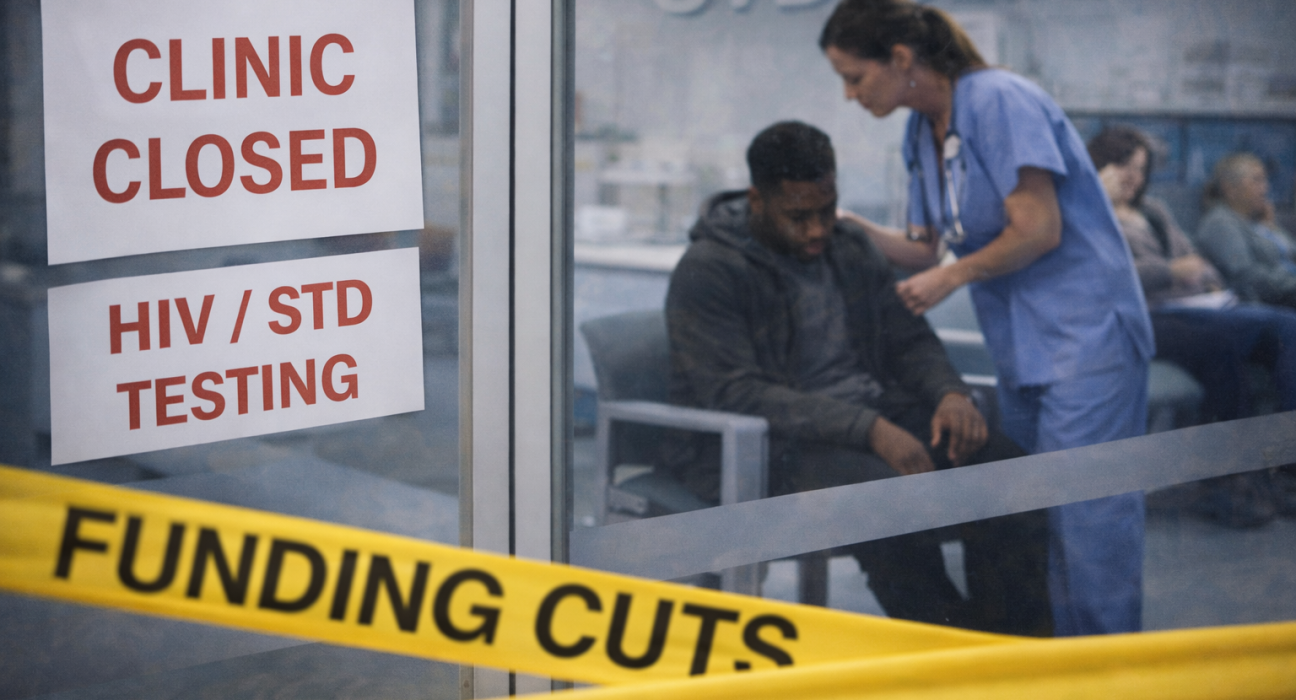
The Centers for Disease Control and Prevention (CDC) is canceling approximately $600 million in HIV and sexually transmitted disease (STD) funding that had been allocated to four Democrat-led states, according to recent reporting. The decision has prompted debate about public health strategy, federal oversight authority, and the broader political environment surrounding health funding.
The move affects grant programs that support testing, prevention, and community health infrastructure. While federal officials describe the decision as part of broader fiscal or policy recalibration, critics argue that the cuts could have measurable health consequences.
What the Funding Typically Supports
CDC HIV and STD grants generally help states fund:
- Free or low-cost HIV and STD testing
- Disease surveillance and outbreak response
- Contact tracing services
- Public education campaigns
- Access to preventive medications like PrEP
- Outreach to high-risk populations
- Staffing for local health departments
These programs are particularly important in states with large urban populations or higher rates of HIV and sexually transmitted infections.
Public health officials warn that when funding gaps emerge, services often scale back quickly because many programs rely heavily on federal support rather than state tax revenue.
Administration Rationale
Federal officials have indicated the cancellations are part of a broader review of spending priorities and compliance standards. Though full justification details have not been publicly outlined in depth, administrations often cite reasons such as:
- Reallocation of federal health funding
- Evaluation of state-level program effectiveness
- Policy disagreements over how funds are administered
- Fiscal restraint measures
Supporters of the move argue that federal agencies have discretion to adjust grant programs and that states can supplement funding independently if they consider programs essential.
Public Health Concerns
Public health experts have raised several concerns about the potential impact of these funding reductions:
1. Increased Transmission Risk
HIV and STD prevention depends on consistent testing and early detection. Reduced access to screening could delay diagnosis and increase transmission rates.
2. Strain on Safety-Net Clinics
Community health centers and nonprofit organizations often operate on tight margins. Loss of federal funding may lead to staff layoffs or reduced operating hours.
3. Higher Long-Term Costs
Preventive care is generally less expensive than treatment of advanced disease. If infection rates increase, long-term healthcare costs may rise for both state systems and federal programs like Medicaid.
Political Context
Because the affected states are led by Democratic governors, the decision has been interpreted through a political lens. Critics argue that targeting specific states may reflect ideological differences rather than purely fiscal analysis. Supporters counter that federal funding decisions often shift with administrations and that geographic or partisan alignment does not necessarily determine motive.
The situation highlights an ongoing tension between federal authority and state autonomy, especially in areas like public health, immigration, education, and environmental policy.
Who Is Most Affected
If funding reductions proceed as planned, the most immediate impacts may be felt by:
- Low-income individuals
- Uninsured or underinsured populations
- Communities with higher HIV prevalence rates
- LGBTQ+ populations
- Rural residents with limited healthcare access
Public health professionals note that prevention programs often serve populations who face barriers to traditional healthcare systems.
Historical Perspective
The United States has experienced funding fluctuations in disease prevention before. During economic downturns or shifts in federal leadership, grants have sometimes been reduced or redirected. However, experts caution that infectious disease prevention infrastructure requires stability to remain effective.
In past decades, expanded HIV prevention funding contributed to measurable declines in new infections. Whether cuts reverse that progress will depend on state-level responses and alternative funding sources.
Potential Next Steps
Several outcomes are possible:
- States may challenge the cancellations legally if they believe contractual obligations were violated.
- State legislatures could allocate emergency funding to preserve programs.
- Congress could intervene through appropriations or oversight hearings.
- Nonprofits and private foundations may attempt to fill funding gaps.
The timeline and implementation details will likely determine how disruptive the changes become.
Broader Implications
Beyond immediate health services, the decision reflects broader debates about:
- The role of federal agencies in state public health systems
- How preventive healthcare is prioritized in federal budgets
- The degree to which health policy aligns with political ideology
Public health experts emphasize that infectious diseases do not follow political boundaries, and prevention programs often have cross-state implications.
Conclusion
The CDC’s cancellation of $600 million in HIV and STD funding to four states introduces uncertainty into public health infrastructure that has relied on consistent federal support. While federal officials frame the move as part of policy and budget review, critics warn of potential increases in infection rates and healthcare disparities.
The long-term impact will depend on whether states replace the lost funding, how courts or Congress respond, and whether infection trends shift in the coming years. At its core, the situation underscores the complex intersection of public health, federal authority, and political governance.
References & Further Reading
Denver7 — Trump’s CDC canceling $600M in HIV and STD funds to four Democrat-led states
https://www.denver7.com/politics/the-president/trumps-cdc-is-canceling-600m-in-hiv-and-std-funds-to-four-democrat-led-states
CDC — HIV Surveillance Reports
https://www.cdc.gov
Kaiser Family Foundation — Federal funding for HIV prevention
https://www.kff.org
World Health Organization — Global HIV response overview
https://www.who.int