A recent BBC report has renewed international attention on the inner workings of North Korea’s ruling Kim dynasty, particularly regarding questions of succession and the potential rise of a woman within the regime’s tightly controlled leadership structure. The discussion centers on whether, for the first time in the country’s modern history, a woman could emerge as a central power figure in the Kim family line — and what that would mean domestically and globally.
Has There Ever Been a Woman in This Lineage?
North Korea has been ruled by three generations of the Kim family:
- Kim Il-sung (founder of the Democratic People’s Republic of Korea)
- Kim Jong-il
- Kim Jong-un
Each successor has been male. The regime’s structure has traditionally emphasized patriarchal leadership rooted in military authority, revolutionary lineage, and dynastic continuity.
However, women have played important symbolic and political roles:
- Kim Jong-suk, Kim Il-sung’s wife, is celebrated as a revolutionary heroine.
- Kim Kyong-hui, sister of Kim Jong-il, held senior party roles before disappearing from public life.
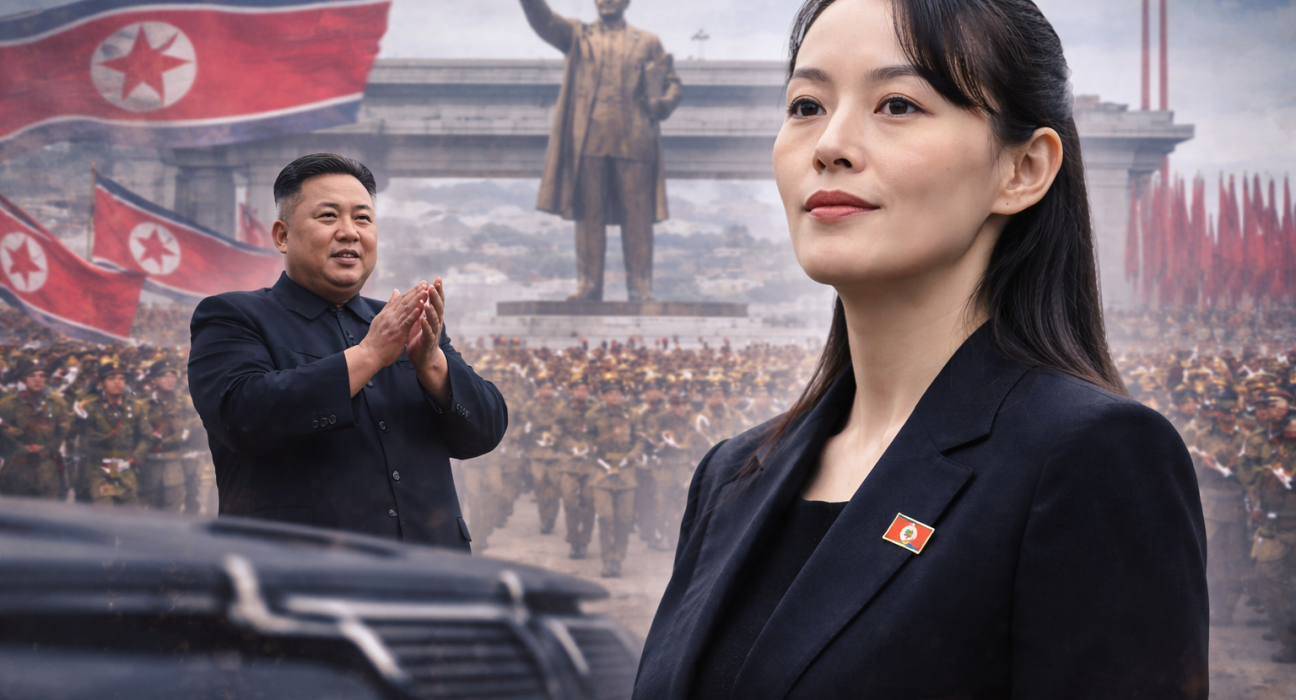
- Kim Yo-jong, sister of Kim Jong-un, has become one of the most visible women in North Korean politics, serving in high-level party and diplomatic capacities.
Despite these roles, no woman has formally led North Korea. A female successor would represent a significant departure from precedent within the regime’s dynastic tradition.
Why Her?
If the BBC report references Kim Yo-jong — widely viewed by analysts as one of the most powerful figures in Pyongyang — several factors explain why she is frequently discussed as a potential future leader:
1. Bloodline Legitimacy
North Korea’s political system centers on the “Paektu bloodline,” referring to direct descent from Kim Il-sung. Kim Yo-jong shares that lineage, which is a foundational source of authority in the regime.
2. Political Experience
She has served as:
- Deputy director in the Workers’ Party of Korea
- Senior propagandist shaping domestic messaging
- Diplomatic envoy in inter-Korean and U.S. negotiations
Her public appearances alongside Kim Jong-un at military events and summits signal trust and internal authority.
3. Controlled Public Exposure
Unlike many other elites in North Korea, she is consistently visible in state media. Analysts interpret this as deliberate grooming — either for long-term succession or as a stabilizing figure within the ruling circle.
4. Strategic Messaging
Her public statements often deliver sharp foreign policy warnings, suggesting she serves as a political enforcer and spokesperson. This positioning allows Kim Jong-un to maintain strategic distance while signaling strength.
What Might Be the Response Inside North Korea?
Public sentiment in North Korea is difficult to measure due to state control over information and expression. However, analysts suggest several possible reactions:
Loyalty to the Bloodline
Many North Koreans are conditioned through decades of propaganda to equate leadership legitimacy with Kim family descent rather than gender. If the regime frames a female successor as divinely or historically destined, resistance may be limited.
Military Considerations
The Korean People’s Army plays a central role in governance. A female leader would need strong military backing. Any transition would likely require careful alignment with top generals to prevent instability.
Cultural Norms
North Korean society remains conservative and male-dominated, particularly in the military and party hierarchy. A female successor would challenge traditional norms, but the regime’s centralized power structure allows it to reshape narratives quickly.
Stability Over Reform
Most observers believe any successor from the Kim family would prioritize regime continuity rather than liberalization. Therefore, citizens’ daily lives might not change dramatically regardless of gender.
Why This Discussion Matters Globally
The possibility of a woman within the Kim dynasty stepping into a leadership role has implications beyond symbolism:
Regional Security
South Korea, Japan, and the United States closely monitor succession signals because instability in North Korea could affect nuclear policy and military posture.
Diplomatic Tone
Kim Yo-jong has demonstrated both hardline rhetoric and diplomatic engagement. Her leadership style, if ever formalized, could shape negotiations differently than her brother’s.
Internal Consolidation
Speculation about succession often reflects broader questions about Kim Jong-un’s health, stability, and long-term governance planning.
Is This Likely in the Near Term?
There is no confirmed indication that leadership transition is imminent. North Korea has historically guarded succession plans carefully, revealing them only when strategically advantageous.
Analysts caution that public appearances and elevated profiles do not guarantee eventual succession. In North Korean politics, visibility can signal power — but it can also be a tool of internal balancing rather than succession planning.
Broader Context: Women in Authoritarian Dynasties
While North Korea has not had a female head of state, other authoritarian or dynastic systems have:
- Indira Gandhi in India
- Benazir Bhutto in Pakistan
- Park Geun-hye in South Korea
- Isabel Perón in Argentina
These cases show that dynastic politics can override gender norms under certain conditions, particularly when legitimacy is tied to family lineage.
North Korea’s system is uniquely centralized, however, making the calculus different from electoral democracies.
Conclusion
North Korea has never had a woman at the top of its ruling lineage. However, the prominence of Kim Yo-jong and other female figures in recent years has prompted renewed speculation about whether that could change in the future.
If such a shift were to occur, it would likely be framed domestically not as a break with tradition, but as a continuation of the sacred Kim bloodline. The reaction inside North Korea would depend less on gender and more on how effectively the regime maintains unity among party elites and the military.
For now, the discussion reflects broader uncertainties about succession planning in one of the world’s most opaque political systems.
References & Further Reading
BBC News — North Korea leadership analysis
https://www.bbc.com/news/articles/cn0e1g7kwglo
Council on Foreign Relations — Understanding North Korea’s political structure
https://www.cfr.org/backgrounder/north-korea
Brookings Institution — Succession politics in North Korea
https://www.brookings.edu
38 North (Stimson Center) — Analysis of North Korean elite politics
https://www.38north.org