
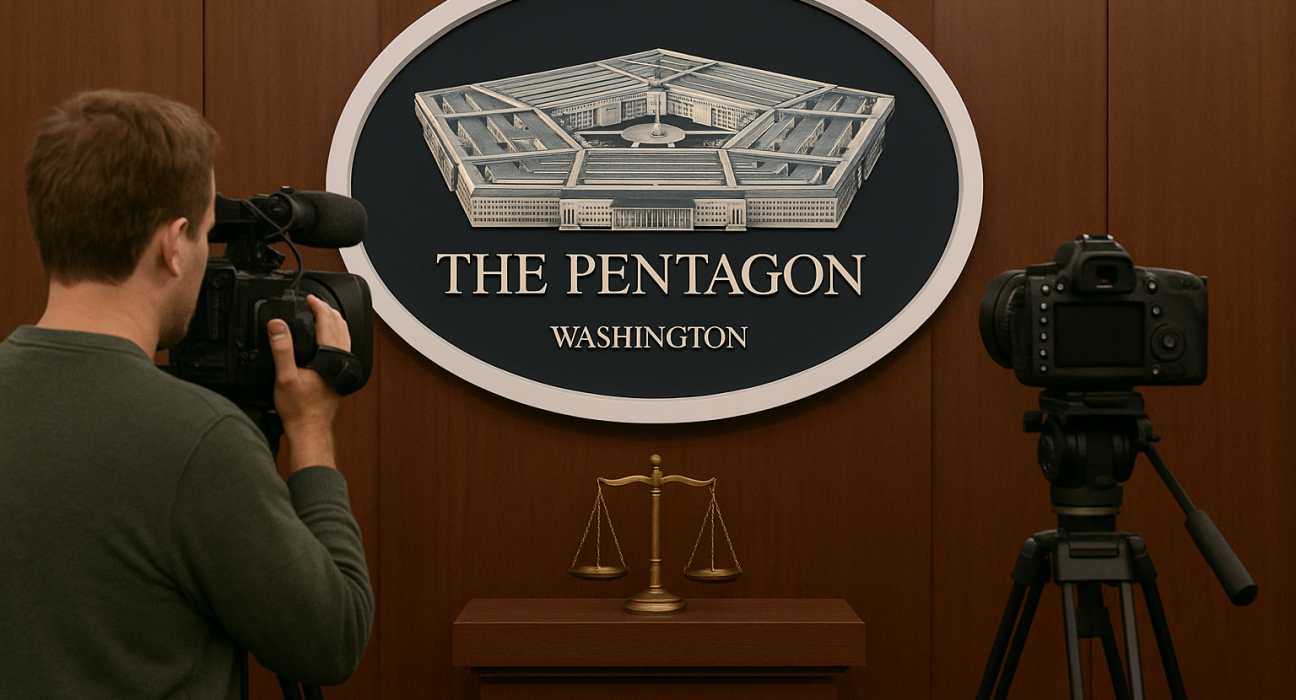
News Outlets Protest and Walkout of Pentagon
According to Reuters, dozens of reporters who cover the Department of Defense vacated their Pentagon offices and returned their credentials in protest of newly instituted press access rules. The new policy, introduced under Defense Secretary Pete Hegseth, requires journalists to sign an acknowledgment of rules that could revoke their badges if they publish information not sanctioned by Pentagon officials — even unclassified material.
At least 30 outlets, including Fox News, Reuters, and others, refused to comply, citing threats to press freedom and transparency. The Pentagon Press Association has strongly condemned the changes, calling the day a “dark day for press freedom.”
Reporters described the normally busy press areas as eerily quiet as they packed up decades of equipment. One journalist noted: “I’ve never seen that place not buzzing like a beehive.”Even as they left, many vowed to continue reporting via alternate channels.
Key Points & Highlights
- The new rules compel journalists to acknowledge restrictions on soliciting or publishing “unauthorized” information — a move seen as a prior restraint on reporting.
- The rules also limit access to parts of the Pentagon unless escorted, and tie credentialing to compliance.
- Media organizations across the ideological spectrum (CNN, Fox News, The New York Times, The Washington Post, etc.) refused to sign.
- The Pentagon defends the rules as necessary for national security and consistency with military operating procedures.
- The standoff marks a significant rupture in the relationship between the Pentagon and the press corps, potentially reshaping how defense news is covered.
Implications & Broader Themes
Government Surveillance & Information Control
- Greater control over narrative: The Pentagon seeks to channel all reporting through its filters, controlling what is reported and how.
- Chilling effects on sources: Defense personnel may be deterred from speaking candidly, fearing consequences for unauthorized disclosures. Journalists worry that past leaks or whistleblowing may now carry harsher consequences.
- Expansion of state power over media: This approach shifts the balance toward executive control of information flows, weakening the traditional roles of independent reporting and oversight.
Politicization of Free Speech & Press Access
- Selective enforcement: The policy could be used to silence stories unfavorable to the current administration, especially in the defense domain.
- Instrumentalizing credentialing: Access to the Pentagon becomes a tool to reward compliant outlets and marginalize dissenters, shaping which media have physical proximity to power.
- Precedent for broader silencing: If this model is accepted here, similar restrictions might spread to other agencies, especially at the intersection of national security and public accountability.
Operational & Reporting Shifts
- Reporting from a distance: Without embedded presence, journalists will rely more on off-site sources, leaked documents, digital communications, and investigative work.
- Delays and secondhand reporting: Breaking events may be harder to cover in real time, as reporters lose fast access to spokespersons and internal briefings.
- Resource constraints: Media outlets may need to invest more in secure communication and investigative capabilities to compensate for lost proximity.
Pros & Cons (Neutral Evaluation)
Potential Upsides (from defense / security perspective)
- Consistency and certainty: Establishing clear rules may reduce ambiguity about what sources are permitted or off limits.
- Protecting sensitive information: The Pentagon argues restrictions help prevent inadvertent disclosure of information that could be harmful if published prematurely.
- Safeguarding personnel & operations: Tighter control may reduce risks from unvetted leaks or misinterpretation of sensitive data.
Risks & Downsides (journalistic, legal, democratic)
- Undermining transparency: The public’s ability to monitor military activity may be severely curtailed, weakening accountability in a domain that demands scrutiny.
- Prior restraint & First Amendment tension: Requiring journalists to limit what they solicit or publish in advance edges close to censorship.
- Unequal power dynamics: Large media bureaus may absorb the shift more easily; smaller or independent outlets may suffer.
- Institutional mistrust: Over time, the press–Pentagon relationship may permanently fracture, damaging long-term information ecosystems.