
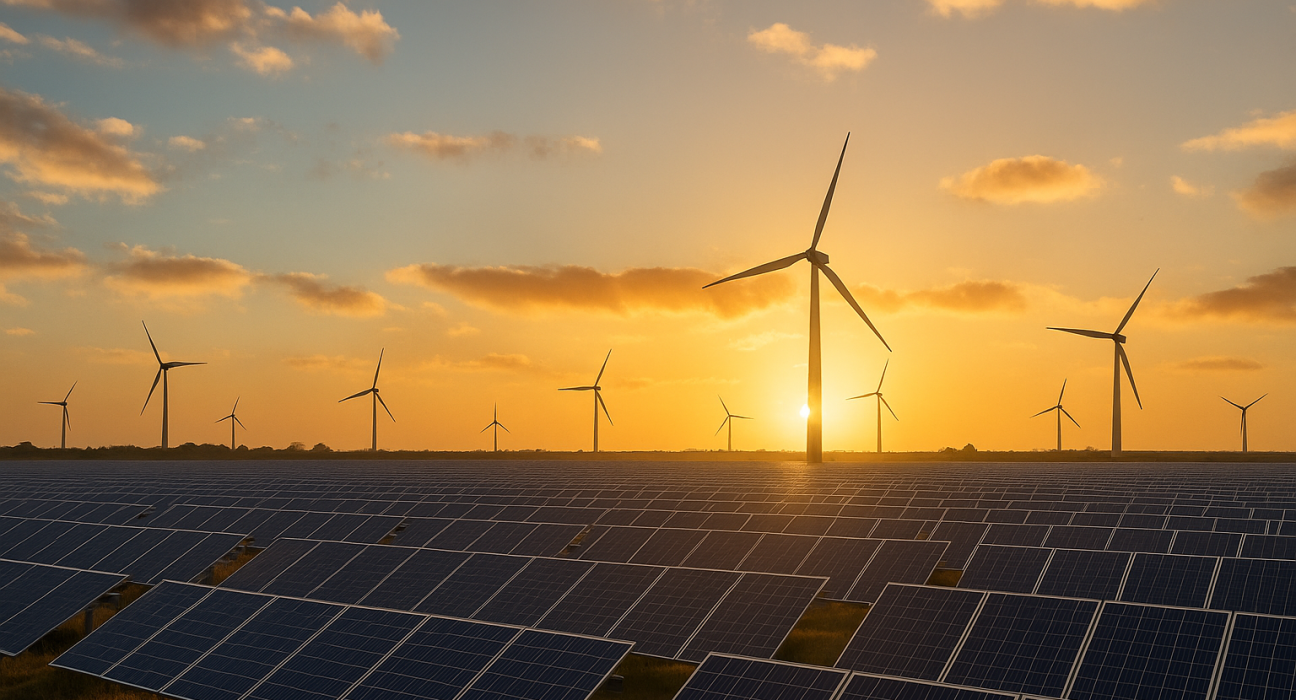
New Renewable Energy Powerhouse
- The article discusses a global energy milestone: that renewable energy sources have overtaken coal as a primary source of electricity in many parts of the world.
- Multiple news threads and social media references cite that, for the first half of 2025, renewables (wind, solar, hydro, etc.) generated more electricity globally than coal plants.
- The shift is especially pronounced in countries investing heavily in solar and wind capacity, such as China, India, and parts of Europe.
- The article highlights the significance of that transition: that the world is potentially entering a new era of cleaner power generation, and that coal’s dominance is being eroded faster than many had forecast.
- It may talk about challenges remaining — grid stability, storage, intermittency, investment, and policy alignment — as well as optimism about technology and scale bringing renewed cost advantages.
Main Points (Likely Highlights)
- Renewables overtake coal globally — a symbolic and substantive turning point in energy production.
- Rapid capacity growth in solar and wind, particularly in developing and populous countries.
- Declining role of coal — reduced demand, plant retirements, policy or economic pressures pushing coal out.
- Challenges and caveats — infrastructure, storage, grid reliability, investment in transmission.
- Implications for climate goals — this shift strengthens prospects for reducing emissions if sustained.
Broader Context & Significance
- The transition from coal to renewables is a central pillar of climate strategy. Coal is a major source of greenhouse gases, so displacing its share with clean energy is essential for meeting net-zero and Paris targets.
- Many countries have pledged to phase out coal or limit its expansion; seeing actual electricity generation cross this threshold is concrete progress.
- This milestone could accelerate investment: private capital, governments, and industries may use this as proof point to further shift subsidies, regulations, and infrastructure spending.
- However, electricity generation is only part of the energy system — sectors like transportation, industry, heating still use fossil fuels heavily, so the shift in electricity must be complemented by change in other sectors.
- Equity and access: regions poor in investment, grid capacity, or capital might lag, increasing disparities in who benefits from the energy transition.
Projections: Pros & Risks
Potential Upsides
- Momentum for climate action: With coal receding, political will for stronger climate policies may grow.
- Falling costs: Renewable energy, especially solar + battery storage, may continue becoming cheaper, making further adoption easier.
- Cleaner air & health benefits: Less coal burning means reduced particulate pollution, respiratory diseases, and health costs.
- Technological innovation: Demand for storage, grid management, smart grids, and flexible energy systems may boost R&D and jobs in clean tech.
Potential Challenges / Risks
- Grid reliability: High renewable penetration demands investments in storage, transmission, and balancing to avoid outages or instability.
- Intermittency & backup: Wind and solar are variable — without sufficient storage or backup generation, grids may face “dark doldrums.”
- Infrastructure and investment gaps: Some regions may not have the capital or institutional capacity to upgrade networks or build new infrastructure.
- Stranded assets: Coal plants and fossil investments may lose value rapidly, leading to losses for utilities, workers, and communities dependent on mining.
- Policy uncertainty: If policies or subsidies reverse, or political will wanes, the trend may stall.