
New Jersey Declares State of Emergency
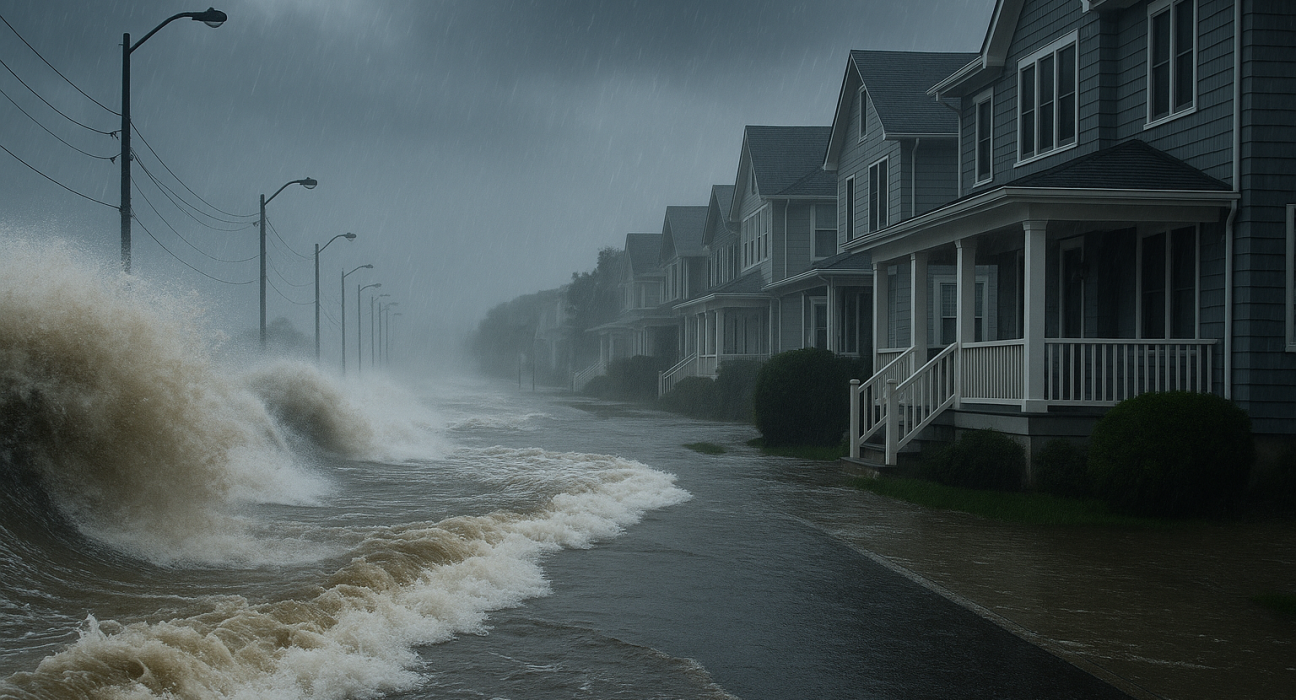
A powerful nor’easter swept up the U.S. East Coast, causing heavy rain, coastal flooding, and strong winds that prompted emergency declarations, especially in New Jersey and parts of New York. In New Jersey, the governor declared a state of emergency for all counties. In New York State, eight southern counties also received emergency orders. The storm’s impacts ranged from flooded roads to air travel disruptions. (AP News)
The weather system is churning moisture from the Carolina coast toward New England, driving a mix of coastal surge, inland flooding, and wind impacts. Some areas are forecast to receive up to 5 inches (≈ 13 cm) of rain, and wind gusts could reach 60 mph (≈ 97 kph). High surf and beach erosion are expected to worsen conditions along the coastline. (AP News)
In Delaware, the National Guard was activated to assist with rising water levels. Voluntary evacuations were ordered in low-lying areas like Bowers Beach. Along the North Carolina Outer Banks, ocean overwash spilled onto Highway 12, and several beachfront homes showed signs of structural strain. (AP News)
Further north, parts of Long Island, suburban New York, and coastal Westchester County were placed under coastal flood warnings and wind advisories. Utilities in the impacted regions mobilized over 1,600 workers to respond to outages, and flight delays were reported throughout the Northeast. (AP News) The storm was expected to move out by Monday night, although its most severe coastal inundation was forecast during peak high tides.
The article also notes another concurrent natural disaster in western Alaska: heavy flooding, exacerbated by the remnants of Typhoon Halong, has destroyed homes in remote coastal communities and left dozens missing. Rescue operations are underway amid logistical challenges in isolated areas. (AP News)
In sum, the nor’easter has become a disruptive force across a large swath of the U.S. East Coast, testing both coastal resilience and emergency response systems. The timing of high tides, combined with the intensity of wind and rainfall, is expected to push coastal flooding higher than is typical for storms of this nature.
Key Points
- A nor’easter moving along the East Coast triggered emergency declarations in New Jersey and parts of New York.
- Rainfall of up to 5 inches and wind gusts near 60 mph are expected, along with significant coastal flooding and beach erosion.
- Delaware’s National Guard was activated; voluntary evacuations occurred in flood-prone areas.
- Utilities staged over 1,600 workers to manage storm damage; flight disruptions extended from Washington to Boston.
- The storm is forecast to exit by Monday night, though peak flooding coincides with high tide.
- Simultaneously, Alaska is facing severe flooding from Typhoon Halong’s remnants, with homes lost and people unaccounted for in remote communities.
Projections & Implications
Infrastructure and resilience tests. The storm stresses coastal defenses, drainage systems, and utility grids. Areas already vulnerable to sea level rise and storm surge may see exacerbated damage, underscoring the need for adaptive planning in coastal zones.
Emergency response capacity. Mobilizing National Guard units, repairing infrastructure, and coordinating across states highlight how critical resource allocation and preplanning are during overlapping disasters (East Coast storm + Alaska flooding).
Economic and insurance impacts. Property damage, business interruption, and repair costs may rise, especially in coastal counties. Insurers may reassess risk models for nor’easters and coastal flooding in the Northeast.
Public planning & policy. State and local governments may revisit zoning, setback rules, coastal buffer protections, and building codes to withstand more frequent extreme weather. Post-storm investigations could influence future storm readiness budgets.
Climate context & recurrence. While this nor’easter is not a tropical system, it demonstrates how storms can derive strength from both tropical moisture and midlatitude dynamics. With warmer oceans and increased atmospheric moisture, future non-tropical storms might carry heavier precipitation, making inland flooding more common.
Cascading risk across regions. Simultaneous disasters (like Alaska flooding in this case) strain federal and national support systems. How rapidly resources are prioritized across diverse geographies may become more politically and logistically challenging.
References
- “New Jersey declares emergency as nor’easter approaches, while Alaska flooding carries away homes” — AP News
- Related meteorological analysis from Washington Post
- Supporting forecasts and commentary from National Weather Service / FOX Weather