
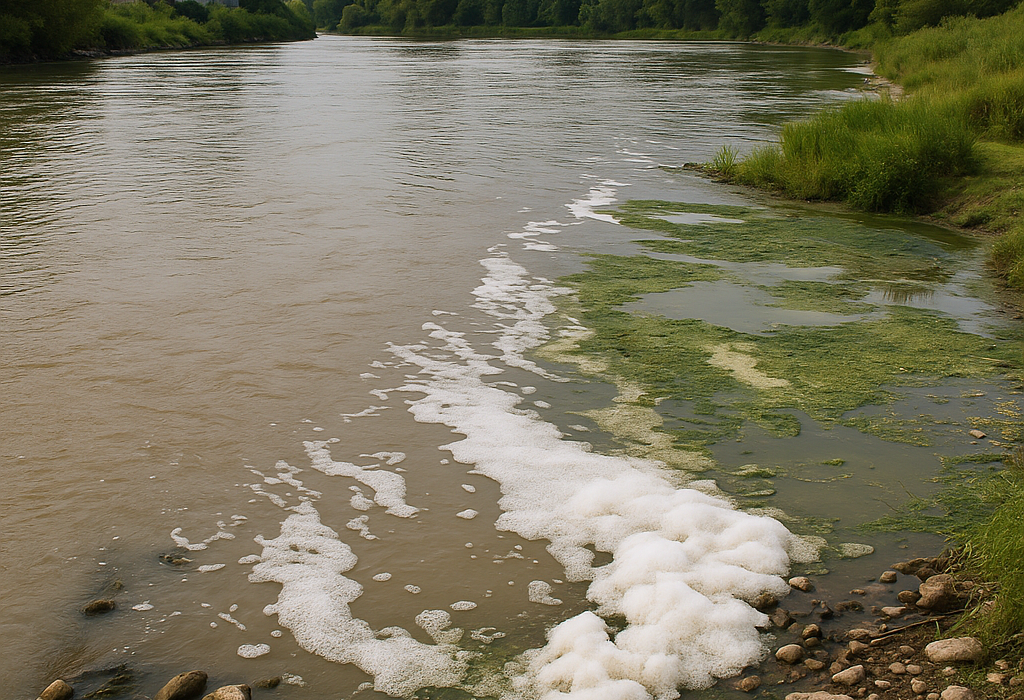
Campbells Dumps Disturbing Amounts of Waste Into Waterways
The Campbell Soup Supply Company has admitted to violating the federal Clean Water Act more than 5,400 times by dumping wastewater into the Maumee River in Ohio, which feeds into Lake Erie. The company’s Napoleon, Ohio, facility released pollutants including E. coli bacteria, oil, grease, suspended solids, and other contaminants between April 2018 and December 2024, according to court documents.
The admissions were made as part of a joint lawsuit filed in 2024 by the U.S. Environmental Protection Agency (EPA), Lake Erie Waterkeeper, and Environment Ohio. The organizations allege that Campbell’s discharges contributed to toxic algae blooms in Lake Erie, which threaten drinking water supplies, harm wildlife, and damage local ecosystems.
Environmental advocates say the company’s acknowledgment marks a turning point. “Campbell’s admission that it committed these violations will speed this case toward a trial,” said John Rumpler, Clean Water Program Director for Environment Ohio. The court will next determine how large a civil penalty should be imposed and what measures Campbell must take to prevent future violations.
Sandy Bihn, Lake Erie Waterkeeper’s Executive Director, said the case demonstrates the strength of citizen-led enforcement: “Bringing an end to Campbell’s violations will help water quality in the river and Lake Erie, and demonstrates the power citizen enforcement suits have to drive meaningful environmental progress.”
The company has stated that it has taken steps to improve operations and aims to reach a settlement that “serves the interests of the environment and the community.” Campbell emphasized that it has operated in Napoleon since 1938 and claimed its facility has had “minimal, if any, adverse effects” on the river or lake.
Legal experts note that this admission removes Campbell’s ability to deny liability, clearing the way for the court to focus on penalties and remediation requirements. The trial is expected to begin in 2026, and outcomes may include stricter wastewater limits, enhanced monitoring, and community-funded cleanup initiatives.
Main Points
- Campbell Soup admitted to violating the Clean Water Act 5,400 times.
- Wastewater contained oil, grease, E. coli, and solids dumped into the Maumee River.
- The pollution contributed to toxic algae blooms in Lake Erie.
- The EPA and environmental groups filed the lawsuit.
- A penalty phase will determine fines and pollution control measures.
- The company claims to have improved compliance and minimized harm.
Projections
Potential Positive Outcomes (Pro):
- Stronger environmental enforcement and precedent for corporate accountability.
- Possible ecological recovery for the Maumee River and Lake Erie watershed.
- Encourages better compliance and oversight among food manufacturers.
Potential Negative Outcomes (Con):
- Potential job and economic impacts on the Napoleon community if operations are restricted.
- Ongoing contamination concerns may require years of remediation.
- Highlights systemic weaknesses in pollution monitoring before lawsuits occur.
Sources
- WJLA – Campbell’s Soup Co. admits to dumping waste into an Ohio river, violating law 5,400 times
- EPA and Environment Ohio legal filings
- Statements from Campbell Soup Co. and Lake Erie Waterkeeper