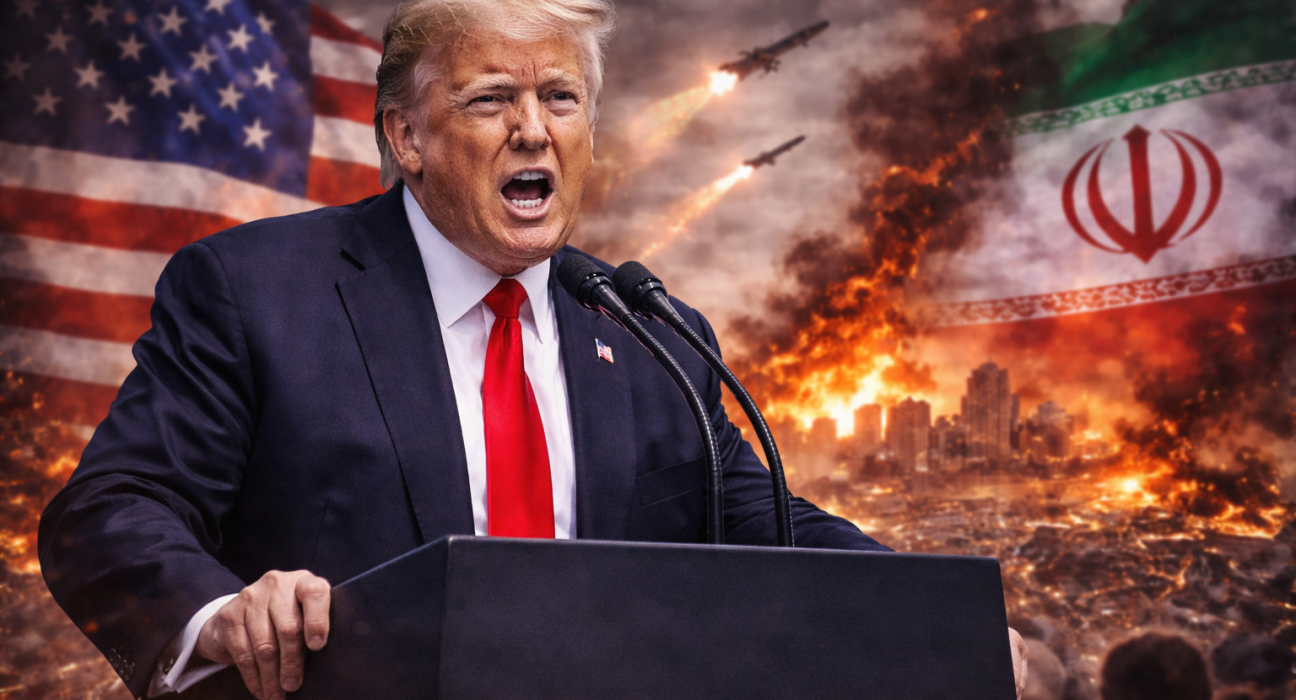
The ongoing U.S.–Iran conflict has entered a critical and volatile phase marked by intensified rhetoric, collapsing diplomacy, and rising domestic political scrutiny. Recent developments—including a congressional resolution, Iran’s suspension of diplomatic channels, and sharply escalated warnings from Donald Trump—highlight a convergence of pressures that are shaping the trajectory of the crisis.
Drawing from legislative documents, international reporting, and opinion analysis, the situation reflects both geopolitical escalation and internal U.S. political tension, with global implications.
Escalation in Rhetoric: “A Whole Civilization Will Die Tonight”


One of the most widely reported developments is Trump’s statement warning that “a whole civilization will die tonight” if Iran did not agree to terms tied to reopening the Strait of Hormuz.
The statement, posted publicly, was part of a broader ultimatum demanding compliance within a specific deadline. Additional reporting indicates:
- The warning was tied to potential expanded military action
- U.S. and allied strikes had already targeted infrastructure, including oil facilities
- Iran remained resistant to demands and rejected temporary ceasefire proposals
The rhetoric drew strong reactions from analysts and legal experts, some of whom raised concerns about the implications of targeting civilian infrastructure and the language used in the warning.
At the same time, other observers interpret such statements as part of high-pressure negotiation tactics commonly used in geopolitical conflicts.
Diplomatic Breakdown: Iran Cuts Communication
Parallel to escalating rhetoric, Iran reportedly cut direct diplomatic channels with the United States, reducing opportunities for immediate negotiation.
This development is significant because:
- Even during conflict, backchannel diplomacy typically continues
- Communication helps prevent miscalculation and unintended escalation
- Its absence increases uncertainty and risk
While indirect mediation efforts—through third-party countries—may still exist, the breakdown signals a deepening standoff between the two nations.
Strategic Flashpoint: Strait of Hormuz
The crisis remains centered on the Strait of Hormuz, a critical global energy chokepoint through which approximately 20% of the world’s oil supply flows.
Recent developments include:
- Reduced shipping traffic and disruptions
- Rising global oil prices, with crude reaching multi-year highs
- Military activity targeting infrastructure tied to energy exports
The U.S. has demanded the reopening of the strait, while Iran has framed its actions as a response to military pressure and sovereignty concerns.
Congressional Pressure: H.Res. 1155
Domestically, the introduction of H.Res. 1155 reflects increasing scrutiny within Congress regarding executive actions tied to the conflict.
Such resolutions typically:
- Raise concerns about presidential decision-making
- Initiate or support oversight or impeachment-related processes
- Signal political divisions within the legislative branch
The resolution highlights a broader debate over:
- War powers and congressional authority
- Justification for military action
- Accountability for foreign policy decisions
This domestic dimension adds complexity to the crisis, as internal political pressure may influence external strategy.
Broader Strategic and Legal Concerns
The escalation has raised several key issues:
1. Targeting Infrastructure
Reports indicate potential targeting of:
- Power plants
- Bridges
- Oil and energy facilities
Legal experts note that international humanitarian law requires distinction between civilian and military targets, and any deviation could raise legal and ethical concerns.
2. Ambiguous War Objectives
Analysts have pointed out that U.S. objectives have varied throughout the conflict, including:
- Preventing nuclear development
- Weakening Iran’s military
- Securing trade routes
- Influencing regime change
This lack of a clearly defined endpoint complicates both strategy and public understanding.
3. Domestic Public Opinion
Polling referenced in broader reporting suggests:
- Growing public concern over prolonged conflict
- Economic pressure from rising fuel costs
- Mixed support for continued military engagement
Public sentiment can play a role in shaping policy decisions, particularly during extended conflicts.
Competing Interpretations
View 1: Strategic Pressure for Resolution
Supporters of the administration’s approach argue that:
- Strong rhetoric and deadlines may force negotiation
- Military pressure can accelerate conflict resolution
- Control of key trade routes is essential to global stability
View 2: Risk of Escalation and Instability
Critics argue that:
- Escalatory language increases the risk of miscalculation
- Diplomatic breakdown reduces opportunities for de-escalation
- Targeting infrastructure could widen the conflict
The difference between these views reflects broader debates about the effectiveness of coercive diplomacy versus negotiation-based approaches.
Pros (Strategic or Supportive Perspectives)
• High-pressure negotiation tactics: May push adversaries toward agreement
• Demonstration of military capability: Signals deterrence strength
• Congressional oversight: Reflects functioning checks and balances
• Global attention: Encourages international mediation efforts
Cons (Risks and Concerns)
• Diplomatic isolation: Loss of communication channels increases risk
• Escalation potential: Strong rhetoric may trigger further conflict
• Economic impact: Oil market volatility affects global economies
• Legal and ethical concerns: Targeting infrastructure raises international law questions
Future Projections
1. Continued Escalation or Last-Minute Diplomacy
Deadlines may lead to either intensified conflict or rapid negotiations.
2. Increased Role of Mediators
Countries such as Pakistan, Turkey, or Gulf states may attempt to restore communication.
3. Congressional Action Expansion
H.Res. 1155 could lead to hearings, investigations, or further political consequences.
4. Energy Market Instability
Oil prices and supply chains may remain volatile depending on the status of the Strait of Hormuz.
5. Partial Diplomatic Reopening
Even limited communication channels could reduce immediate risks.
Conclusion
The current phase of the U.S.–Iran conflict is defined by heightened rhetoric, reduced diplomacy, and increased political pressure. Trump’s warning about the potential destruction of a “civilization” underscores the intensity of the moment, while Iran’s decision to cut communication reflects the depth of the standoff.
At the same time, congressional action signals that the conflict is not only a geopolitical issue but also a domestic political one. The outcome will likely depend on whether diplomatic pathways can be restored—or whether escalating pressure leads to further confrontation.
References
Primary Sources
- Reuters – Trump warns “a whole civilization will die tonight”
https://www.reuters.com/world/middle-east/trump-says-a-whole-civilization-will-die-tonight-if-iran-does-not-make-deal-2026-04-07/ - Firstpost – Iran cuts diplomatic channels with U.S.
https://www.firstpost.com/world/iran-cuts-all-diplomatic-channels-with-us-ahead-of-trumps-strait-of-hormuz-deadline-13997645.html - U.S. Congress – H.Res. 1155
https://www.congress.gov/119/bills/hres1155/BILLS-119hres1155ih.pdf - The Daily Beast – Coverage of Trump’s escalation rhetoric
https://www.thedailybeast.com/desperate-trump-79-threatens-to-kill-whole-civilization-as-iran-war-deal-push-fails/ - The Hill – Opinion analysis on Iran crisis escalation
https://thehill.com/opinion/white-house/5818240-trump-iran-crisis-escalation/
Additional Sources
- Reuters – Oil market and escalation coverage
- The Guardian – Ceasefire proposals and diplomatic efforts
- Washington Post – Legal analysis of military targeting